Aegis provides affordable, low power Wi-Fi sensor network solutions that make a ubiquitous sensing world come alive and a full line of controlled temperature cabinets. Laboratory, Pharmacy and Chromatography refrigerators and freezers which are designed to meet the dimensional and temperature requirements of the scientific community.

2026 Top Types of Disposable Plastic Cups for Global Buyers
Choosing the right Disposable Plastic Cups in 2026 requires more than comparing price and clarity. Global buyers must examine drink temperature, filling speed, transport distance, storage conditions, and end-of-life options. PET cups provide strong transparency for iced coffee, juice, and bubble tea. PP cups tolerate warmer beverages and repeated handling better. rPET can reduce virgin plastic use, but supply quality may vary between regions. Compostable cups sound attractive, yet they require suitable industrial composting systems. That detail is often missed.
Packaging recycling specialist Edward Kosior has stated, “If we can’t recycle it, we shouldn’t make it.” His point remains useful, although cup recycling is not always simple. Adhesive labels, sleeves, lids, pigments, and leftover drinks can reduce recovery quality. Buyers should request resin identification, food-contact documentation, migration test results, and verified recycled-content evidence. They should also confirm whether local facilities actually accept the selected material.
This guide compares the top types of Disposable Plastic Cups for global purchasing teams. It considers practical performance, appearance, customization, cost, and responsible sourcing. Some choices will look perfect on paper. They may fail during shipping or filling. Therefore, sampling remains essential. Test the cup with real beverages, real sealing equipment, and realistic warehouse temperatures. A low-cost cup can become expensive when leaks, cracking, or rejected shipments appear. Requirements also differ across markets, so buyers should verify current regional rules before placing orders.
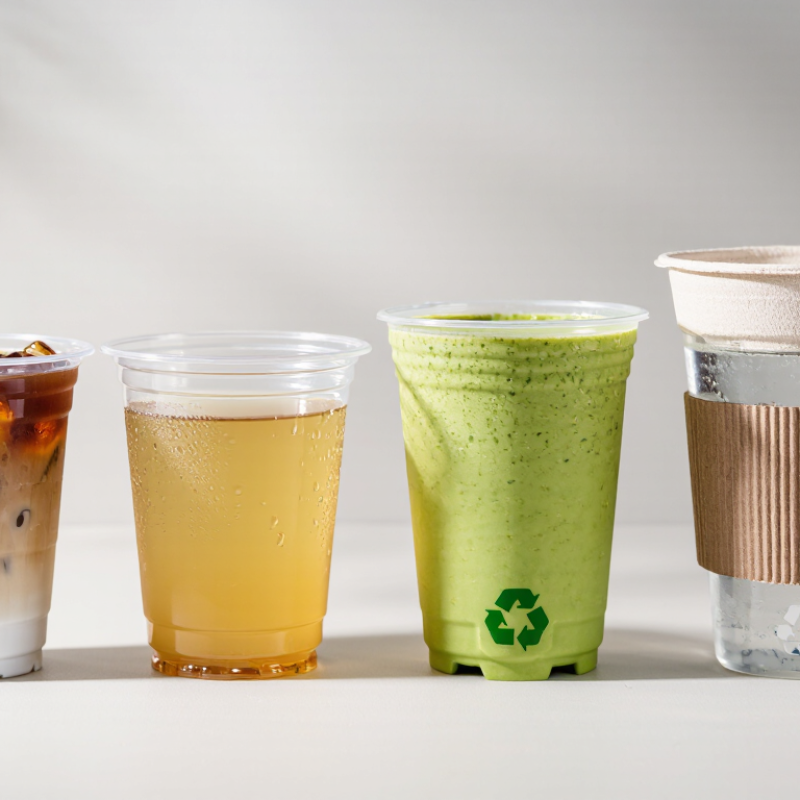
Table of Contents [Hide]
What Are Disposable Plastic Cups and Why Do Global Buyers Use Them?
What Are Disposable Plastic Cups and Why Do Global Buyers Use Them?
Disposable plastic cups are single-use containers designed for serving cold drinks, samples, desserts, and takeaway beverages. Common materials include PET, PP, and polystyrene. Each material performs differently. PET offers clear visibility, while PP handles moderate heat better. Cup walls may be thin, rigid, smooth, or textured, depending on the intended use.
In practical sourcing work, buyers usually check capacity, rim diameter, lid fit, leakage resistance, and carton strength. A 12-ounce cup may suit iced coffee, but it may not fit the same lid as a 16-ounce version. Small mistakes can affect thousands of units. Global buyers choose disposable cups because they support fast service and consistent portion control. They also reduce washing labor in busy cafés, food stalls, offices, and outdoor events. Lightweight cartons lower handling effort and often simplify shipping.
Hygiene is another important reason. Unused cups arrive sealed and ready for direct service. However, disposable does not automatically mean sustainable. Recycling access differs between countries and even between cities. Buyers should review material labels, local waste systems, and packaging requirements before ordering. Some cups feel sturdy but create unnecessary material use. Others save plastic but may collapse under ice and pressure. That trade-off deserves honest testing with real drinks, real lids, and real transport conditions.
Contact Us
Phone
Toll Free: 1-800-796-2344
OH: 513 204 5837
PA: 215-281-9180
support@site_367d8ed1-a876-442b-a1d7-b1fc1cf4ed19