Aegis provides affordable, low power Wi-Fi sensor network solutions that make a ubiquitous sensing world come alive and a full line of controlled temperature cabinets. Laboratory, Pharmacy and Chromatography refrigerators and freezers which are designed to meet the dimensional and temperature requirements of the scientific community.

What Are the 2026 Top Types of Aluminium Melting Furnaces?
Selecting the right aluminium melting furnace in 2026 requires more than comparing purchase prices. Furnace performance depends on alloy range, batch size, production rhythm, energy availability, and workplace conditions. No single design wins everywhere.
This article examines the leading furnace types used in modern aluminium foundries. It covers gas-fired reverberatory furnaces, electric resistance furnaces, induction furnaces, rotary furnaces, and crucible furnaces. Each option creates different trade-offs. Reverberatory models suit large batches and continuous production. Electric systems offer clean operation and precise temperature control. Induction furnaces can deliver rapid melting with strong process control. Rotary furnaces may support efficient recovery of aluminium scrap. Crucible furnaces remain practical for smaller workshops and flexible production.
The best choice also depends on metal quality requirements. Excessive holding time can increase oxidation and dross formation. Poor temperature control may affect casting consistency. These details matter on the shop floor, where operators monitor burner flames, power readings, crucible walls, and molten metal surfaces. Small visual changes can signal larger maintenance problems.
Reliable recommendations should combine engineering experience, manufacturer specifications, energy studies, and actual site conditions. Buyers should verify thermal efficiency, refractory life, emission controls, charging methods, safety systems, and service support. Some comparisons remain imperfect because published efficiency figures use different testing methods. That limitation deserves attention.
The following outline compares each furnace type by operating principle, advantages, limitations, suitable applications, and expected 2026 development trends.
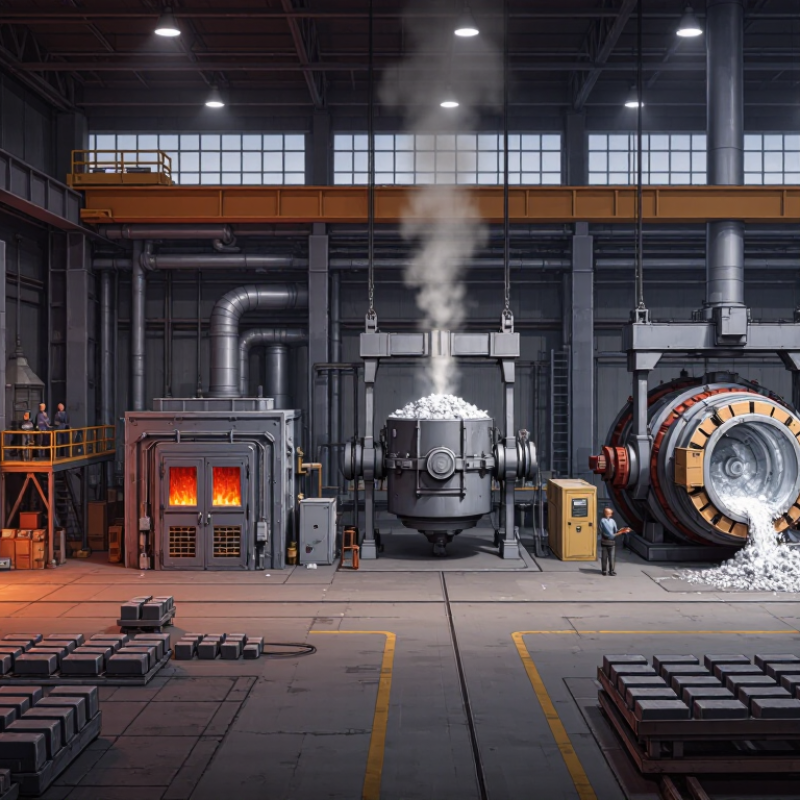
Table of Contents [Hide]
What Defines a Modern Aluminium Melting Furnace in 2026
A modern aluminium melting furnace in 2026 is defined by measurable control, not appearance. The furnace must melt mixed scrap consistently, limit oxidation, and record energy use for every batch. The International Aluminium Institute reports that recycled aluminium requires about 95% less energy than primary production. That advantage disappears when poor sorting, excessive dross, or unstable temperatures reduce metal yield.
Energy data also changes furnace selection. The U.S. Department of Energy’s Industrial Decarbonization Roadmap identifies process heating as roughly half of industrial energy demand. Modern reverberatory furnaces therefore use regenerative or recuperative burners, improved insulation, and heat recovery. Electric induction furnaces offer precise control and low local emissions, but their value depends on electricity sources, charge size, and alloy requirements. Rotary furnaces remain useful for contaminated scrap, although salt use and residue management need careful evaluation.
Sensors matter more than brochures. Temperature probes, oxygen monitoring, and exhaust analysis can reveal a cold corner or an over-fired burner before quality declines. Digital records also support traceability and maintenance planning. Yet automation is not magic. A sensor may drift. Operators still need practical experience beside the furnace. The best design balances melt rate, recovery, emissions, safety, and repair access. It should also tolerate real scrap, not only laboratory-grade feedstock. That distinction is often missed.
Contact Us
Phone
Toll Free: 1-800-796-2344
OH: 513 204 5837
PA: 215-281-9180
support@site_367d8ed1-a876-442b-a1d7-b1fc1cf4ed19