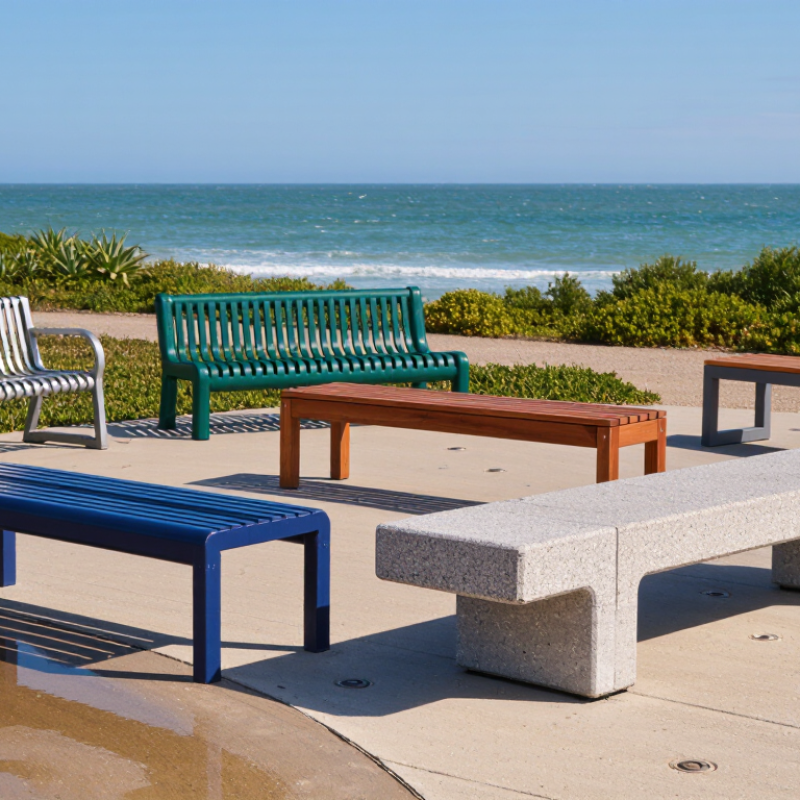
| Cast-Iron or Steel Park Bench | Metal frame with timber, recycled-plastic, or metal slats. Often anchored to concrete or paved surfaces. | Public parks, transport areas, town centers, campuses, and high-traffic outdoor spaces. | Suitable for most climates when the metal has an appropriate corrosion-protection system. | High structural strength, stable installation, classic appearance, and good resistance to heavy use. | Heavy to transport; uncoated or damaged metal may rust; metal surfaces can become hot or cold. | Inspect coatings and anchor points regularly; clean dirt and repair exposed metal promptly. | Confirm corrosion category, coating thickness, weld quality, anchoring method, load rating, and replacement-part availability. |
| Recycled-Plastic Bench | Slats or molded components made from recycled plastic or high-density polymer, usually combined with a metal frame. | Parks, schools, coastal promenades, playgrounds, gardens, and low-maintenance public projects. | Performs well in humid, rainy, and coastal environments; dark colors may heat up in strong sun. | Does not splinter, resists moisture and insects, and generally requires less surface treatment than natural wood. | Can expand and contract with temperature; lower-quality material may fade, warp, or become brittle. | Wash with mild detergent; check fasteners, deformation, fading, and frame corrosion. | Request recycled-content information, UV-stability data, dimensional tolerances, slip resistance, and end-of-life recyclability. |
| Treated Timber Bench | Outdoor-rated softwood or hardwood boards treated with preservative, stain, paint, or protective oil. | Gardens, residential developments, hospitality venues, parks, and landscape projects seeking a natural appearance. | Suitable for many regions when the timber treatment matches local moisture, insect, and UV conditions. | Warm appearance, comfortable surface temperature, easy repair, and broad design flexibility. | May absorb water, crack, discolor, or decay if drainage and maintenance are poor. | Clean periodically; reseal, repaint, or re-oil according to exposure and the selected finish. | Verify timber species, legal sourcing documentation, moisture content, preservative type, rounded edges, and drainage design. |
| Stainless-Steel Bench | Stainless-steel frame or slats, sometimes combined with timber, recycled plastic, or composite seating surfaces. | Premium public spaces, marine locations, modern plazas, airports, commercial developments, and coastal projects. | Strong choice for humid and coastal conditions when the steel grade and finish are correctly selected. | High corrosion resistance, clean appearance, strong frame, and relatively simple cleaning. | Higher purchase cost; fingerprints and surface contamination may be visible; metal may feel hot or cold. | Use non-abrasive cleaners; remove salt deposits and inspect welds and fixings. | Confirm steel grade, surface finish, salt-spray or corrosion test data, weld passivation, and galvanic compatibility with other metals. |
| Concrete Bench | Precast or cast-in-place concrete, sometimes with timber, tile, stone, or metal seating inserts. | Permanent plazas, memorial areas, urban streetscapes, parks, and locations requiring vandal resistance. | Suitable for hot, cold, and wet climates when freeze-thaw resistance and water drainage are addressed. | Very stable, difficult to move or steal, fire resistant, and generally resistant to heavy vandalism. | Very heavy, hard surface, potentially uncomfortable without a seat insert, and costly to relocate. | Clean stains promptly; inspect for cracks, spalling, exposed reinforcement, and blocked drainage. | Check concrete strength, freeze-thaw performance, reinforcement protection, edge safety, surface temperature, and installation access. |
| Gabion Bench | Wire gabion baskets filled with stone, usually topped with timber, composite, or concrete seating boards. | Landscape projects, ecological parks, retaining-wall areas, recreational paths, and contemporary public spaces. | Performs well outdoors when the wire coating and drainage system are suitable for local conditions. | Strong visual character, excellent mass and stability, good drainage, and flexible site integration. | Rough surfaces, difficult cleaning, considerable weight, and possible wire corrosion or stone displacement. | Remove debris; inspect mesh, connectors, stone settlement, and the condition of the seating board. | Verify wire coating, mesh aperture, stone size, edge protection, drainage, local installation requirements, and replacement procedure. |
| Modular or Portable Bench | Knock-down components using steel, aluminum, timber, plastic, or composite slats with bolted connections. | Events, temporary public spaces, schools, rental properties, flexible landscaping, and seasonal installations. | Suitable for varied climates if components are protected and the bench is secured against wind or misuse. | Easy shipping, assembly, storage, replacement, and layout changes. | More joints can loosen; lightweight units may be unstable or vulnerable to theft and wind. | Retighten fixings; inspect joints, feet, handles, wheels, and locking or anchoring components. | Check packed dimensions, assembly time, tool requirements, spare hardware, anti-tamper options, stacking safety, and wind stability. |
| Backless Bench | Single seat surface made from timber, metal, concrete, plastic, or composite material, with legs or pedestal supports. | Walkways, dining areas, gardens, transit platforms, stadiums, and compact spaces where two-way access is useful. | Suitable for most climates; material selection determines heat, moisture, and corrosion performance. | Compact footprint, access from both sides, simple construction, and usually lower shipping volume. | Provides less back support and may be less comfortable for long periods of sitting. | Clean the seat and inspect supports, edges, fasteners, and surface damage. | Confirm seat height, seat depth, edge radius, stability, anti-tip performance, accessibility strategy, and intended sitting duration. |
| Bench with Backrest and Armrests | Seat, backrest, and armrests supported by metal, timber, plastic, or composite components. | Rest areas, senior living environments, healthcare landscapes, parks, promenades, and long-stay seating zones. | Suitable for all major climates when drainage, corrosion protection, and UV resistance are specified correctly. | Improves posture support, sitting comfort, and ease of standing; armrests can help users transfer safely. | Larger footprint, more components to maintain, and armrests may restrict side access. | Clean all contact surfaces; inspect armrest joints, backrest supports, seat fixings, and sharp edges. | Verify seat height and depth, back angle, armrest height, transfer clearance, accessibility requirements, and load testing. |
| Picnic or Dining Bench | Long seat boards, often paired with a table; common materials include treated timber, recycled plastic, metal, and composite boards. | Campgrounds, parks, outdoor restaurants, schools, workplaces, resorts, and family recreation areas. | Suitable for varied weather when the table and bench offer adequate drainage and corrosion protection. | Supports group seating, outdoor meals, social interaction, and efficient use of open space. | Requires more space; difficult to move after installation; food debris can increase cleaning needs. | Clean tabletop and seats frequently; inspect joints, underside drainage, and ground contact areas. | Check table height, knee clearance, accessible seating positions, anchoring, rounded corners, stability, and cleaning access. |
| Planter-Integrated Bench | Bench connected to planters made from concrete, steel, aluminum, timber, recycled plastic, or composite panels. | Urban plazas, commercial courtyards, pedestrian streets, rooftop gardens, and landscape-led developments. | Suitable for most climates if irrigation, drainage, waterproofing, and root protection are properly designed. | Combines seating and landscaping, improves space efficiency, and can create separation or informal barriers. | More complex installation; plant irrigation may expose seating components to constant moisture. | Maintain plants and drainage; inspect waterproof liners, overflow paths, fasteners, and moisture-sensitive materials. | Verify drainage capacity, waterproofing, root control, maintenance access, soil weight, structural loading, and safe seating edges. |