Aegis provides affordable, low power Wi-Fi sensor network solutions that make a ubiquitous sensing world come alive and a full line of controlled temperature cabinets. Laboratory, Pharmacy and Chromatography refrigerators and freezers which are designed to meet the dimensional and temperature requirements of the scientific community.

What Is the Best Medical Fridge for Global Buyers?
Choosing the best medical fridge for global buyers is not simply a capacity decision. It is a reliability decision.
The World Health Organization reports that up to 50% of vaccines may be wasted globally because of weak temperature control, logistics, and shipment management. This finding appears in WHO’s Immunization Supply Chain and Logistics: A Neglected Issue. The report remains a useful warning for hospitals, laboratories, pharmacies, and distributors.
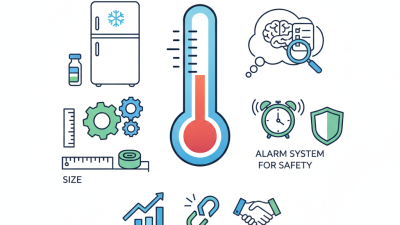
A dependable medical fridge should maintain stable temperatures, commonly between 2°C and 8°C. Buyers should also examine temperature mapping, digital alarms, data logging, door recovery, and backup power compatibility. These details matter when a rural clinic faces a long outage or unstable voltage. A large cabinet alone proves little.
WHO Director Dr. Kate O’Brien has said, “Vaccines are one of the most powerful tools we have to prevent disease.” That protection depends on storage discipline. A medical fridge must preserve product quality from delivery to administration.
The UNICEF Supply Division and WHO Performance, Quality and Safety system also show why certified equipment matters in international procurement. Compliance, service access, spare parts, and local technician training deserve equal attention. A technically excellent unit can still fail commercially if repairs take three months.
There is no universal winner. A compact pharmacy refrigerator may suit an urban clinic, while a solar-compatible unit may better serve remote facilities. Buyers sometimes focus too heavily on price. That is understandable, but incomplete.
The best choice balances verified performance, energy use, maintenance support, safety features, and regional conditions. Even careful specifications can miss daily realities. Door-opening habits, dust, heat, and staff training may decide the final result.
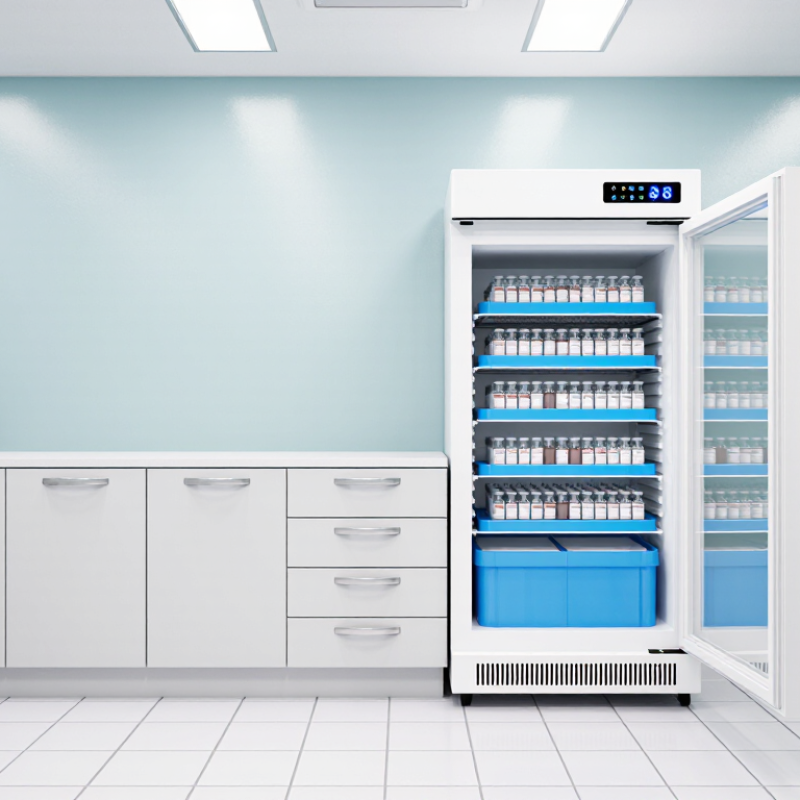
Table of Contents
[Hide]
Medical Fridge Basics: Purpose, Types, and Core Features
A medical fridge protects temperature-sensitive products from damage, contamination, and reduced effectiveness. Vaccines commonly require a stable 2°C to 8°C range. The World Health Organization’s Vaccine Management Handbook warns that poor temperature control contributes to substantial vaccine waste, with global losses historically estimated at up to 50% in some settings. That figure varies by product and region, but the risk remains real.
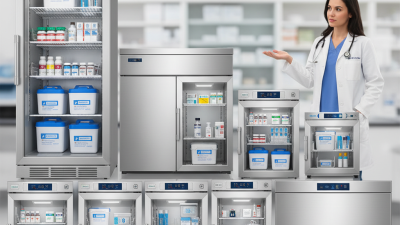
Medical fridges are not all designed for the same purpose. Vaccine refrigerators prioritize stable temperatures and limited freezing. Pharmacy refrigerators support medicines, diagnostic materials, and laboratory supplies. Blood bank refrigerators use stricter controls for blood components. WHO’s Performance, Quality and Safety specifications emphasize reliable operation within the required temperature range. Buyers should check usable volume, shelf layout, airflow, and recovery time after door opening.
Core features include calibrated digital sensors, continuous data logging, visual and audible alarms, secure doors, and backup power compatibility. The CDC recommends recording storage temperatures regularly and using a temperature monitoring device with an alarm. A solid door usually improves stability. Glass doors improve visibility, but may increase heat exposure in bright rooms. Small details matter.
I would not treat a low price as proof of value. No checklist is perfect. Power cuts, crowded shelves, and careless door opening can still defeat good equipment. Global buyers should verify local voltage, service access, calibration support, and documented performance before purchase. These practical checks are often overlooked.
Related Posts
-

Top Laboratory Fridges for Quality and Efficiency in China?
-
Top 10 Vaccine Refrigerators for Safe Storage and Optimal Performance
-
Top 10 Vaccine Refrigerator Models for Optimal Storage Solutions?
-
2026 Top Laboratory Fridge Features Buyers Should Know?
-
2026 How to Choose the Best Medical Fridge for Your Practice?
-
Top 10 Pharmacy Fridge Options for Optimal Medication Storage
Contact Us
Phone
Toll Free: 1-800-796-2344
OH: 513 204 5837
PA: 215-281-9180
support@site_367d8ed1-a876-442b-a1d7-b1fc1cf4ed19