Aegis provides affordable, low power Wi-Fi sensor network solutions that make a ubiquitous sensing world come alive and a full line of controlled temperature cabinets. Laboratory, Pharmacy and Chromatography refrigerators and freezers which are designed to meet the dimensional and temperature requirements of the scientific community.

How to Choose the Best Teak Plywood for Your Project?
Choosing the best Teak Plywood begins with understanding your project’s real demands. Cabinet doors, yacht interiors, wall panels, and outdoor furniture require different performance characteristics. A sheet that looks excellent under showroom lighting may reveal uneven color, open joints, or weak bonding after cutting. Small details matter.
In practical woodworking, I have learned to inspect more than the teak surface. Check veneer thickness, core construction, sheet flatness, moisture content, adhesive quality, and visible repairs. Ask suppliers for technical data, production details, and relevant compliance documents. Do not assume that every teak-faced panel is suitable for marine or exterior use. Those applications need verified glue performance and careful edge protection.
The “best” choice is rarely the most expensive sheet. It is the panel that matches your environment, machining method, budget, and expected service life. Compare samples in natural light. Sand a hidden edge. Test how the surface reacts to your chosen finish. This extra work can expose problems before installation.
Responsible sourcing also deserves attention. Prefer suppliers who can explain the timber’s origin and provide credible chain-of-custody information where applicable. Product names can sound reassuring, but documentation is stronger evidence. I may still miss a hidden core defect, even after inspection. That is why ordering a sample and confirming specifications in writing remains a sensible safeguard. A careful decision produces cleaner cuts, more stable surfaces, and fewer costly surprises.
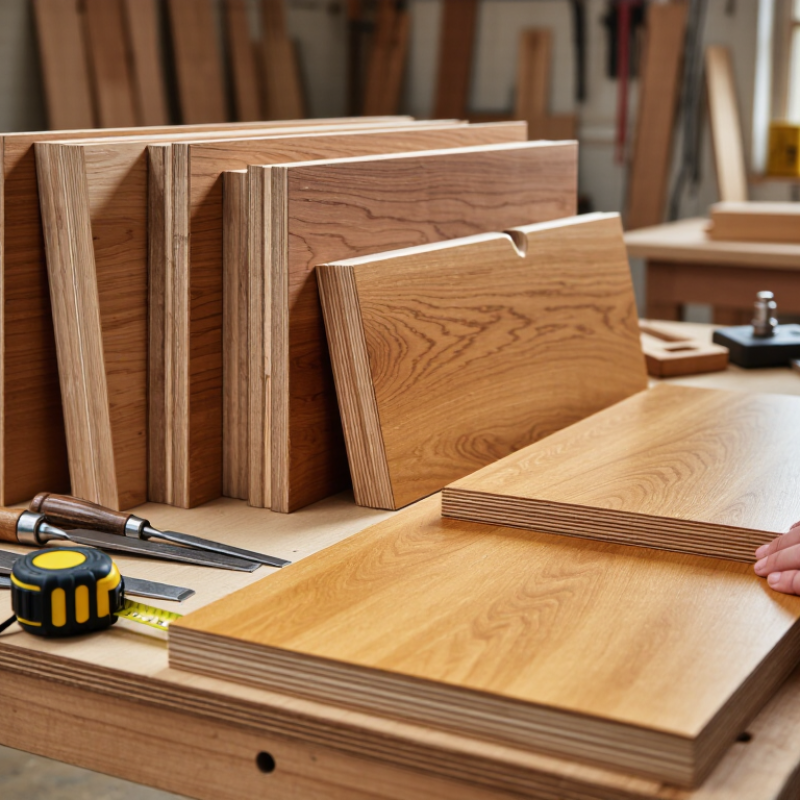
Table of Contents [Hide]
Define Teak Plywood and Its Key Performance Characteristics
Teak plywood is an engineered panel made from thin teak veneers bonded over a layered core. Its visible teak surface gives projects a warm grain and natural oil content. However, not every teak plywood panel is made entirely from teak. The core may use other hardwoods, so check the construction before buying. This detail matters.
Its key performance comes from balance. Teak veneers can resist moisture, insects, and surface wear better than many ordinary timbers. Cross-laid layers also reduce movement across the panel. In a humid room, this helps doors, wall panels, and furniture stay flatter.
It is not waterproof by default. Poor edges, weak glue, or exposed screw holes can still absorb water.
Look closely at the panel before installation. The face should have even color, tight joints, and no open splits. Pressing the corners can reveal soft spots or separation. Ask for core details, bonding classification, thickness tolerance, and formaldehyde emission data. For boat interiors or outdoor applications, use a panel tested for the expected moisture exposure. Seal cut edges with a compatible coating, especially around sinks and fasteners.
Density also affects handling. A thick panel may feel strong but become difficult to cut or lift. Teak’s natural oils can reduce glue adhesion, so surface preparation and the adhesive specification deserve attention. A smooth finish is attractive, but it can hide uneven veneer thickness. That is easy to miss. Selecting the best panel means matching verified performance to the project, not choosing the darkest grain.
Contact Us
Phone
Toll Free: 1-800-796-2344
OH: 513 204 5837
PA: 215-281-9180
support@site_367d8ed1-a876-442b-a1d7-b1fc1cf4ed19