Aegis provides affordable, low power Wi-Fi sensor network solutions that make a ubiquitous sensing world come alive and a full line of controlled temperature cabinets. Laboratory, Pharmacy and Chromatography refrigerators and freezers which are designed to meet the dimensional and temperature requirements of the scientific community.

Why Choose a Camping Grill for Outdoor Cooking?
Outdoor meals often feel better when cooking is simple, steady, and close to camp. A Camping Grill can help, whether you are making breakfast beside your tent or vegetables after a long hike. Unlike an open fire, a grill gives you a defined cooking surface and adjustable heat on many models. That helps when sausages brown quickly, a pan needs stable support, or wind shifts across the campsite. Small details count. Fuel type, burner control, grate size, and cleanup can shape the whole meal. Still, no grill is perfect. Some models feel bulky, and uneven ground can make setup frustrating.
This guide explores why campers choose grills, which features deserve attention, and how to cook with care. A useful choice depends on your trip, not on selecting the largest or most powerful model. Check the manufacturer’s instructions, use the grill outdoors only, and keep it away from tent fabric and dry debris. Let hot parts cool before packing, and follow the stated fuel and cleaning guidance. These habits help protect people and equipment. Packing extra fuel or wiping greasy grates may not feel exciting, but it can prevent avoidable problems. Choosing well means balancing portability, cooking space, safe operation, and the meals you actually enjoy outdoors. It is a practical trade-off, and sometimes the lighter option is not the easiest one to cook on.
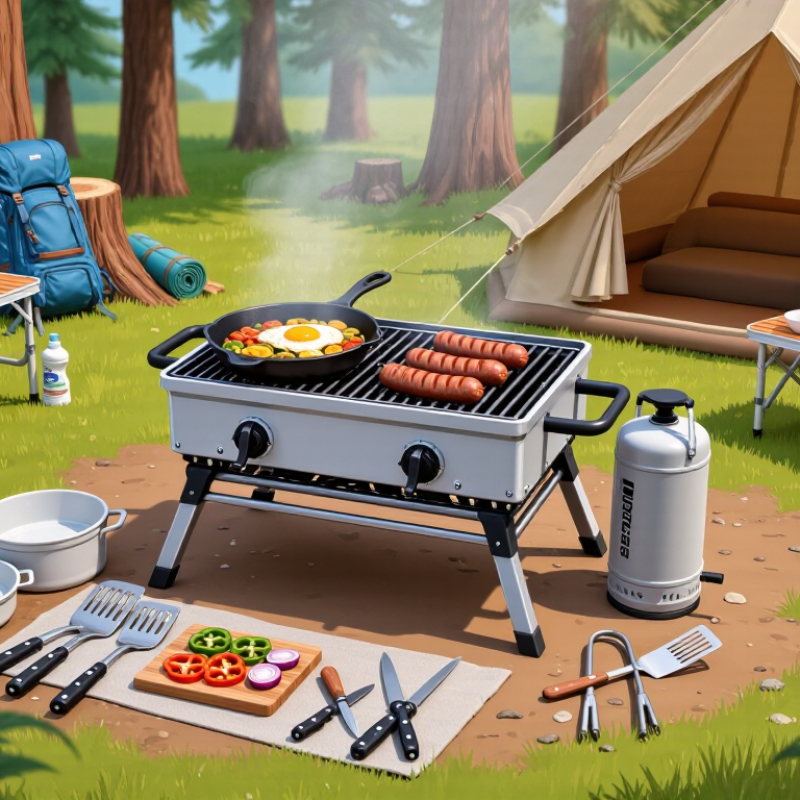
Table of Contents [Hide]
How Camping Grills Fit into Outdoor Cooking
Why Choose a Camping Grill for Outdoor Cooking?
How Camping Grills Fit into Outdoor Cooking
A camping grill gives outdoor meals a steady cooking surface without requiring a full kitchen. It suits quick breakfasts, grilled vegetables, and simple dinners beside the campsite. The KOA 2024 North American Camping Report estimates that 58 million North American households camped in 2023. That scale helps explain why practical, portable cooking gear matters to many campers. A grill can reduce reliance on disposable cooking items, though fuel and cookware still need planning. It is not ideal for every meal. Wind, limited fuel, and uneven heat can turn a simple dinner into a small project.
Tips: Choose a stable, level spot outdoors, well away from tents and dry brush. Check the grill and fuel connections before lighting. Keep raw and cooked food separate, and use a food thermometer for meat. Pack only the tools you expect to use. I sometimes overestimate how much cooking gear a trip needs; a lighter kit is often easier to manage.
Source: KOA, 2024 North American Camping Report.
Contact Us
Phone
Toll Free: 1-800-796-2344
OH: 513 204 5837
PA: 215-281-9180
support@site_367d8ed1-a876-442b-a1d7-b1fc1cf4ed19