Aegis provides affordable, low power Wi-Fi sensor network solutions that make a ubiquitous sensing world come alive and a full line of controlled temperature cabinets. Laboratory, Pharmacy and Chromatography refrigerators and freezers which are designed to meet the dimensional and temperature requirements of the scientific community.

How to Choose a Fridge and Freezer in 2026?
Choosing a fridge and freezer in 2026 requires more than comparing stainless-steel finishes. The right appliance should suit your kitchen, shopping habits, climate, and energy budget. Measure the opening carefully, including door clearance and ventilation space. A beautiful model can become frustrating if its doors strike a wall.
Food-safety expert Dr. Ben Chapman puts the essential rule plainly: “Keep your refrigerator at 40°F or below.” Use a small internal thermometer because the display may not show the warmest shelf. Look for stable cooling, adjustable shelves, separate temperature controls, and a freezer that limits frost buildup. Families who buy frozen food weekly may prefer a bottom freezer. Frequent fresh-food shoppers may find a wide refrigerator section more practical. Counter-depth models save space, but they often provide less storage.
Energy labels, inverter compressors, repair access, and warranty terms deserve close attention. Check the appliance’s noise rating if your kitchen opens into a living room. A door alarm can prevent wasted energy after children leave it open. Smart features sound impressive, yet many owners rarely use them. That is worth questioning. I once assumed a larger freezer was always better; unused drawers simply consumed space and electricity. Capacity should match real routines, not showroom excitement. Before choosing, compare internal dimensions, not just advertised litres. Then consider service availability in your area. The best fridge and freezer is not necessarily the most advanced model. It is the one that keeps food safely, fits naturally, and remains dependable after the novelty fades.
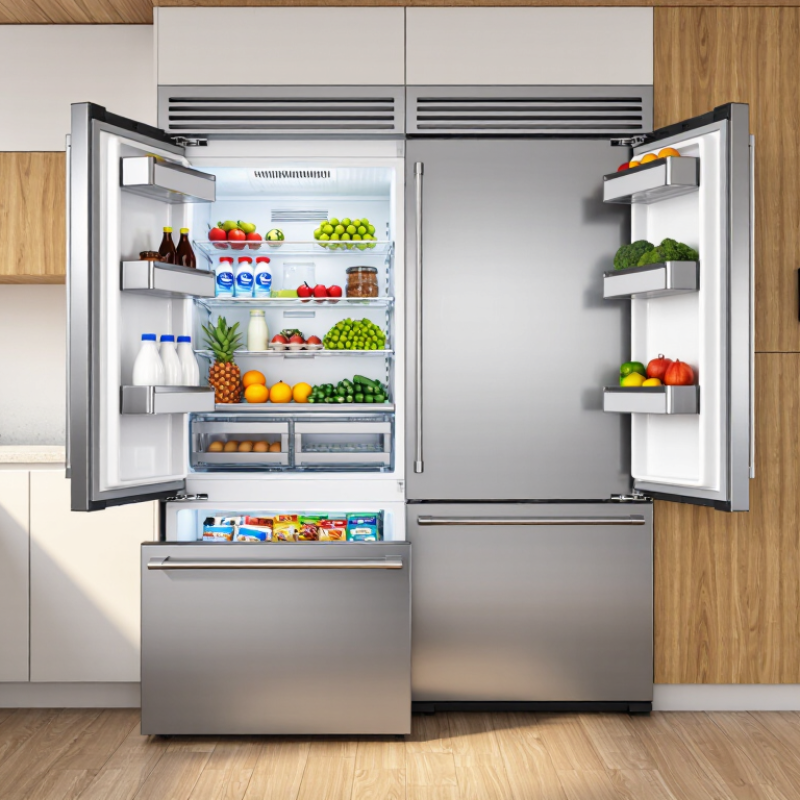
Table of Contents
[Hide]
Define Your Household’s Fridge and Freezer Requirements
Choosing starts with your household, not the showroom. Count regular users, weekly shopping trips, and frozen-food habits. A couple buying fresh produce needs different storage from a family cooking in batches. Record seven days of actual food volume. This is more reliable than guessing. USDA FSIS recommends 40°F or below for refrigeration and 0°F for frozen storage. Temperature control is essential.
Measure available width, height, depth, doorways, and door-swing clearance. Leave ventilation space required by the installation instructions. A deep cabinet can look generous but hide yogurt, herbs, or leftovers at the back. I have seen households buy extra capacity, then waste food because shelves became visual blind spots. That is an uncomfortable design failure. Choose adjustable shelves, shallow drawers, and lighting where your hands actually work. Review high shelves carefully.
Separate freezer demand from refrigerator demand. ENERGY STAR product guidance reports that certified refrigerators use about 9% less energy than minimum-standard models. Compare annual energy use, not only purchase price. The U.S. Energy Information Administration’s Residential Energy Consumption Survey lists refrigerators and freezers as separate appliance categories. For frequent bulk buying, a dedicated freezer may fit better. For small households, it may waste space and power. Recheck your estimate after one month. Real life is messier than the spreadsheet.
Related Posts
-
2026 Top Fridge and Freezer Suppliers Worldwide?
-
Top Research Freezers for Laboratory Efficiency and Performance?
-
What is the Best Research Freezer for Global Buyers?
-
10 Essential Tips for Choosing the Perfect Upright Fridge?
-
How to Choose the Best Portable Fridge for Your Outdoor Adventures?
-
2026 Top Upright Fridge Models Are They Worth the Investment?
Contact Us
Phone
Toll Free: 1-800-796-2344
OH: 513 204 5837
PA: 215-281-9180
support@site_367d8ed1-a876-442b-a1d7-b1fc1cf4ed19