Aegis provides affordable, low power Wi-Fi sensor network solutions that make a ubiquitous sensing world come alive and a full line of controlled temperature cabinets. Laboratory, Pharmacy and Chromatography refrigerators and freezers which are designed to meet the dimensional and temperature requirements of the scientific community.

How to Choose Ordinary Plywood for Global Projects?
Choosing Ordinary Plywood for a global project requires more than comparing prices and thicknesses. The right panel must suit the building’s climate, structural demands, handling conditions, and final application. A 12-millimeter sheet may perform well inside a dry office, yet fail quickly in a humid warehouse or exposed construction area. Small details matter. Core gaps matter. Moisture matters.
Experienced buyers usually begin with the project specification, not the supplier’s product name. They confirm veneer species, panel grade, dimensions, density, bonding quality, and allowable tolerances. They also check formaldehyde emissions, moisture resistance, and relevant regional standards. Requirements may differ between Europe, North America, Asia, and emerging markets. Local building codes should guide the final decision. A supplier’s test report is useful, but independent laboratory verification offers stronger confidence. Clear batch numbers and production records make quality easier to trace.
No checklist is perfect. A panel can pass a laboratory test and still suffer from poor storage during ocean transport. I have seen otherwise acceptable plywood arrive with swollen edges after exposure to rain. That risk deserves attention. Buyers should request samples, inspect the cut core, review packaging, and discuss claims procedures before placing large orders. Ordinary Plywood is not automatically a low-quality choice. Its value depends on consistent manufacturing, honest documentation, and correct application. This guide examines those practical factors, helping project teams balance cost, performance, compliance, and supply reliability across international markets.
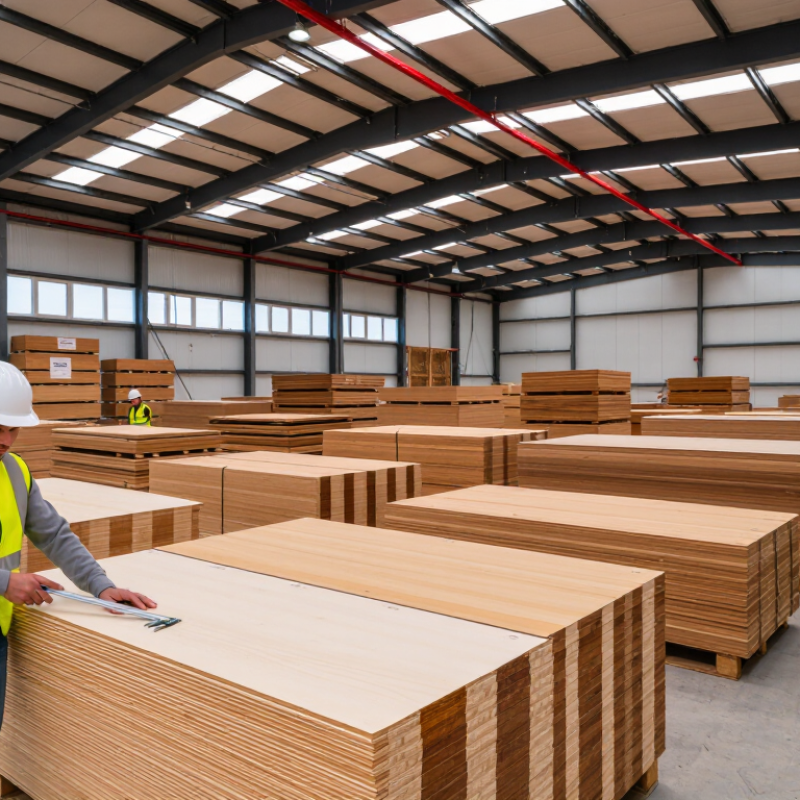
Table of Contents [Hide]
Understanding Ordinary Plywood and Its Global Applications
How to Choose Ordinary Plywood for Global Projects?
Ordinary plywood is a practical engineered panel made from thin wood veneers. Its cross-layer structure offers useful strength and dimensional stability. It suits furniture backs, interior partitions, packaging, wall linings, and temporary site structures.
For global projects, application matters more than a low purchase price. A dry indoor panel may fail quickly in humid storage. Check thickness, veneer quality, core gaps, surface flatness, and bonding performance before ordering. A 12-millimeter sheet can look suitable, yet uneven layers may cause weak screw holding.
Tips
Request recent technical data and a physical sample. Measure the sample after delivery. Inspect edges for open joints, delamination, or excessive voids. Confirm moisture resistance for the intended environment, not merely the shipping route. Ask about formaldehyde emissions and testing methods when panels enter occupied buildings. Requirements differ between countries and project types, so independent verification is sensible. Do not rely on a translated product description alone.
In practice, ordinary plywood performs well when protected from standing water and direct weather exposure. Store sheets flat on bearers, above the floor, with air movement around the stack. Cover them, but do not seal in condensation.
I have seen attractive surfaces hide rough inner veneers; that mistake becomes expensive during installation. For export projects, calculate container loading, edge protection, and replacement tolerance early. A small size variation can disrupt a repetitive wall system. The material is simple, but the decisions are not.
Contact Us
Phone
Toll Free: 1-800-796-2344
OH: 513 204 5837
PA: 215-281-9180
support@site_367d8ed1-a876-442b-a1d7-b1fc1cf4ed19