Aegis provides affordable, low power Wi-Fi sensor network solutions that make a ubiquitous sensing world come alive and a full line of controlled temperature cabinets. Laboratory, Pharmacy and Chromatography refrigerators and freezers which are designed to meet the dimensional and temperature requirements of the scientific community.

How to Choose the Best Aluminum Porch Railing in 2026?
Choosing the right Aluminum Porch Railing in 2026 means balancing safety, durability, appearance, and installation needs. A sleek black rail may look ideal online, but its finish, post spacing, and mounting system matter more once it meets your porch. Measure the railing run, note corners and stair slopes, and check what surfaces can support the posts. Small details count.
Aluminum resists corrosion and is generally lighter than steel, but it is not maintenance-free. Scratches or damaged coatings can affect how it ages, especially in wet or coastal conditions. Compare powder-coat finishes, warranty terms, and product specifications rather than relying on photos alone. Ask whether the rail system is designed for your layout, and confirm its tested load information and applicable local building requirements with the supplier or a qualified installer. A railing that fits a straight porch may need different components for steps or uneven decking.
Budget matters, but the cheapest kit may not include the brackets, gates, or stair parts your project requires. Check replacement-part availability, too. These choices are easy to overlook. A careful comparison can help you choose a railing that feels secure, suits your home, and remains practical to maintain. Still, no checklist catches every odd corner or aging porch board; inspect the actual site before ordering.
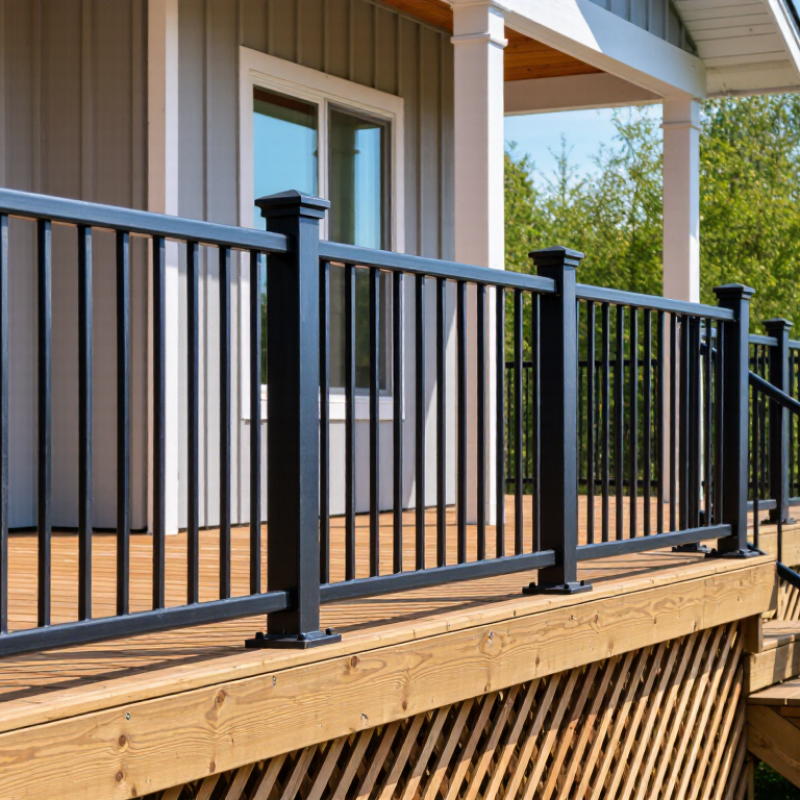
Table of Contents [Hide]
Define Porch Exposure and Use Before Comparing Aluminum Railing Systems
Before comparing aluminum porch railing systems, map the porch’s actual exposure. A covered entry in a dry inland town faces different demands than an open seaside deck. Note salt spray, wind direction, driving rain, freeze-thaw cycles, and hours of direct sun. Salt air is relentless. Also record how people use the space: children leaning on rails, pets pressing against infill, furniture moving past corners, or frequent hand contact. These details affect finish durability, infill choice, post spacing, and maintenance access.
NOAA’s 2022 Sea Level Rise Technical Report projects about 10–12 inches of U.S. coastal sea-level rise by 2050, compared with 2000 levels. That is a national average, not a porch-specific forecast, but it highlights future saltwater and flooding exposure near coasts.
For wind, check local design criteria and the project’s exposure category before choosing posts or attachment hardware. Appearance alone says little about load capacity. Request documented structural ratings and installation requirements, then confirm the porch framing can support them.
After rain, note pooling water, coating scratches, loose fasteners, and where runoff hits the lower rail. It sounds fussy. It helps. Powder-coated finishes can still be damaged, and aluminum components are not automatically maintenance-free.
I would compare systems only after this check. Honestly, that order can feel slower, but it may prevent choosing a beautiful profile that performs poorly in its actual setting.
Contact Us
Phone
Toll Free: 1-800-796-2344
OH: 513 204 5837
PA: 215-281-9180
support@site_367d8ed1-a876-442b-a1d7-b1fc1cf4ed19