Aegis provides affordable, low power Wi-Fi sensor network solutions that make a ubiquitous sensing world come alive and a full line of controlled temperature cabinets. Laboratory, Pharmacy and Chromatography refrigerators and freezers which are designed to meet the dimensional and temperature requirements of the scientific community.

How to Choose the Right Check Valve in 2026?
Selecting the right check valve in 2026 requires more than matching pipe size. The valve must suit the fluid, pressure, temperature, flow direction, and installation position. A model that performs well in clean water may fail quickly in abrasive slurry or chemically aggressive service. Small details matter.
This guide approaches selection from practical engineering experience and established industry practice. It considers swing, lift, wafer, dual-plate, ball, and spring-loaded designs. Each type controls reverse flow differently. Response speed, pressure loss, water hammer, sealing performance, and maintenance access all affect the final choice. A compact wafer valve may save space, while a spring-assisted design can close faster in a vertical line. The correct answer depends on the system, not the catalogue photograph.
Reliable decisions also require evidence. Review pressure and temperature ratings, material compatibility data, test records, certification, and the manufacturer’s installation instructions. Ask how the check valve behaves during startup, shutdown, low flow, and pump failure. Field technicians often find that poor orientation or neglected debris causes more trouble than the valve itself. That assumption fails.
Digital monitoring may improve inspection in 2026, but sensors cannot correct an unsuitable design. No selection guide removes every uncertainty. Real systems contain pulsation, vibration, changing fluid quality, and imperfect maintenance. These factors deserve honest consideration. By combining operating data, professional review, and realistic maintenance planning, engineers can reduce leakage, noise, premature wear, and unexpected downtime. The goal is not simply to stop backflow. It is to create a dependable flow-control system that remains safe and serviceable over time.
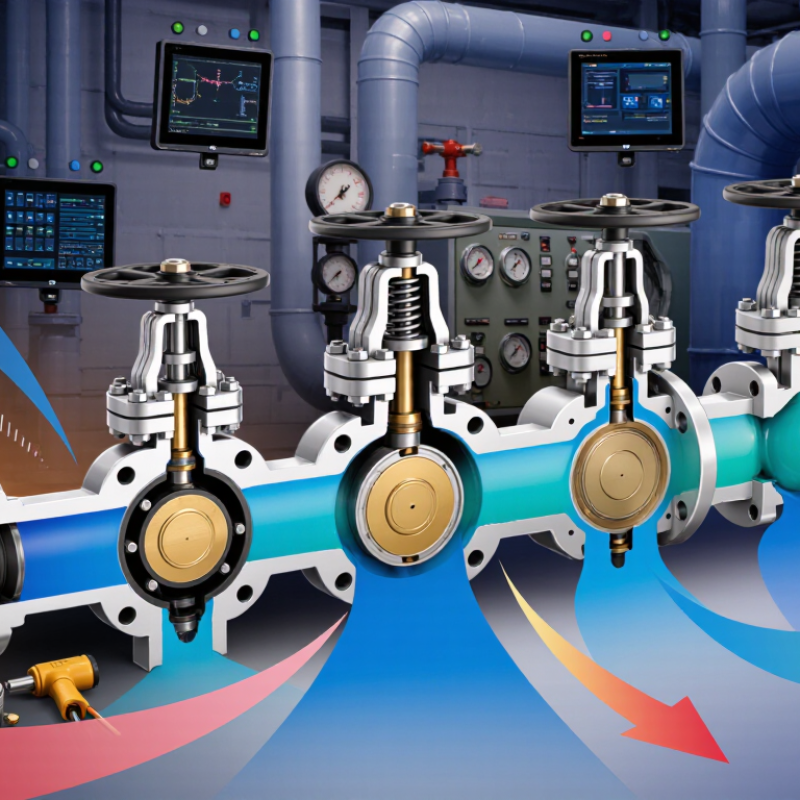
Table of Contents [Hide]
Define Flow Direction, Media, and Pressure-Temperature Ratings
How to Choose the Right Check Valve in 2026?
Start by defining the real flow direction, not the intended one. A swing check valve suits steady, low-velocity flow, while a lift or spring-loaded design can respond faster. Reverse flow creates water hammer, noise, and possible pump damage. The U.S. Department of Energy’s Improving Pumping System Performance report notes that pumping systems may consume 25–50% of industrial facility electricity. A poorly selected valve can increase this burden through unnecessary pressure loss.
Identify the media before comparing valve materials. Water, steam, oil, corrosive chemicals, and abrasive slurries require different seats, bodies, and disc designs. Record viscosity, solids content, oxygen exposure, and cleaning chemicals. Then verify pressure and temperature ratings at the actual operating condition. Do not rely only on the maximum catalog value. API 598 and ISO 5208 provide recognized testing frameworks for valve pressure integrity and leakage. Their use improves confidence, but field installation still matters.
I check the minimum flow, startup pressure, pipe orientation, and expected cycling frequency. Small details decide performance. A valve may pass a shop test and still slam during operation. That part is often underestimated. My own practice is conservative: leave a practical margin, review transient conditions, and question any rating that lacks temperature-specific data. Mistakes happen when normal pressure is mistaken for surge pressure, or when clean water data is applied to dirty service.
Contact Us
Phone
Toll Free: 1-800-796-2344
OH: 513 204 5837
PA: 215-281-9180
support@site_367d8ed1-a876-442b-a1d7-b1fc1cf4ed19