Aegis provides affordable, low power Wi-Fi sensor network solutions that make a ubiquitous sensing world come alive and a full line of controlled temperature cabinets. Laboratory, Pharmacy and Chromatography refrigerators and freezers which are designed to meet the dimensional and temperature requirements of the scientific community.

How to Choose Winfort Commercial Smart Locks?
Choosing the right commercial smart lock affects security, daily operations, and customer confidence. Winfort commercial smart locks may suit offices, hotels, retail stores, and managed buildings with changing access needs. However, a professional decision requires more than comparing prices or attractive product images.
This guide examines practical factors, including door compatibility, unlocking methods, access permissions, audit records, battery performance, and management software. Picture a busy office entrance at 8:30 a.m. A reliable lock should recognize authorized users quickly, record entry accurately, and remain manageable when an employee leaves. Key cards, PIN codes, mobile credentials, and remote administration should match your staff structure. Simplicity matters.
Security is only one part.
Installation conditions also deserve careful attention. Check door thickness, lock body dimensions, network coverage, weather exposure, and emergency exit requirements before ordering. A lock that performs well in a showroom may behave differently on an old metal door or during heavy daily use. This is easy to overlook.
The following outline evaluates Winfort commercial smart locks through an evidence-based lens. It considers user experience, security controls, maintenance demands, system compatibility, warranty support, and long-term operating costs. Product specifications should be verified through official documentation and qualified installers. Independent testing can add confidence, but it cannot replace a site assessment. Some recommendations may need adjustment. Real buildings are rarely perfect, and access policies often change after installation. Careful planning helps buyers choose a smart lock system that remains dependable, understandable, and suitable for their commercial environment.
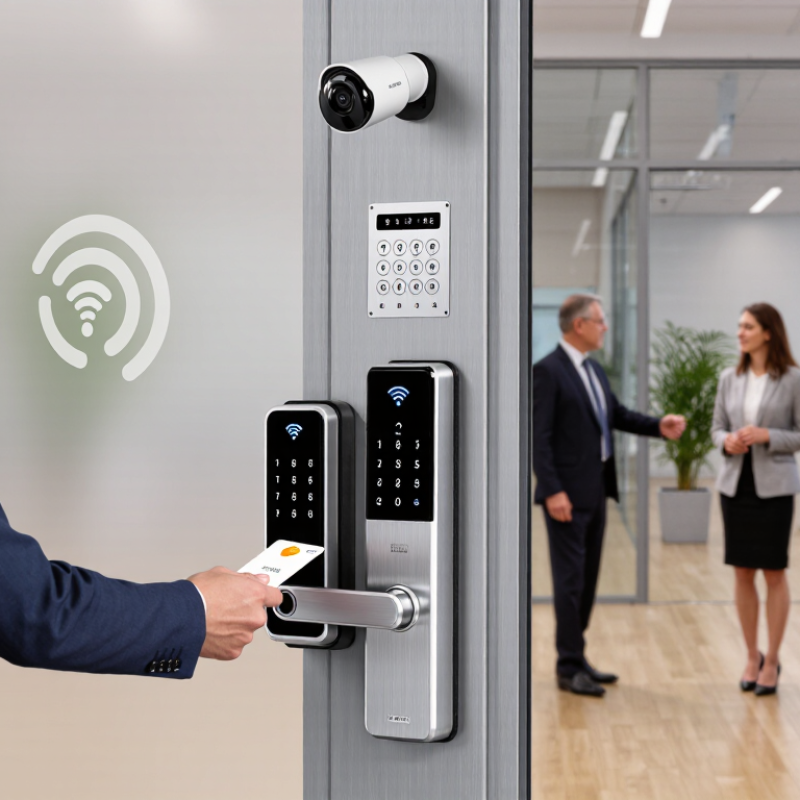
Table of Contents [Hide]
Define Your Commercial Smart Lock Security and Access Needs
How to Choose Commercial Smart Locks: Define Your Security and Access Needs
A commercial smart lock should solve a real access problem, not simply add more technology. Walk through each entrance at different times. Note who needs access, when they need it, and what could go wrong. A warehouse door may need staff access during shifts, while a server room may require fewer users and stronger verification. Consider employees, contractors, visitors, and emergency personnel separately. Their access should not be identical.
Review the physical environment carefully. Outdoor doors face rain, dust, temperature changes, and heavy traffic. Indoor doors may need quiet operation and clean appearance. Check battery life, backup entry options, activity records, and remote management. Reliable access logs can show who opened a door and when. However, records are useful only when someone reviews them. A complicated system may create confusion instead of better security.
Tips: Create a simple access map before comparing products. Mark each door, user group, schedule, and risk. Test the lock on a busy day, not only during a showroom demonstration. Ask what happens when batteries weaken, networks fail, or an administrator leaves. No plan is perfect. A feature can look impressive but remain unnecessary for your site. Recheck permissions regularly, because old access often remains longer than expected.
Contact Us
Phone
Toll Free: 1-800-796-2344
OH: 513 204 5837
PA: 215-281-9180
support@site_367d8ed1-a876-442b-a1d7-b1fc1cf4ed19