Aegis provides affordable, low power Wi-Fi sensor network solutions that make a ubiquitous sensing world come alive and a full line of controlled temperature cabinets. Laboratory, Pharmacy and Chromatography refrigerators and freezers which are designed to meet the dimensional and temperature requirements of the scientific community.

What Is a Cooler Freezer and How Does It Work?
A cooler freezer is more than an insulated box with a cold setting. It is a compact thermal system designed to remove heat, control temperature, and protect food or beverages during storage or transport. Most compressor models use four key parts: a compressor, condenser, expansion device, and evaporator. Refrigerant absorbs heat inside the cabinet, releases it through external coils, then cycles back through the system. The process repeats quietly, although the compressor may sound noticeable in a small room.
Portable units usually follow two designs. Compressor-based models can freeze contents near 0°F (-18°C), while thermoelectric coolers commonly provide cooling below ambient temperature without true freezing performance. That difference matters. A cooler freezer advertised as “portable” may not maintain stable temperatures during hot weather, frequent lid opening, or weak vehicle power. The label needs careful reading.
ENERGY STAR data shows that certified refrigeration products must meet strict efficiency requirements beyond federal minimum standards. The U.S. Department of Energy also evaluates refrigerator and freezer performance through standardized test procedures. These measurements help compare annual energy use, though real-world results can vary. The U.S. Food and Drug Administration recommends keeping refrigerators at 40°F (4°C) or below and freezers at 0°F (-18°C). Simple numbers. Important numbers.
This guide explains insulation, airflow, thermostat control, power consumption, and defrosting. It also examines practical details, such as frost around the evaporator, warm edges near the lid seal, and battery drain during overnight trips. Some product claims sound impressive. They still deserve checking. Temperature stability may matter more than maximum cooling speed.
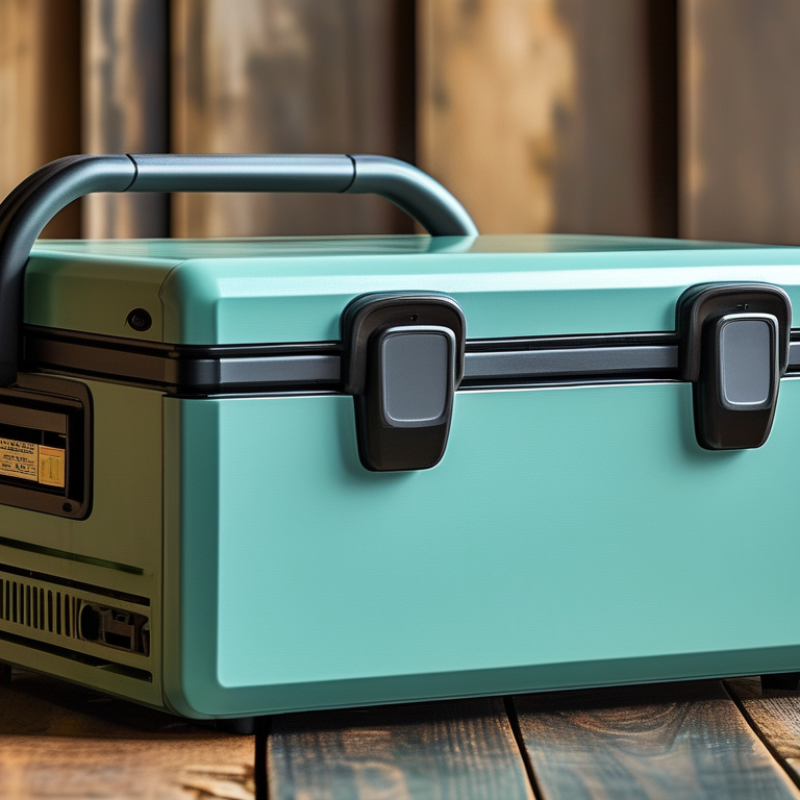
Table of Contents
[Hide]
Definition and Core Purpose of a Cooler Freezer
A cooler freezer is an insulated appliance designed to preserve food by removing heat from an enclosed space. Its core purpose is temperature control, not simply making items cold. A cooler section usually stays near 0–4°C, while a freezer section operates around −18°C. The term is not perfectly standardized. Some units combine both zones, while others describe portable, ice-assisted containers as cooler freezers.
The system uses a refrigeration cycle. A compressor pressurizes refrigerant, and the condenser releases heat through external coils. The refrigerant then expands, becomes colder, and absorbs heat inside the cabinet. Fans may circulate air, although some compact units rely on natural airflow. A thermostat monitors temperature and starts or stops the compressor. Small details matter. A damaged door seal can allow warm, moist air inside. Frost then builds on the evaporator, reducing efficiency.
The International Energy Agency’s The Future of Cooling report projects that global cooling demand could triple by 2050 without stronger efficiency measures. This highlights why insulation, compressor performance, and accurate controls matter. The U.S. Food and Drug Administration recommends refrigerator storage at or below 4°C and freezer storage at −18°C. These figures are practical benchmarks, but real performance varies with ambient temperature, loading, and door opening. My own assessment is less absolute: a cooler freezer can protect food well, yet its advertised temperature may not match every shelf or operating condition.
What Is a Cooler Freezer and How Does It Work? - Definition and Core Purpose of a Cooler Freezer
| Data Dimension | Typical Information | Definition and Practical Purpose |
|---|---|---|
| Basic Definition | Portable insulated appliance with cooling and freezing functions | A cooler freezer is a powered storage unit designed to keep food, drinks, and other temperature-sensitive items chilled or frozen without relying only on ice. |
| Core Purpose | Temperature-controlled storage during travel, outdoor activities, work, or emergencies | Its main purpose is to preserve contents at a selected temperature for longer and more consistent periods than a traditional ice cooler can normally provide. |
| Typical Cooling Range | Approximately 0°C to 10°C (32°F to 50°F) for refrigeration | This range is suitable for chilled beverages, prepared food, dairy products, and other items that should remain cold but not frozen. Actual performance varies with ambient temperature and insulation. |
| Typical Freezing Range | Approximately -18°C to 0°C (0°F to 32°F) | Temperatures near -18°C (0°F) are commonly used for long-term frozen-food storage. Some units provide a freezer compartment or allow the entire compartment to operate below freezing. |
| Cooling Technology | Usually compressor-based; some compact units use thermoelectric cooling | A compressor system actively circulates refrigerant and can generally reach lower temperatures. Thermoelectric systems are simpler and quieter but usually have more limited cooling and freezing capability. |
| How It Works | Heat is removed from the insulated interior and released outside | In a compressor model, refrigerant absorbs heat inside the cabinet, the compressor raises the refrigerant pressure, and the condenser releases the heat to the surrounding air. The cycle repeats until the selected temperature is reached. |
| Temperature Control | Electronic thermostat or digital temperature controller | A sensor measures the internal temperature and signals the cooling system to start or stop. This helps maintain a more stable temperature than manually adding ice. |
| Insulation | Foam-insulated walls with a sealed lid and gasket | Insulation slows heat transfer from the environment, while the lid seal reduces warm-air leakage. Better insulation generally improves temperature stability and reduces energy use. |
| Power Sources | Commonly direct current, alternating current, or both | Many portable models can operate from a vehicle electrical outlet or household power. Some systems can also be connected to a battery or suitable solar-power setup through compatible equipment. |
| Temperature Recovery | Depends on ambient temperature, contents, and lid-opening frequency | A fuller, well-organized unit usually retains cold more effectively, while frequent opening and placing warm items inside increase the time and energy required to return to the target temperature. |
| Storage Capacity | Common portable capacities range from about 10 to 100 liters | Capacity determines how much food or drink can be stored. Usable space may be lower than the advertised internal volume because of baskets, dividers, compressor housings, or separate compartments. |
| Single-Zone Configuration | One compartment operating at one selected temperature | A single-zone unit can function as a refrigerator or freezer, but it normally cannot maintain two different temperatures at the same time. |
| Dual-Zone Configuration | Two independently controlled compartments in some models | Dual-zone designs may allow one compartment to remain chilled while the other is frozen. The actual temperature range and independent-control capability depend on the unit's design. |
| Ice Requirement | Not required during normal powered operation | Because the appliance uses an active cooling system, it can maintain a set temperature without melting ice. Ice may still be used as a backup during a power interruption. |
| Condensation and Moisture | Moisture may collect inside the cabinet, especially in humid conditions | Warm air entering the compartment can condense on cold surfaces. Regularly removing moisture and keeping the interior clean helps reduce odors, frost, and hygiene problems. |
| Energy Use | Variable; affected by temperature setting, insulation, load, and ambient heat | Energy consumption is usually lower when the unit is kept closed, shaded, adequately filled, and operated at the highest safe temperature suitable for the contents. |
| Portability | Designed for transport with handles, compact dimensions, or vehicle-friendly construction | Portability makes a cooler freezer useful for camping, road travel, boating, outdoor work, medical transport, and temporary food storage. |
| Safety Considerations | Requires ventilation, stable power, and correct food-storage temperatures | Airflow around the heat-dissipating components helps prevent overheating. Perishable food should be kept at safe temperatures, and the unit should not be overloaded or operated with damaged cables. |
| Primary Difference from an Ice Cooler | Active temperature control instead of passive ice-based cooling | An ice cooler depends on frozen ice and gradually warms as the ice melts. A cooler freezer uses electricity and a cooling system to maintain a selected temperature for a longer period. |
| Best-Suited Applications | Travel, camping, outdoor events, food transport, backup storage, and mobile work | The appliance is most useful where conventional refrigeration is unavailable, limited, or inconvenient, provided that an appropriate power source is available. |
Temperature ranges, capacity, power consumption, and freezing performance vary by design, insulation quality, ambient conditions, and operating mode.
Related Posts
-
Why Choose a 4 cu ft Freezer for Your Food Storage Needs?
-
What is a 4 cu ft freezer and How Can It Benefit Your Home?
-
Top 10 Benefits of Using Low Temperature Freezers for Food Storage?
-

2025 How to Choose the Best Low Temperature Freezer for Your Needs
-

10 Essential Tips for Choosing an Ultra Low Temperature Freezer
-

Top Research Freezers for Laboratory Efficiency and Performance?
Contact Us
Phone
Toll Free: 1-800-796-2344
OH: 513 204 5837
PA: 215-281-9180
support@site_367d8ed1-a876-442b-a1d7-b1fc1cf4ed19