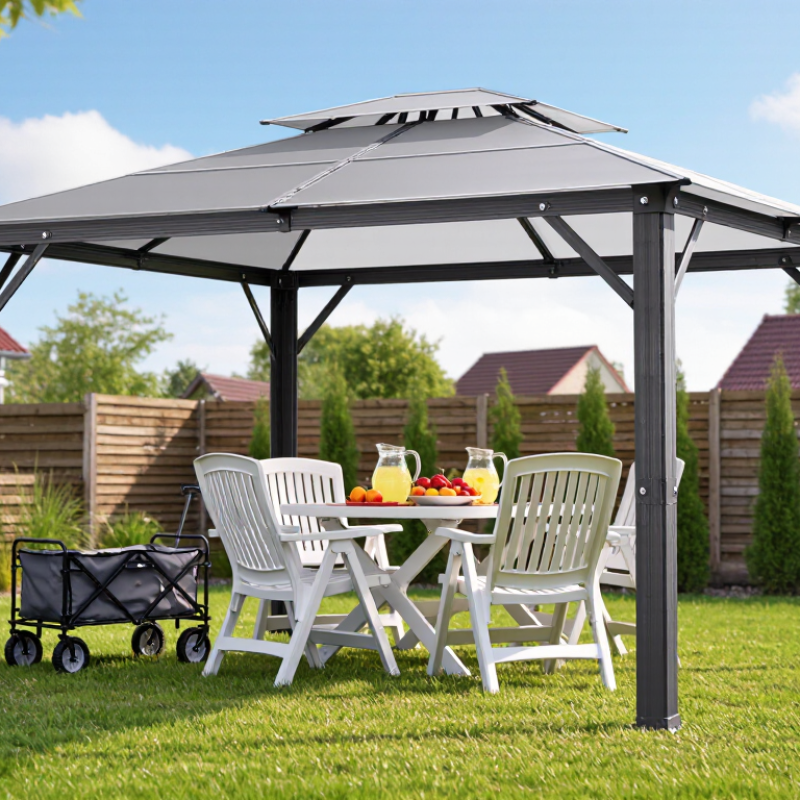
| Intended Wind Use | Choose a model with a clearly stated operating wind limit. For temporary use, plan for calm to moderate conditions and dismantle it before strong winds or thunderstorms. | Look for a wind-speed value in mph or km/h, the test configuration, whether sidewalls were installed, and whether the rating assumes anchoring. | A fabric canopy creates uplift and sideways forces. Wind performance cannot be judged reliably from frame appearance alone. |
| Wind-Load Documentation | Prefer published wind-load data in pressure units such as psf or kPa, together with a test report or engineering basis. | Confirm whether the value is a tested structural load, a design calculation, or only a marketing statement. Check the applicable standard or test method. | Wind speed, pressure, exposure, turbulence, and canopy shape are different measurements. A wind-speed claim without conditions is difficult to compare. |
| Anchoring on Concrete | Use rated ballast or mechanical anchors sized for the surface and expected wind. A common temporary planning range is about 25–40 kg of ballast per leg, subject to the manufacturer’s instructions and site conditions. | Check the number of legs, ballast attachment points, anchor-hole size, fastener type, edge distances, and whether ballast is included in the stated wind rating. | Lightweight frames can slide, lift, or rack even when the canopy fabric remains intact. Ballast must be secured directly to the frame or approved anchor points. |
| Anchoring on Grass or Soil | Use purpose-designed stakes or screw anchors with sufficient embedment for the soil. Do not rely on short decorative pegs or loose weights. | Verify recommended stake length, diameter, pull-out capacity, soil type, underground utilities, and the number of anchors required per leg. | Soft, wet, sandy, or rocky ground can reduce holding strength substantially. Soil anchoring performance is site-specific and should not be treated as universal. |
| Frame Strength | Prefer a corrosion-resistant steel or aluminum frame with positive locking at every leg and clearly stated tubing dimensions and wall thickness. | Check the material, tube outside dimensions, wall thickness, joint construction, cross-brace design, replacement-part availability, and lock indicators. | The weakest hinge, connector, or locking mechanism often governs stability. A large canopy may impose higher loads than a compact one. |
| Vertical Load Capacity | Use the stated roof or hanging-load limit only for the specified load locations. Never assume the frame can support people, snow, lighting, or equipment unless expressly rated. | Look for distributed-load and point-load values, permitted attachment points, load direction, safety factors, and whether the rating applies with or without sidewalls. | A canopy may carry its own fabric but fail under concentrated loads such as speakers, signs, heaters, or suspended lighting. |
| Snow and Ice Load | For most portable folding gazebos, treat snow and ice as a removal requirement unless a specific snow-load rating is provided. | Look for snow-load data in psf or kPa, allowable accumulation depth, required pitch, temperature limits, and instructions for immediate clearing. | Wet snow is much heavier than fresh snow. Accumulation can overload the roof and frame rapidly, even when wind conditions are calm. |
| Roof Drainage | Select a taut, properly pitched roof with reinforced corners and designed drainage paths. Avoid designs that allow persistent water pockets. | Inspect the roof slope, center height, seam layout, gutter or valance design, corner reinforcement, and whether water can drain away from entrances. | Ponding water adds concentrated weight, stretches fabric, weakens seams, and can cause sudden drainage onto occupants or stored goods. |
| Water Resistance | Prefer fabric with a stated hydrostatic-head or water-resistance result, sealed or protected seams, and a defined water-repellent treatment. | Check fabric type, coating, seam treatment, test value, UV exposure limits, and whether the rating applies to the complete assembled canopy. | Water resistance is not the same as waterproofing. Abrasion, folding, ultraviolet exposure, and untreated seams can reduce performance. |
| Roof Fabric Weight | For repeated outdoor use, compare fabric mass, typically shown in oz/yd² or g/m², together with coating and seam details rather than fabric weight alone. | Record the fabric composition, coating type, denier, UV rating, flame-performance information, and whether the roof and sidewalls use different materials. | Heavier fabric may improve durability, but it also increases roof weight and wind forces. Construction quality matters as much as fabric mass. |
| Canopy Size and Height | Choose a footprint that leaves clearance around people and equipment. Typical temporary models range from approximately 2 m × 2 m to 6 m × 6 m. | Measure packed size, installed footprint, interior clearance, eave height, peak height, and the space required for anchors and drainage. | Larger and taller canopies present more surface area to wind and may require stronger anchoring, more personnel, and a larger setup area. |
| Setup and Locking System | Choose a design with clearly visible leg locks, pinch-point protection, and a setup procedure that can be completed by the recommended number of adults. | Test the locking buttons, sliding hubs, roof tension, leg adjustment, and release mechanism before regular use. | Incomplete locking can cause sudden collapse, while forced folding can damage hinges, trusses, and fabric sleeves. |
| Electrical and Heating Safety | Use only equipment approved for outdoor use and follow the heater, lighting, and electrical clearances specified by their instructions. | Confirm flame-resistance information, minimum clearance from fabric, ventilation requirements, cable routing, ground-fault protection, and generator location. | Portable shelters can trap heat, fumes, or combustible materials. Never use fuel-burning equipment in an enclosed or poorly ventilated canopy. |
| Fire Performance | For public, commercial, or enclosed events, request a documented flame-performance classification appropriate to the installation location. | Check the test standard, fabric identification, certificate scope, treatment durability, and whether the document covers the exact fabric construction. | Fire requirements vary by jurisdiction and venue. A generic “fire resistant” claim may not satisfy local event or building requirements. |
| UV and Weather Durability | Prefer documented UV resistance and care instructions, but treat all temporary fabrics as wear items that require inspection and replacement. | Look for UV-test information, warranty exclusions, recommended storage conditions, cleaning restrictions, and signs of coating degradation. | Sunlight can embrittle fabric, fade coatings, and reduce seam strength. Wet storage can also encourage mildew and corrosion. |
| Inspection and Maintenance Data | Inspect the canopy, seams, frame, connectors, locks, and anchors before every use and after severe weather. | Confirm that replacement roofs, pins, feet, anchors, and connectors are available. Retire parts showing tears, bent tubes, cracked hubs, or failed stitching. | Small defects can become structural failures under wind or water loading. Routine inspection is essential for a folding structure used outdoors. |
| Compliance and Site Rules | Select a model that meets the requirements of the venue, municipality, event organizer, and applicable temporary-structure rules. | Check permitted dimensions, fire documentation, egress clearance, accessibility, anchoring restrictions, inspection requirements, and weather shutdown procedures. | A physically suitable gazebo may still be unacceptable if it lacks required documentation or blocks exits, access routes, utilities, or emergency areas. |