How to Choose the Right Dining Table in 2026?
Choosing the right Dining Table in 2026 means balancing daily habits, available space, and lasting design. Trends matter, but they should not control the decision.
Industrial designer Jasper Morrison once said, “The table is the most important piece of furniture in the house.” His view remains practical. A table shapes conversation, movement, meals, homework, and unexpected guests. It is not merely a surface.
Measure the room before browsing styles. Leave at least 36 inches between the table edge and nearby walls or furniture. Allow roughly 24 inches of width for each seated person. These numbers are useful, though real homes are rarely perfect. A six-seat table may feel cramped when broad chairs, serving dishes, or children are involved.
Consider the table’s everyday workload. Solid wood can bring warmth and may be repaired, but it needs care around water rings and heat. Ceramic, stone, and engineered surfaces resist some stains, yet they can feel colder and may chip. Rounded corners improve circulation in smaller rooms. Extendable designs help during holidays, but test the mechanism before buying.
Material quality deserves close inspection. Check stable joints, level legs, smooth edges, and a finish that suits your cleaning routine. Do not choose a fashionable shape if it blocks the kitchen path.
Some choices remain uncertain. Online photos cannot show texture, height, or wobble accurately. Visit a showroom when possible. Sit down. Reach across the surface. Imagine Tuesday dinner, not only a perfect photograph. The best Dining Table should support real life, including its mess, noise, and changing needs.
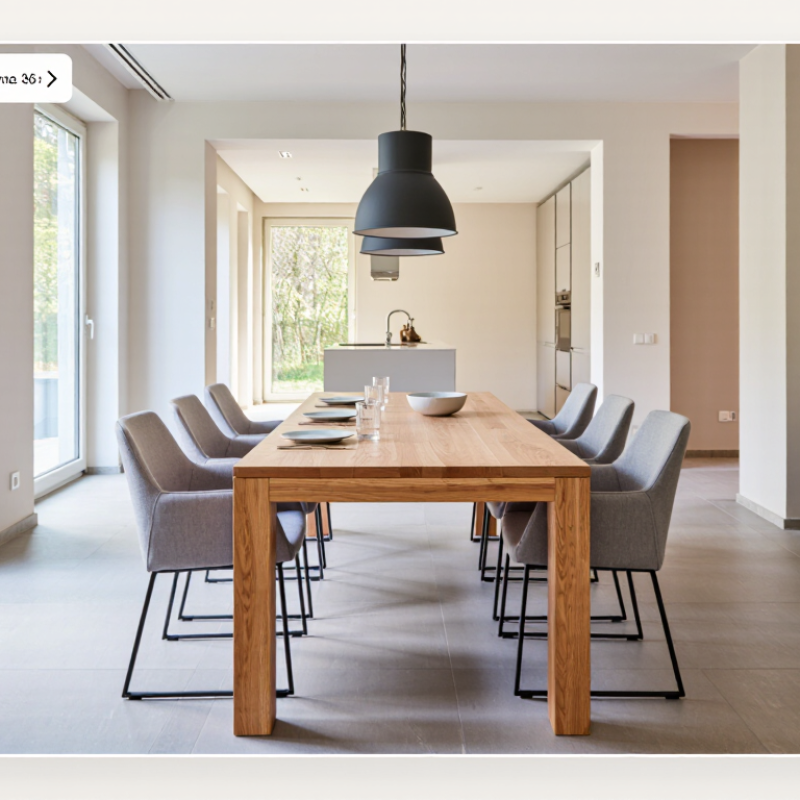
Define Your Dining Space, Household Needs, and Usage Patterns
How to Choose the Right Dining Table in 2026?
Start with the room, not the table. Measure the usable floor area after placing chairs, lighting, and storage. The National Kitchen and Bath Association recommends about 36 inches for comfortable circulation. A table can fit on paper and still feel cramped in daily use. Mark its footprint with painter’s tape. Walk around it while carrying plates.
Household size matters, but habits matter more. The U.S. Census Bureau’s 2023 American Community Survey reports an average household size of about 2.6 people. A compact four-seat table may suit everyday meals, while an extendable design handles guests without consuming the room. Allow roughly 24 inches of table width per diner. Children, wider chairs, and shared dishes may require more space.
Usage patterns reveal the better shape. The Bureau of Labor Statistics’ 2023 American Time Use Survey shows adults spend about 1.2 hours daily eating and drinking. If the table also hosts homework, remote work, or crafts, choose a durable surface and generous depth. Round tables improve conversation in tight spaces. Rectangular tables usually serve larger groups efficiently. I once favored a beautiful narrow table, but laptops quickly exposed its weakness. Measure real objects, not imagined routines. Your ideal choice may be less stylish, but easier to live with.
Compare Table Materials, Construction, and Long-Term Durability
A dining table should survive more than a showroom inspection. In daily use, hot plates, spilled drinks, chair impacts, and repeated wiping expose weak materials quickly. Solid hardwood usually allows sanding and refinishing, but its moisture movement can cause seasonal gaps or cupping. The USDA Forest Products Laboratory’s Wood Handbook explains that wood changes dimension as moisture content changes. Leave expansion space in the construction, especially for wide tops.
Engineered wood can offer better dimensional stability and lower cost. However, edge sealing matters greatly. The U.S. Environmental Protection Agency’s TSCA Title VI limits formaldehyde emissions to 0.09 ppm for hardwood plywood, 0.11 ppm for medium-density fiberboard, and 0.13 ppm for particleboard. Ask for compliance documentation, not vague “eco-friendly” wording. Veneer over a stable core may look convincing, but damaged edges are difficult to repair. I have seen attractive surfaces fail where moisture reached the substrate.
Construction often matters more than the material label. Look for mortise-and-tenon joints, reinforced corner blocks, strong aprons, and replaceable hardware. Tables should not rock when pressure is applied diagonally. EN 12521:2010 provides safety, strength, and durability requirements for domestic tables, while testing organizations commonly repeat load and stability assessments. These tests are useful, but home use is messier. A perfect laboratory result cannot predict every careless move. Check the underside, lift one corner, and inspect how the legs connect. Measure twice. Surface beauty fades; repairability keeps the table useful.
How to Choose the Right Dining Table in 2026?
Solid hardwood generally offers the longest service life and the best repairability. Tempered glass resists moisture and staining, while laminate and engineered wood provide practical everyday performance at a lower cost. MDF is affordable but is more vulnerable to prolonged moisture exposure and edge damage.
Ratings use a 1–10 comparative scale based on commonly documented material properties, construction behavior, resistance to everyday wear, and repair potential. They are material-level comparisons and do not represent any company or brand.
Evaluate Style, Maintenance, Budget, and Future Flexibility
Choosing the right dining table in 2026 starts with how your room actually works, not a showroom photograph. Measure the cleared floor area, doorways, and walking routes before comparing finishes. Leave about 36 inches around the table for comfortable movement, especially near drawers or kitchen islands. I have found that a beautiful six-seat table feels cramped when chairs cannot slide back. Style should support daily habits. A rounded edge softens busy rooms, while a rectangular shape suits formal meals and shared work. Check the surface in daylight. Glossy finishes reveal fingerprints quickly; textured surfaces hide them better, though crumbs may collect in their grooves.
Maintenance affects the table long after delivery. Ask how the surface responds to hot plates, spilled tea, moisture, and repeated wiping. Solid wood may age attractively, but it can shift with humidity and need occasional care. Veneered or coated surfaces can simplify cleaning, yet damaged areas may be harder to repair invisibly. Use coasters and washable mats, but do not assume they prevent every mark. Children, pets, and rushed breakfasts expose weak finishes quickly. That is practical evidence, not pessimism.
Set a complete budget including chairs, delivery, assembly, protectors, and future refinishing. A low purchase price can become expensive when replacement parts or custom repairs are unavailable. Prioritize strong joinery, stable legs, and accessible care instructions over decorative details. For future flexibility, choose an extendable design only if the mechanism feels secure and storage is realistic. Measure extension leaves before buying. A table that changes with your household may serve longer, but extra hardware can fail. I would photograph the mechanism, keep the care guide, and question any promise that sounds absolute.
