Aegis provides affordable, low power Wi-Fi sensor network solutions that make a ubiquitous sensing world come alive and a full line of controlled temperature cabinets. Laboratory, Pharmacy and Chromatography refrigerators and freezers which are designed to meet the dimensional and temperature requirements of the scientific community.

What Is a Motorized Pergola and How Does It Work?
A Motorized Pergola is an outdoor shade structure with adjustable roof louvers powered by a small electric motor. With a wall switch, remote control, or smart-home app, homeowners can change the roof angle in seconds. Open louvers admit sunlight and fresh air. Closed louvers create shade and help redirect light rain. The result feels more controlled than a fixed patio cover, especially during changing weather.
Inside the frame, a motor turns a drive shaft connected to several louvers. These linked panels rotate together, keeping the roof movement smooth and coordinated. Many systems include limit switches that stop the motor at fully open or closed positions. Some models also use rain, wind, or sunlight sensors. However, sensor performance depends on installation quality, maintenance, and local conditions. Technology helps, but it is not magic.
A well-designed Motorized Pergola can make a patio more useful for dining, relaxing, or entertaining. Aluminum frames usually resist moisture and require less upkeep than untreated wood. Still, buyers should check drainage paths, electrical requirements, wind ratings, and warranty terms before installation. A professional installer can evaluate the wall structure, wiring route, and ground level. Small mistakes may cause water pooling or uneven louver movement. That detail is easy to overlook. This guide explains how the system works, what components matter, and where practical limitations may appear. It also considers operating costs, maintenance needs, and everyday user experience, so readers can make a more informed decision rather than choosing only by appearance.
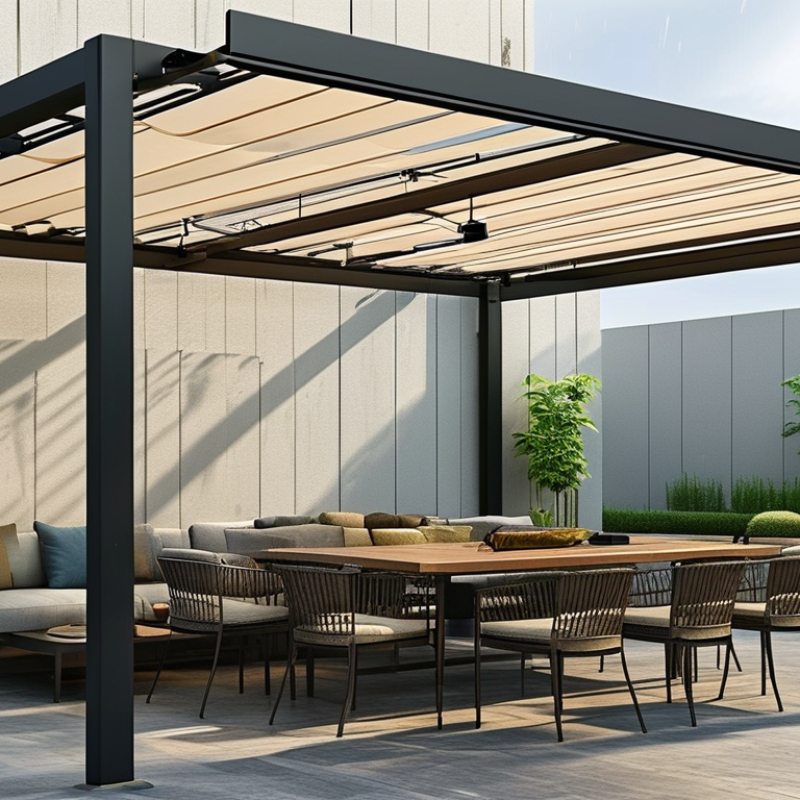
Table of Contents [Hide]
What Is a Motorized Pergola?
A motorized pergola is an outdoor shade structure with adjustable roof slats powered by a small electric motor. Unlike a fixed canopy, its louvers rotate to manage sunlight, airflow, and light rain. Pressing a wall switch, remote, or phone control changes the roof angle. Some systems also use sensors that close the louvers when rain or strong wind is detected. It is not a fully enclosed room. That distinction matters.
Most units use aluminum frames, sealed wiring, and channels that guide water toward posts and drainage outlets. During installation, the structure must stand on a level, strong base. A technician should check post anchoring, electrical connections, roof alignment, and local load requirements. From practical use, small gaps, motor noise, or slower movement in cold weather can occur. These details are normal, but poor installation can make them worse.
A motorized pergola can extend outdoor use, but it still needs care. Clear leaves from drainage channels and inspect seals after heavy weather. Keep the control system dry and test manual operation if power fails. Wind protection is often misunderstood; a closed roof does not make every structure storm-proof. I would also question glossy promises about maintenance-free operation. Moving parts eventually need inspection, even when the system looks simple.
Contact Us
Phone
Toll Free: 1-800-796-2344
OH: 513 204 5837
PA: 215-281-9180
support@site_367d8ed1-a876-442b-a1d7-b1fc1cf4ed19