Aegis provides affordable, low power Wi-Fi sensor network solutions that make a ubiquitous sensing world come alive and a full line of controlled temperature cabinets. Laboratory, Pharmacy and Chromatography refrigerators and freezers which are designed to meet the dimensional and temperature requirements of the scientific community.

What Is a Portable Treadmill and How Does It Work?
A Portable Treadmill is a compact walking or running machine designed for easier movement between rooms, offices, or homes. It usually includes a slim frame, a moving belt, a small electric motor, and basic speed controls. Some models fold nearly flat and slide beneath a bed or sofa. Others include transport wheels for smoother repositioning.
The mechanism is simple. The motor turns rollers beneath the belt, while the belt moves backward at a selected speed. Your feet move forward to maintain position. Sensors and a control panel may track speed, time, distance, and calories. Many walking pads use a remote control, which is convenient when the display sits several feet away. Still, convenience can create careless habits.
Dr. James Levine, a physician and movement researcher, expressed the health principle clearly: “The human body was designed to move.” His statement supports the practical value of a Portable Treadmill, especially for people facing long periods of desk work. However, a compact machine is not automatically safe or effective. Belt length, motor strength, cushioning, noise, user weight, and available floor space all matter. A narrow belt may feel restrictive during faster walking. A lightweight frame may shift on smooth flooring. Small details become important.
This guide explains how a Portable Treadmill works, what its main parts do, and where its design has limits. It also considers setup, maintenance, walking technique, and realistic home use. The term “portable” can sound more capable than it is. That deserves a closer look.
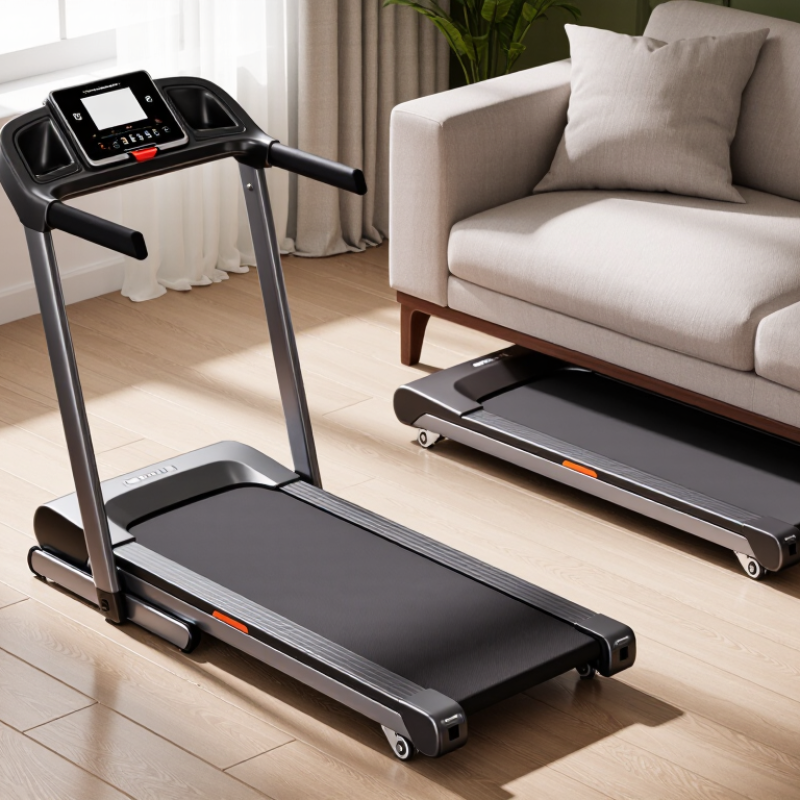
Table of Contents [Hide]
Portable Treadmill: Definition and Main Characteristics
A portable treadmill is a compact exercise machine designed for easy movement, storage, and indoor walking or running. Unlike a fixed gym treadmill, it usually has a lighter frame, a shorter running deck, and transport wheels. Many models fold vertically or flatten under furniture. However, portability is not absolute. A machine weighing 25 kilograms can still feel awkward on stairs.
Its main working parts are simple. An electric motor turns rollers beneath a moving belt, while the user controls speed through a console or remote controller. Sensors may track time, distance, speed, and estimated calories. Some models provide manual or motorized incline, but compact designs often offer less elevation than full-size equipment. During practical use, I have found that belt length matters more than appearance. A narrow deck can make a natural stride feel restricted.
Noise, stability, and weight capacity deserve careful attention. A lighter treadmill may be easier to move, yet it can vibrate more on hard flooring. Rubber feet help, but they cannot correct every uneven surface. The motor should match the intended activity, because frequent running creates greater heat and mechanical stress than casual walking. Before using one, check the belt alignment, emergency stopping feature, power connection, and clearance around the machine. Small details matter. A portable treadmill saves space, but it still needs regular cleaning, lubrication when specified, and honest expectations about performance.
What Is a Portable Treadmill and How Does It Work? – Portable Treadmill: Definition and Main Characteristics
| Data Dimension | Portable Treadmill Information | Practical Significance |
|---|---|---|
| Definition | A portable treadmill is a compact exercise machine designed to be moved, stored, or used in different locations more easily than a traditional full-size treadmill. | It is suitable for apartments, home offices, bedrooms, and other spaces where permanent fitness equipment may be inconvenient. |
| Main Exercise Mode | Most portable models are intended for walking or light jogging. Some include a raised handrail and support higher speeds for running. | The suitable activity depends on the treadmill’s speed range, deck size, motor capacity, and user weight rating. |
| Operating Principle | An electric motor turns a front roller. The roller moves a continuous belt around the walking deck, creating a moving surface for walking or running. | The user keeps pace with the moving belt while the deck supports the body and reduces the need for outdoor space. |
| Power Source | Electric portable treadmills normally use household mains electricity. Manual models operate through the user’s walking force and do not require a motor. | A powered model provides more consistent speed control, while a manual model can be simpler and less dependent on electrical access. |
| Folding Structure | Many portable treadmills use a folding deck, folding handrail, or a slim deck that can slide under furniture when not in use. | The storage method should be checked against the available clearance under a bed, sofa, desk, or wall-mounted storage area. |
| Typical Portability Features | Common features include transport wheels, a relatively slim frame, folding components, and a lower overall profile than many conventional treadmills. | Portability is determined by both physical size and actual lifting or rolling weight, not by folding capability alone. |
| Speed Range | Speed ranges vary by model. Walking-focused units commonly provide low-to-moderate speeds, while running-capable models offer higher maximum speeds. | The maximum speed should match the intended exercise: relaxed walking, brisk walking, jogging, or running. |
| Incline Function | Some portable treadmills have no incline, while others provide manual or motorized incline adjustment. | Incline increases workout intensity, but it can also increase motor load and may require additional clearance. |
| Walking Belt | The belt is the moving surface on which the user walks or runs. Portable models often have a narrower or shorter belt than full-size running treadmills. | A longer and wider belt generally provides more freedom of movement, especially for taller users or faster exercise. |
| Shock Absorption | Many models use cushioning elements beneath the deck to reduce impact compared with walking or running on some hard outdoor surfaces. | Cushioning can improve comfort, but its effect varies with the deck design, user weight, footwear, and exercise speed. |
| Control System | Controls may be located on the console, handrail, remote control, or a connected application, depending on the model. | Accessible speed controls and a clearly visible display make it easier to adjust intensity safely during exercise. |
| Displayed Metrics | Common metrics include elapsed time, speed, distance, and sometimes estimated calories, heart rate, or workout programs. | Displayed values help users monitor exercise, although calorie and heart-rate estimates may not be exact. |
| Safety Components | Typical safety elements include a start-and-stop control, a safety key or emergency stop mechanism, non-slip foot rails, and a stable handrail on supported models. | Users should attach or use the safety mechanism as instructed and keep the area around the treadmill clear. |
| Weight Capacity | The supported user weight differs by model and is specified by the manufacturer. It should not be assumed from the treadmill’s physical size. | Selecting a unit with an appropriate capacity can support stability, performance, and equipment longevity. |
| Noise Considerations | Noise comes from the motor, belt movement, deck, and the user’s foot strikes. Actual sound levels vary with speed, flooring, and maintenance. | A firm, level floor and regular belt maintenance can help reduce vibration and unwanted noise. |
| Maintenance Needs | Routine care may include cleaning the belt and deck area, checking alignment and tension, lubricating compatible components, and inspecting power connections. | Following the user manual is important because lubrication requirements and adjustment procedures differ among treadmill designs. |
| Best Use Case | Portable treadmills are particularly useful for convenient indoor walking, regular low-impact exercise, step goals, and workouts in limited spaces. | They are most effective when the treadmill’s deck size, speed, stability, storage method, and user capacity match the intended routine. |
Contact Us
Phone
Toll Free: 1-800-796-2344
OH: 513 204 5837
PA: 215-281-9180
support@site_367d8ed1-a876-442b-a1d7-b1fc1cf4ed19