Aegis provides affordable, low power Wi-Fi sensor network solutions that make a ubiquitous sensing world come alive and a full line of controlled temperature cabinets. Laboratory, Pharmacy and Chromatography refrigerators and freezers which are designed to meet the dimensional and temperature requirements of the scientific community.

China Top Non Woven Mask Manufacturers for Global Buyers
China has become a major sourcing destination for disposable protective masks. Its manufacturers serve hospitals, distributors, retailers, and industrial buyers worldwide. Yet choosing a reliable supplier requires more than comparing prices. A professional Non-Woven Mask manufacturer should demonstrate stable production, documented quality controls, and clear communication.
This guide examines leading Chinese suppliers through practical buyer concerns. These include raw material consistency, meltblown filtration layers, ultrasonic ear-loop welding, packaging accuracy, and production capacity. Factory experience matters when large orders require dependable delivery. A capable supplier should also provide product specifications, test reports, sample approval, and traceable batch information. Small details matter. A loose ear loop can damage customer confidence.
Compliance must be checked for the destination market. Buyers should confirm applicable standards, labeling rules, and required documentation before placing an order. Certifications should be verified independently where possible. A polished website proves little. Factory audits, video inspections, and physical samples offer stronger evidence. Still, no evaluation is perfect. Supplier conditions may change, and test results may not represent every production batch. This guide therefore encourages careful comparison, direct questions, and written agreements covering quality, lead time, packaging, and after-sales support. The strongest manufacturers are not always the cheapest. They are usually the suppliers that explain limitations clearly and respond consistently when problems appear.
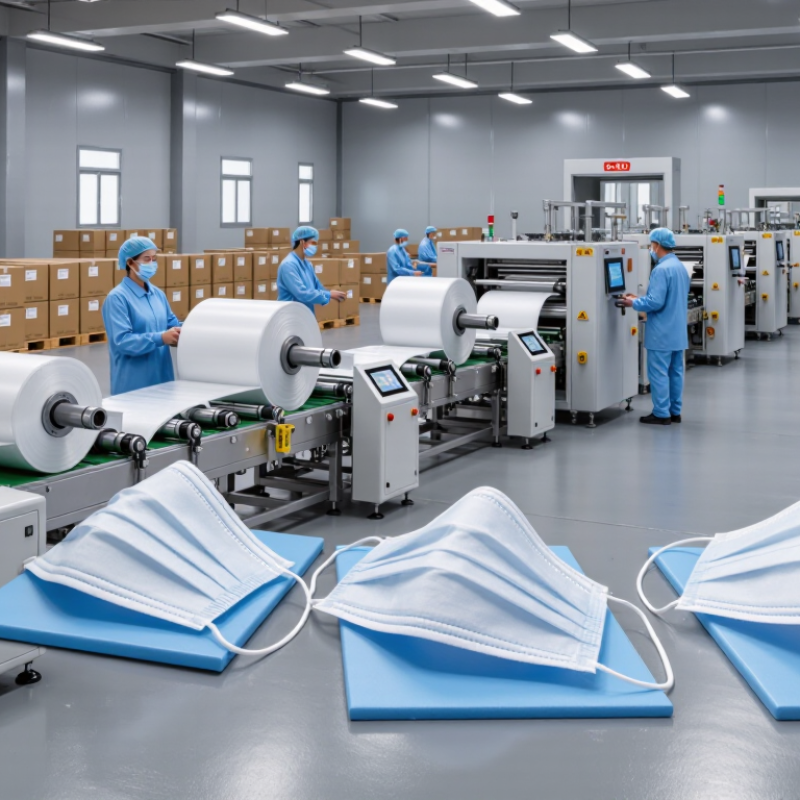
Table of Contents [Hide]
China’s Nonwoven Mask Industry: Capacity, Standards, and Global Demand
China’s nonwoven mask industry combines large-scale converting lines with mature spunbond and meltblown supply chains. China Customs reported 224.2 billion masks exported in 2020, showing exceptional emergency capacity. That figure reflects a crisis peak, not normal demand. It should not guide every purchasing decision.
Global buyers now examine performance, documentation, and supply reliability. The World Health Organization estimated global demand at 89 million medical masks monthly during the early pandemic. Current orders are more selective, but hospitals, workplaces, and emergency stockpiles still require consistent filtration.
Relevant standards include GB/T 38880 in China, EN 14683 in Europe, and ASTM F2100 in the United States. Testing should confirm bacterial filtration, particle filtration, breathing resistance, splash resistance, and skin safety.
Capacity claims can sound impressive. Audited production records matter more.
Tips: Request recent laboratory reports, production photographs, and batch traceability. Check whether the report matches the exact mask model. Ask about meltblown storage and incoming-material inspection. A low price may hide unstable filtration or weak elastic attachment. Buyers should also review export packaging, pallet protection, and sampling procedures before signing large contracts. Smithers’ face-mask market research indicates demand is moving toward quality-focused, application-specific products. That shift is practical, though forecasts remain uncertain. Forecasts can age badly.
Contact Us
Phone
Toll Free: 1-800-796-2344
OH: 513 204 5837
PA: 215-281-9180
support@site_367d8ed1-a876-442b-a1d7-b1fc1cf4ed19