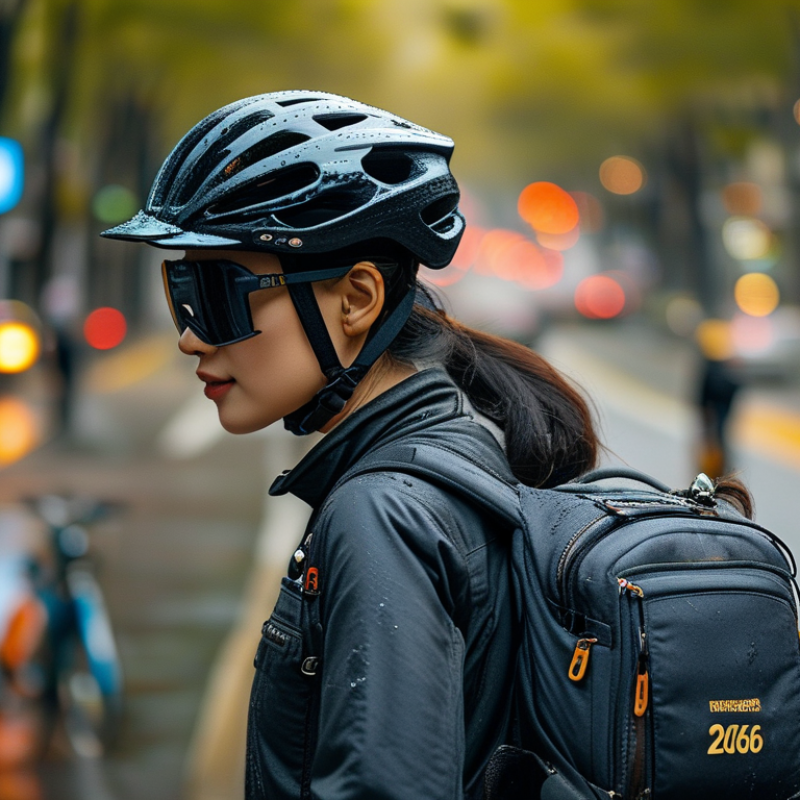
| Cycling Helmet | Impact protection and fit | Look for compliance with EN 1078, CPSC 16 CFR Part 1203, AS/NZS 2063, or JIS T8134, depending on the destination market. | Safety-first design
Improved ventilation, rotational-impact mitigation, and adjustable retention systems. | Correct head-size range, secure rear adjustment, reflective details, and documented certification for the target market. | Certification requirements differ by country. A helmet should be replaced after a significant impact, even if no visible damage exists. |
| Front and Rear Lights | Visibility, beam control, and runtime | Typical rechargeable products offer approximately 100–800 lumens for front lights and 10–200 lumens for rear lights. | Daytime visibility
Wide-angle flash patterns, automatic brightness control, and improved side visibility. | Front light with several modes, rear light with side visibility, low-battery warning, and weather-resistant construction. | Road-use rules vary. Germany, for example, applies specific StVZO requirements; flashing modes may be restricted in some jurisdictions. |
| Light Mounting System | Security and compatibility | Tool-free mounts are convenient, but the light should remain secure on rough roads and fit the handlebar or seatpost diameter. | Quick-release modularity
One mount supporting multiple accessories and improved anti-slip materials. | Silicone or rubber interface, positive locking mechanism, and compatibility with common round handlebar sizes. | Check whether the mount fits aero-shaped handlebars, seat bags, baskets, or racks before purchase. |
| Reflective Clothing and Accessories | Passive visibility | Reflective material returns light toward a light source; fluorescent colors improve daytime conspicuity but do not replace active lighting. | 360° visibility
Reflective zones on the torso, limbs, ankles, bags, and moving parts. | Reflective strips or panels on multiple sides, breathable fabric, and visibility from the front, rear, and side. | Useful across commuting environments, especially at dawn, dusk, rain, and intersections where side visibility is important. |
| Cycling Gloves | Grip, pressure distribution, and weather protection | Padding can reduce pressure points, but excessive padding may reduce handlebar feel and control. | Comfort engineering
Breathable fabrics, touchscreen-compatible fingertips, and strategically placed padding. | Non-slip palm, secure wrist closure, breathable back panel, and sizing based on hand circumference. | For hot climates, prioritize ventilation; for cold climates, consider insulation without restricting brake-lever access. |
| Padded Cycling Shorts | Chafing control and moisture management | A properly fitted chamois should remain stable and lie flat; thicker padding is not automatically more comfortable. | Long-ride comfort
Multi-density padding, flat seams, and quick-drying technical fabrics. | Snug fit without compression discomfort, smooth leg grippers, breathable fabric, and padding matched to riding duration. | Fit varies significantly by body shape. Buyers should check garment measurements rather than relying only on standard size labels. |
| Panniers and Bike Bags | Capacity, waterproofing, and load stability | Water-resistance ratings should be stated clearly; IP ratings apply to enclosures tested under IEC 60529 and may not describe every textile bag. | All-weather commuting
Roll-top closures, welded seams, modular attachment systems, and reflective panels. | Typical commuting capacity: 10–25 litres per side for panniers; stable mounting and reinforced contact points. | Confirm rack compatibility, maximum supported load, closure style, and whether the bag includes a shoulder strap or carrying handle. |
| Cycling Computer and GPS Device | Navigation, sensor support, and battery life | Typical dedicated cycling computers provide approximately 10–40 hours of operating time, depending on navigation, screen, and connectivity settings. | Connected navigation
Turn-by-turn routing, elevation data, incident alerts, and wireless sensor integration. | Readable screen in sunlight, water resistance, reliable positioning, route recalculation, and support for common Bluetooth or ANT+ sensors. | Map availability, mobile-data requirements, satellite coverage, and local language support should be checked before purchase. |
| Electronic Bicycle Bell or Alert Device | Audibility and legal compliance | Sound requirements and permitted alert devices vary by jurisdiction; some locations require a conventional bell. | Low-distraction alerts
Multiple tones, tactile controls, and easy access without removing the hand from the bar. | Clear audible output, weather-resistant controls, secure mounting, and a backup method where required by local law. | Check local regulations before importing an electronic horn or high-volume alert device for public-road use. |
| Phone Mount | Vibration protection and retention | Mount performance depends on the phone, case, bicycle, road surface, and attachment system; no universal vibration rating exists. | Stable smart access
Improved locking mechanisms, vibration-damping interfaces, and one-handed positioning. | Secondary retention for rough terrain, adjustable viewing angle, secure clamp, and compatibility with the phone case. | High-frequency vibration can affect some phone camera stabilization systems; a vibration-damping solution is preferable for frequent use. |
| Portable Bicycle Pump | Pressure range and valve compatibility | Road tires commonly operate at higher pressures than many urban or mountain-bike tires; the correct pressure is printed on the tire sidewall or specified by the manufacturer. | Compact emergency repair
Dual-valve heads, flexible hoses, pressure gauges, and compact electric options. | Secure valve connection, lockable head, pressure gauge where practical, and a stated maximum pressure above the intended tire pressure. | Confirm compatibility with Presta and Schrader valves, replacement seals, charging method, and airline or transport restrictions for electric pumps. |
| Multi-Tool and Repair Kit | Repair coverage and portability | A practical kit should match the bicycle’s actual fasteners and include tire levers, a patch or plug solution, and a chain-repair method when required. | Self-sufficient riding
Integrated chain tools, tubeless plug tools, compact storage, and corrosion-resistant finishes. | Hex keys commonly used on the bicycle, compatible Torx sizes where needed, tire levers, patches, and spare master-link or chain tool if applicable. | Tool compatibility is bicycle-specific. Buyers should inspect every fastener before selecting a compact tool. |
| Tubeless Tire Repair Kit | Puncture sealing capability | Suitable only for compatible tubeless systems. Larger cuts may require an internal tire boot or tire replacement rather than a plug alone. | Fast roadside repair
Compact plug insertion tools, improved storage, and sealant-compatible components. | Plug sizes matched to the tire, insertion tool with protective storage, spare plugs, and compatible sealant. | Sealant performance depends on temperature, puncture size, tire casing, and maintenance interval; carry a backup inflation method. |
| Smart Helmet or Crash Sensor | Detection accuracy and emergency communication | Crash detection is not guaranteed to identify every incident. Cellular emergency features require network coverage, a compatible service, and often an active subscription. | Connected safety
Automatic incident alerts, location sharing, integrated lighting, and privacy controls. | Clear alert-cancellation process, documented battery runtime, secure sensor placement, and visible status indicators. | Verify cellular bands, regional emergency-number support, data roaming, subscription terms, and personal-data handling before cross-border use. |
| E-Bike Battery and Charger Accessories | Electrical safety and transport compliance | Rechargeable lithium batteries for transport are commonly assessed under UN 38.3 testing requirements; charger and battery compatibility must be exact. | Safer energy management
Battery health monitoring, certified chargers, thermal protection, and secure weather-resistant connectors. | Use only the specified voltage, current, connector, and charging protocol; avoid damaged, swollen, or overheating batteries. | Air and postal transport rules can restrict lithium batteries. Check watt-hour limits, documentation, and destination-country requirements. |
| Water Bottle and Cage | Leak resistance and bottle retention | Common cycling bottles are typically sized around 500–750 ml; insulated versions are usually heavier and may have lower capacity. | Hydration convenience
Soft-squeeze bottles, insulated designs, tool-free cages, and recycled-material options. | Secure cage grip, easy-clean opening, leak-resistant cap, and bottle diameter compatible with the frame or cage. | Consider local heat, water availability, cleaning access, and whether the material is suitable for repeated food contact. |