Aegis provides affordable, low power Wi-Fi sensor network solutions that make a ubiquitous sensing world come alive and a full line of controlled temperature cabinets. Laboratory, Pharmacy and Chromatography refrigerators and freezers which are designed to meet the dimensional and temperature requirements of the scientific community.

China Top Operation Theatre Surgical Light Manufacturers
Choosing a reliable Operation Theatre Surgical Light manufacturer requires more than comparing brightness, prices, or catalogue images. Surgical teams need stable illumination during long procedures, especially when shadows, tissue color, and narrow working areas affect clinical decisions. Chinese manufacturers now offer a broad range of LED operating lights, from compact single-dome systems to ceiling-mounted configurations for complex theatres. Quality varies.
This guide examines manufacturers through practical and professional criteria. These include optical performance, color rendering, shadow control, sterile-handle design, arm movement, heat management, and service support. It also considers documented quality systems and relevant medical-device standards, such as ISO 13485 and IEC 60601 requirements. Certifications matter, but they should not replace verification. Ask for test reports, installation references, warranty terms, and maintenance procedures. A product may look impressive in a showroom yet feel stiff during positioning. That detail matters. So does the availability of replacement parts after installation.
The discussion reflects purchasing concerns from hospital engineers, operating-room planners, distributors, and clinical users. It highlights established Chinese suppliers while avoiding unsupported claims about market leadership. Readers should compare each manufacturer against their own surgical specialties, room dimensions, electrical conditions, and local regulatory requirements. No single model suits every theatre. Even experienced buyers can overlook glare, control-panel usability, or cleaning access. A careful evaluation remains essential. Performance in daily practice is the real measure.
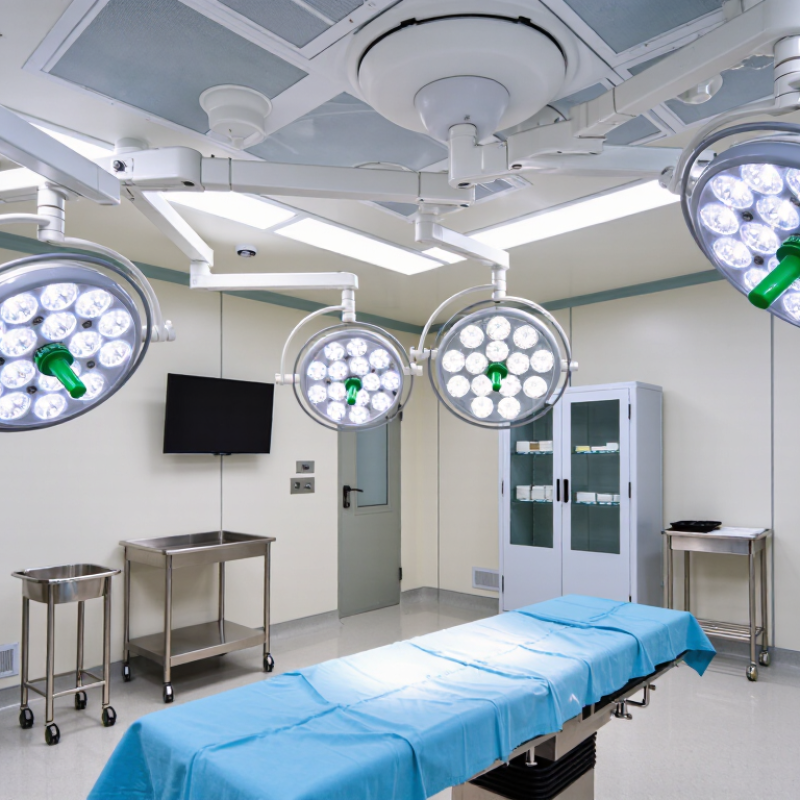
Table of Contents [Hide]
Definition and Role of Operation Theatre Surgical Lights
China Top Operation Theatre Surgical Light Manufacturers
Definition and Role of Operation Theatre Surgical Lights
An operation theatre surgical light is a medical luminaire designed to illuminate the surgical field without distracting shadows. It must reveal tissue color, depth, edges, and fluid boundaries accurately. In daily operating-room practice, surgeons also need stable light during movement, draping, and instrument changes.
The IEC 60601-2-41 standard addresses essential safety and performance requirements for surgical and diagnostic luminaires. Common systems provide approximately 40,000 to 160,000 lux, depending on the model and clinical task. However, maximum brightness is not the only measure of quality. Excessive glare can increase eye fatigue, while poor color rendering may weaken visual judgment. The World Health Organization reports that surgical-site infections affect about 11% of surgical patients worldwide. Proper lighting cannot prevent every infection, but it supports cleaner visualization and more controlled procedures. That role is often underestimated.
Tips: Check illuminance, color rendering, shadow control, heat output, and sterile-handle design. Ask for test records, not only product claims. Verify performance after installation. A light can meet specifications yet feel uncomfortable in a real theatre. Staff feedback matters, and it should be recorded rather than assumed.
Contact Us
Phone
Toll Free: 1-800-796-2344
OH: 513 204 5837
PA: 215-281-9180
support@site_367d8ed1-a876-442b-a1d7-b1fc1cf4ed19