Aegis provides affordable, low power Wi-Fi sensor network solutions that make a ubiquitous sensing world come alive and a full line of controlled temperature cabinets. Laboratory, Pharmacy and Chromatography refrigerators and freezers which are designed to meet the dimensional and temperature requirements of the scientific community.

What Are the Top Exterior Kitchen Cabinets?
Choosing the top Exterior Kitchen Cabinets requires more than comparing colors, door styles, and price tags. Outdoor cabinetry faces sunlight, rain, humidity, temperature changes, insects, and cooking grease. A cabinet that looks excellent in a showroom may swell, fade, or corrode beside a grill.
Russ Faulk, founder of Kalamazoo Outdoor Gourmet, has said, “Outdoor kitchens should be designed with the same care as indoor kitchens.” That principle remains practical. The best cabinets use weather-resistant materials, sealed edges, reliable hardware, and construction suited to the local climate. Marine-grade polymer, stainless steel, and properly finished aluminum are common choices. However, no material is maintenance-free. Even stainless steel needs regular cleaning near salt air.
This guide examines leading cabinet options through durability, storage, installation, appearance, and long-term value. It also considers real outdoor use. Think wet towels, hot pans, dusty weekends, and sudden storms. Small details matter. Adjustable shelves help. Soft-close hinges improve daily use. Ventilation can protect enclosed equipment. Poor drainage cannot.
There is no universal winner. A coastal homeowner may prioritize corrosion resistance, while a dry-climate buyer may focus on UV stability. Budget changes the decision, too. Sometimes, the most expensive cabinet is not the most suitable one. That is worth remembering.
The recommendations draw on material performance, professional design guidance, and practical installation experience. Still, product claims should be checked carefully. Climate, workmanship, and maintenance can change the outcome. The top Exterior Kitchen Cabinets are not merely attractive; they should remain useful, stable, and safe through years of outdoor cooking.
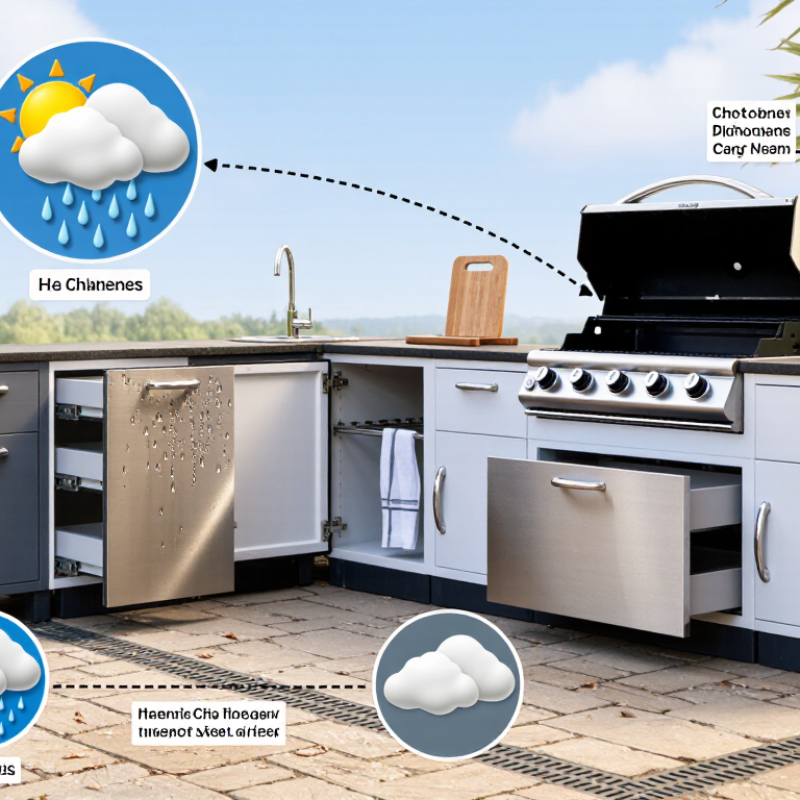
Table of Contents [Hide]
Types of Exterior Kitchen Cabinets and Their Best Uses
Exterior kitchen cabinets must withstand sunlight, rain, humidity, and changing temperatures. The best type depends on your climate and cooking habits. Marine-grade polymer cabinets suit fully exposed patios because they resist moisture, fading, and swelling. They are practical, though their appearance can feel less warm than natural wood.
Stainless steel cabinets work well for frequent cooking and demanding outdoor spaces. They handle heat, grease, and repeated cleaning with confidence. However, fingerprints and surface scratches appear quickly. Powder-coated aluminum offers a lighter option for rooftop kitchens or balconies. It resists rust, but poor-quality finishes may fade under strong sunlight. I would inspect the coating thickness before purchasing.
Teak and other weather-resistant hardwoods bring a richer, residential look to covered patios. They need regular sealing, especially near pools or coastal air. Without maintenance, the surface can dry, crack, or turn gray. High-density polyethylene cabinets are useful around wet bars and pool kitchens. They do not absorb water easily and clean quickly. Still, they can expand slightly in extreme heat. Leave proper installation gaps. A cabinet installer should also use corrosion-resistant hinges, sealed edges, and adjustable legs. Small oversights matter outdoors. Even a strong cabinet can fail when water collects beneath it or wind-driven rain enters unprotected joints.
Contact Us
Phone
Toll Free: 1-800-796-2344
OH: 513 204 5837
PA: 215-281-9180
support@site_367d8ed1-a876-442b-a1d7-b1fc1cf4ed19