Aegis provides affordable, low power Wi-Fi sensor network solutions that make a ubiquitous sensing world come alive and a full line of controlled temperature cabinets. Laboratory, Pharmacy and Chromatography refrigerators and freezers which are designed to meet the dimensional and temperature requirements of the scientific community.

What Is a TV Cabinet Wall Unit?
A Tv Cabinet Wall Unit combines a television area with storage and display space in one coordinated installation. It may include a media console, open shelves, closed cabinets, and wall-mounted panels. Some designs also leave room for books, speakers, or a few personal objects. The exact layout varies. Not every unit includes every feature.
In practical terms, the unit helps organize a living room around the screen. A console can conceal game systems and cables, while shelves keep everyday items within reach. Before choosing one, measure the wall, television, and available floor space. Check where power outlets sit, too. These details can affect both installation and daily use. A wide cabinet may look balanced beneath a large screen, but it can overwhelm a narrow room. Small oversight, big effect.
Materials and construction also matter. Solid wood, engineered wood, metal, and glass each offer different appearances and care requirements. Ask how shelves are supported and whether the cabinet provides ventilation for electronics. Heat needs somewhere to go. If the unit will be mounted to a wall, confirm that its weight and fixing method suit the wall structure; a qualified installer can help assess this. Style is only part of the decision. A useful Tv Cabinet Wall Unit should fit the room, support the equipment safely, and make storage easier. It may still require compromises, especially when the wall has uneven surfaces or limited space. Measuring carefully—and being honest about what you actually need—makes the choice more reliable.
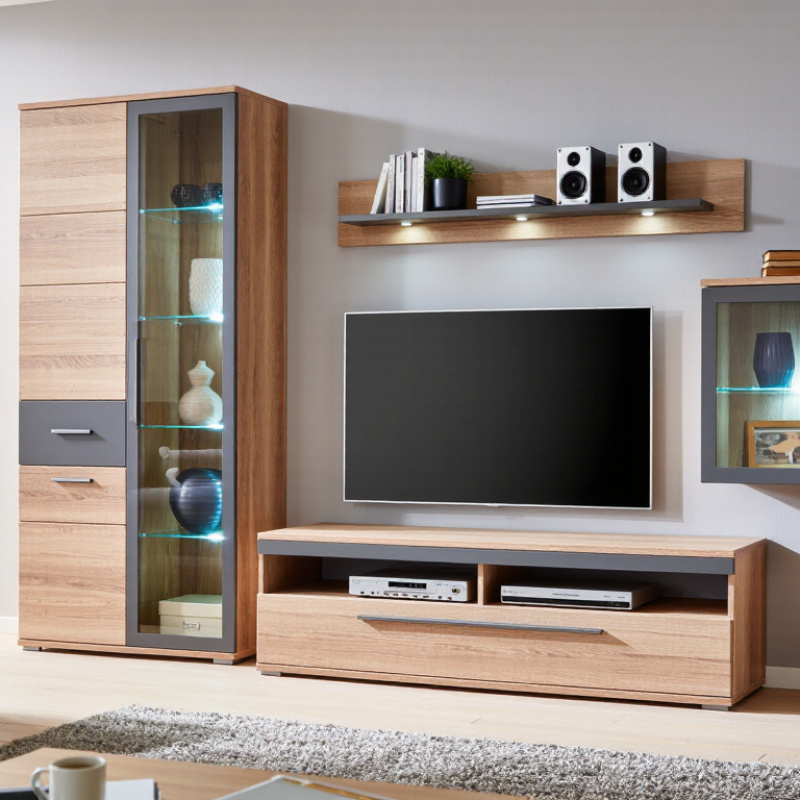
Table of Contents [Hide]
Definition and Role: How a TV Cabinet Wall Unit Combines Storage and Display
What Is a TV Cabinet Wall Unit?
Definition and Role: How a TV Cabinet Wall Unit Combines Storage and Display
A TV cabinet wall unit is a fitted furniture arrangement built around the television. It usually combines a lower cabinet, open shelving, wall panels, and enclosed compartments. Unlike a simple TV stand, it uses vertical wall space for both storage and display. The structure can hold media equipment, books, speakers, framed photographs, and everyday items.
Its main role is practical organization. The lower cabinet hides cables, game controllers, remote controls, and unused devices. Open shelves keep decorative objects visible without making the room feel completely closed. Wall-mounted sections can also create a visual frame around the screen. This helps the television sit naturally within the interior instead of appearing as an isolated black rectangle.
In real homes, careful planning matters. Measure the screen, wall width, viewing height, and power outlet positions before installation. Leave ventilation around electronic equipment, especially inside enclosed compartments. Sliding doors may reduce dust, but they can restrict airflow. I have seen attractive units become inconvenient because their shelves were too shallow for equipment. That mistake is easy to make. Adjustable shelving and hidden cable channels improve daily use. Still, a wall unit is not automatically better than a basic cabinet. It can feel heavy in a small room, and excessive open storage may create visual clutter. A balanced design should display a few meaningful objects while keeping practical items concealed.
Contact Us
Phone
Toll Free: 1-800-796-2344
OH: 513 204 5837
PA: 215-281-9180
support@site_367d8ed1-a876-442b-a1d7-b1fc1cf4ed19