Aegis provides affordable, low power Wi-Fi sensor network solutions that make a ubiquitous sensing world come alive and a full line of controlled temperature cabinets. Laboratory, Pharmacy and Chromatography refrigerators and freezers which are designed to meet the dimensional and temperature requirements of the scientific community.

Why Choose Laminated Wood Veneer Panels for Projects?
Why Choose Laminated Wood Veneer Panels for Projects?
Choosing Laminated Wood Veneer Panels involves more than selecting an attractive surface. These panels combine thin wood veneers with structural adhesives, creating a stable material for furniture, doors, wall features, and interior cabinetry. Their layered construction can reduce warping when temperature and humidity change. It also allows designers to use clear grain patterns across large surfaces.
The details matter. A panel beside a sunny window may face heat, glare, and repeated cleaning. Correct veneer direction, adhesive quality, edge sealing, and support spacing can influence its service life. Experienced fabricators also inspect the core, balance the panel, and allow the material to acclimate before installation. Small mistakes can become visible at joints.
Architect and mass-timber advocate Michael Green has observed, “Wood is the only structural material that grows naturally and can be replenished.” His statement reflects both the promise and responsibility of wood-based design. Laminated Wood Veneer Panels can help projects achieve a warm, tactile finish while using wood efficiently. However, they are not automatically sustainable or maintenance-free. Responsible sourcing, low-emission adhesives, careful manufacturing, and realistic moisture control still matter.
That is the less glamorous truth.
Project teams should compare certified sourcing, panel composition, fire performance, formaldehyde emissions, and local code requirements. They should also request samples before approving a finish. A beautiful sample can hide difficult edge behavior. Careful evaluation turns a decorative decision into a dependable specification.
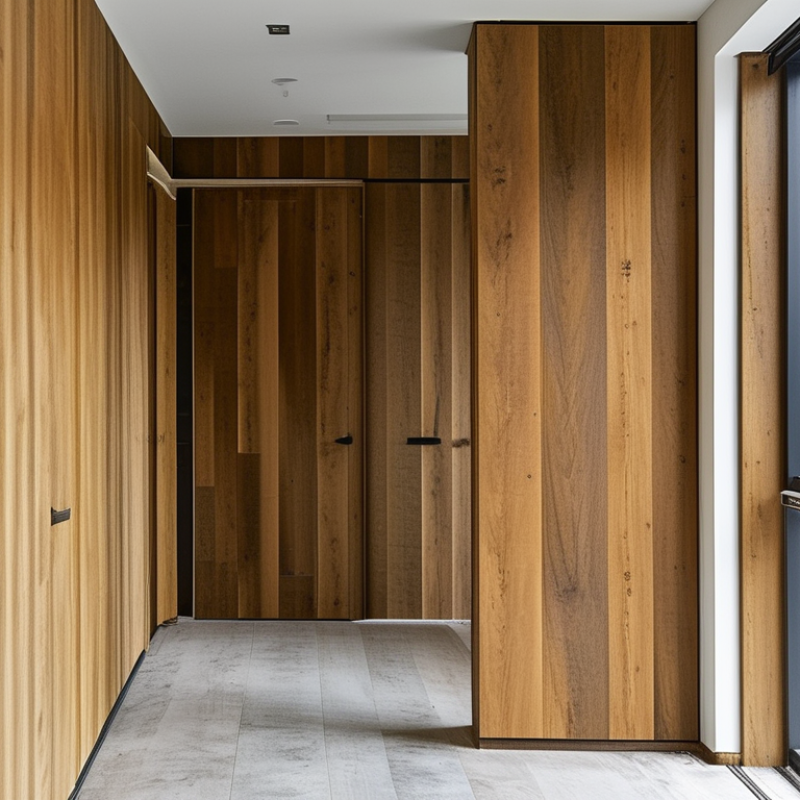
Table of Contents [Hide]
What Are Laminated Wood Veneer Panels?
Why Choose Laminated Wood Veneer Panels for Projects?
Laminated wood veneer panels are engineered boards with a real wood surface bonded to a stable core. The veneer may come from oak, walnut, maple, or other carefully sliced timber. Thin wood layers are pressed onto plywood, medium-density fibreboard, or another structural base. Construction varies.
This design creates the appearance of solid wood while using fewer natural resources. It also reduces movement caused by humidity and temperature changes. In practical projects, panels can cover walls, cabinet doors, ceilings, and built-in furniture. Their consistent thickness helps installers achieve clean joints and predictable dimensions. A clear finish can reveal the grain, while a tinted coating can adjust the color without hiding every detail.
However, laminated veneer is not maintenance-free. The exposed edges need proper sealing, especially near sinks or exterior doors. Poor bonding may cause lifting, bubbling, or visible seams. Before installation, inspect each panel under natural light and check its moisture content. I have found that rushed storage often creates problems later; panels should remain flat and protected from damp floors. Matching grain direction also requires patience. Small differences between sheets may remain visible, and that is not always a defect. It can be part of the wood’s character.
Contact Us
Phone
Toll Free: 1-800-796-2344
OH: 513 204 5837
PA: 215-281-9180
support@site_367d8ed1-a876-442b-a1d7-b1fc1cf4ed19