Aegis provides affordable, low power Wi-Fi sensor network solutions that make a ubiquitous sensing world come alive and a full line of controlled temperature cabinets. Laboratory, Pharmacy and Chromatography refrigerators and freezers which are designed to meet the dimensional and temperature requirements of the scientific community.

Why Choose Montessori Low Chairs for Toddlers?
A Montessori Low Chair can give toddlers a practical place to sit, draw, look at books, or join a snack. Its low seat makes getting on and off easier, while a child-sized table can bring crayons and cups within reach. Small details matter: feet should rest securely, the chair should feel steady, and the seat should suit the child’s size. Not every low chair is a good fit.
Montessori educator Maria Montessori wrote, “The hands are the instruments of man’s intelligence.” Her observation helps explain why a child’s environment matters: reachable materials invite purposeful action. A low chair may support that independence, but it cannot create it by itself. Not magic. Adults still need to check stability, supervise use, and adjust the setup as a toddler grows. A chair that looks charming in a room may be awkward in daily use, and that is worth admitting. Watch how the child climbs, sits, and stands; then consider whether the furniture supports those movements safely and comfortably. This introduction explores the practical reasons families choose a Montessori Low Chair, along with the fit and safety questions that deserve equal attention.
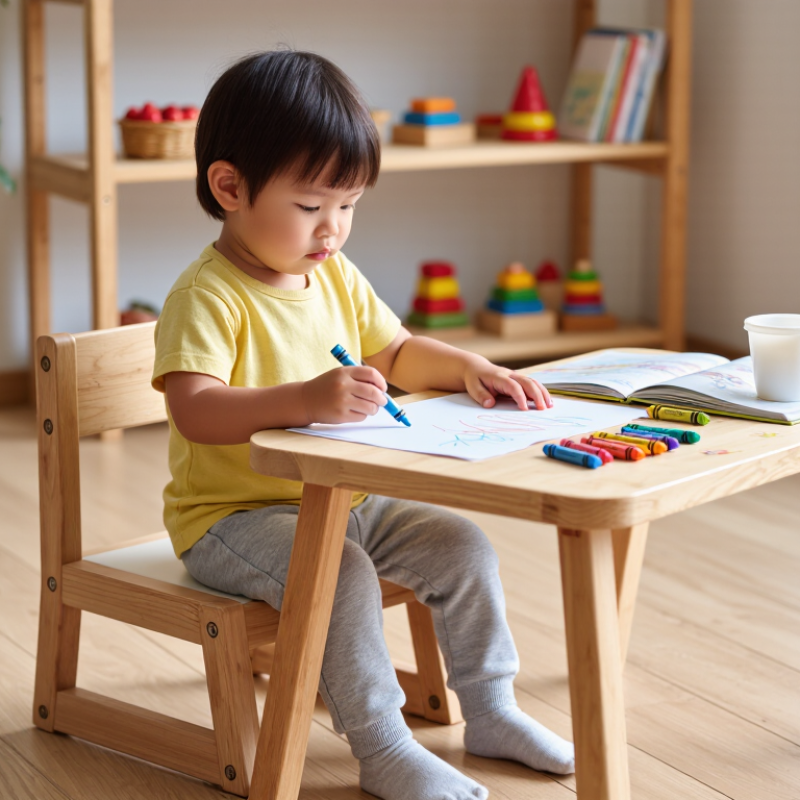
Table of Contents [Hide]
What Montessori Low Chairs Are and How They Differ
A Montessori low chair is a small, lightweight seat designed so a toddler can sit down and stand up with less adult help. Its seat is close to the child’s size, rather than scaled down only for appearance. When seated, a toddler should be able to place both feet on the floor and bend their knees comfortably. That matters.
Unlike many standard dining chairs, which are built for adults and used with booster seats, a low chair gives the child a direct place at their own height. It is often paired with a low table for drawing, puzzles, or a snack. The aim is practical access, not a special learning effect: children can choose a seat, move it carefully, and return to an activity with greater independence.
Look beyond the “Montessori” label. Check that the chair feels stable on your floor, has smooth edges, and suits the child’s current height and coordination. A chair that is too low or too light may frustrate a toddler, even if it looks right in a room. Fit also changes quickly as children grow. Still, fit varies. A simple test is to let the child sit and stand while you supervise, then watch whether their feet rest naturally and the seat stays steady.
Contact Us
Phone
Toll Free: 1-800-796-2344
OH: 513 204 5837
PA: 215-281-9180
support@site_367d8ed1-a876-442b-a1d7-b1fc1cf4ed19