Aegis provides affordable, low power Wi-Fi sensor network solutions that make a ubiquitous sensing world come alive and a full line of controlled temperature cabinets. Laboratory, Pharmacy and Chromatography refrigerators and freezers which are designed to meet the dimensional and temperature requirements of the scientific community.

Why Choose a Multipurpose Electric Kettle for Wholesale?
Wholesale buyers are looking beyond a kettle that only boils water. In homes, hotel rooms, and small offices, one appliance may need to prepare tea, instant coffee, or quick meals. A Multipurpose Electric Kettle can meet those needs while helping retailers offer more practical value in a compact product.
The market signals are worth watching, but they need context. Grand View Research estimated the global electric kettle market at about USD 1.65 billion in 2023, with projected growth through 2030. This is a market estimate, not a promise of sales for any wholesaler. Still, it suggests continued commercial interest in electric kettles. Buyers should compare that broad trend with their own customer feedback, price range, and local demand before placing large orders.
Details matter on the shelf. A removable filter, clear water-level markings, automatic shut-off, and a stable handle can make daily use easier. Multi-temperature settings or keep-warm functions may also appeal to tea drinkers and busy households. Yet extra features are not automatically better. They can raise costs, complicate instructions, or create more points for quality checks. That trade-off deserves a closer look.
For wholesale sourcing, assess capacity, material specifications, warranty terms, packaging, and supplier quality controls. Request product samples and test how the lid, switch, and base feel after repeated use. Small details show up quickly in customer reviews. Not every feature will suit every market. A careful choice balances usefulness, reliability, and landed cost—not just a crowded feature list.
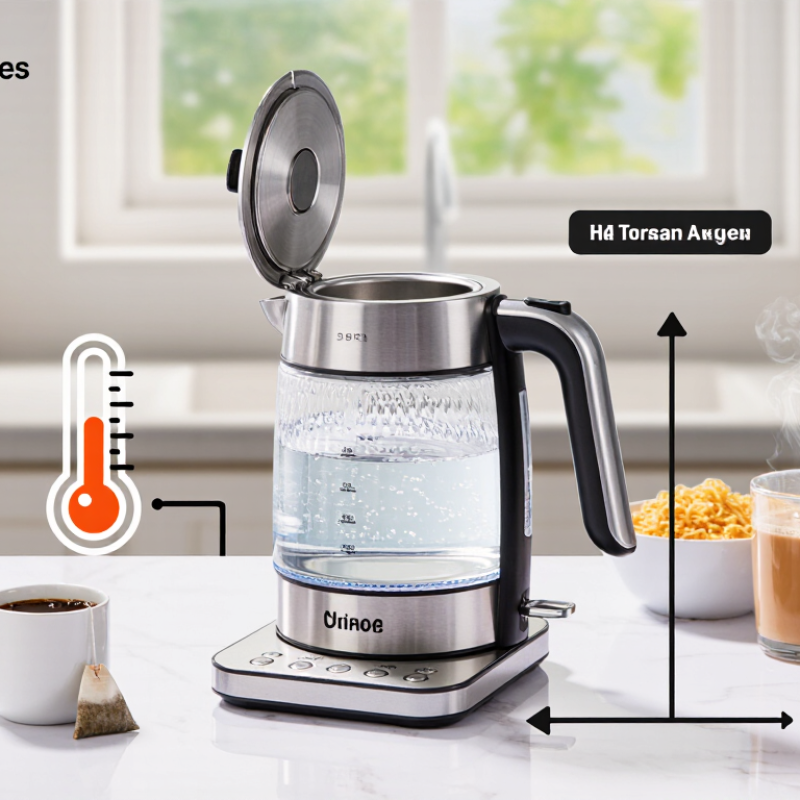
Table of Contents [Hide]
What Defines a Multipurpose Electric Kettle?
A multipurpose electric kettle does more than bring water to a boil. It combines practical functions, such as adjustable temperature settings, keep-warm control, and a removable tea infuser, in one countertop appliance. For example, a lower temperature can suit green tea, while boiling water works for instant oats or soup. The key is useful control, not a long list of features. Grand View Research estimated the global electric kettle market at USD 1.5 billion in 2023, reflecting demand for convenient hot-water appliances.
For wholesale buyers, “multipurpose” should describe capabilities that are clear and dependable. Look for readable water-level marks, a stable base, automatic shutoff, and controls that are easy to understand. Capacity matters too: a compact model may suit small households, while a larger jug serves shared kitchens. The U.S. Department of Energy says water heating accounts for about 18% of household energy use; this figure covers household water heating broadly, not kettles alone. Efficient filling and avoiding unnecessary reheating still make practical sense. Still, multipurpose can become a vague label. A kettle with many settings may be harder to clean or repair, so each added function deserves scrutiny.
Contact Us
Phone
Toll Free: 1-800-796-2344
OH: 513 204 5837
PA: 215-281-9180
support@site_367d8ed1-a876-442b-a1d7-b1fc1cf4ed19