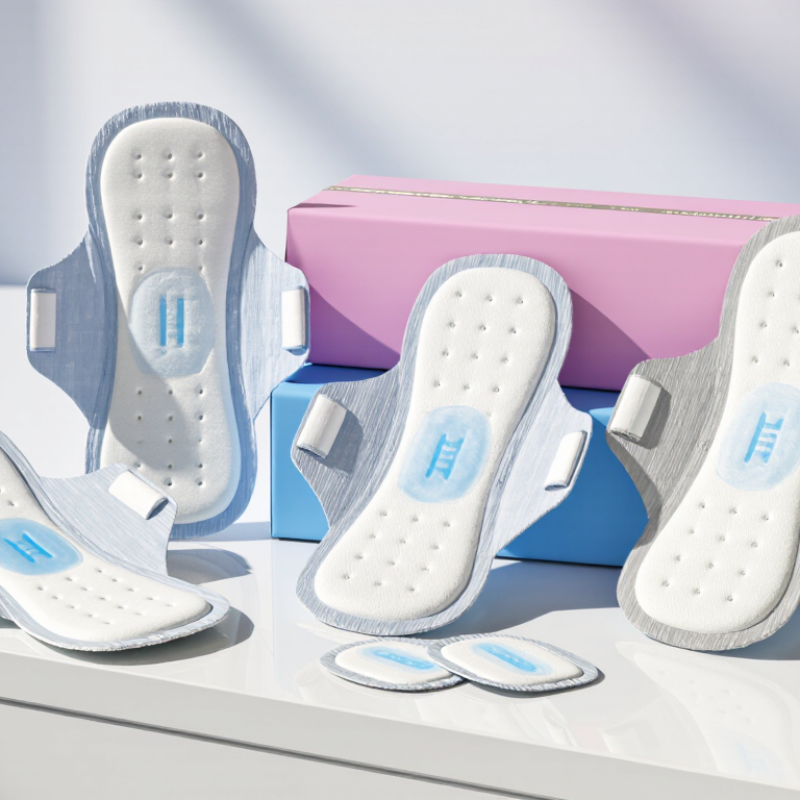
| Absorbency Capacity | Total liquid retained by the complete pad, including the absorbent core and acquisition layer. | Select several absorbency tiers rather than one universal level: light, moderate, and high-flow options. Require the supplier to state the test liquid, test procedure, loading rate, and result in grams or millilitres. | Compare products using the same controlled laboratory method. Because laboratory capacity does not equal real-life protection, also perform simulated repeated-fluid loading and compression testing. | High claimed capacity without a disclosed test method, or a result that cannot be reproduced by an independent laboratory. |
| Absorption Speed | Time required for the surface to draw liquid into the absorbent core. | The surface should absorb repeated small-to-moderate fluid applications quickly enough to reduce pooling. Define a buyer-specific maximum wetness time during the acceptance test. | Apply measured liquid volumes at multiple points and record surface pooling, strike-through, and absorption time after each application. | Visible pooling, slow intake after the first application, or significant wetness when the pad is pressed. |
| Rewet and Leakage Control | Amount of fluid returning to the surface after pressure, movement, or overnight use. | Minimal rewet under compression, secure edge containment, and no visible leakage during standing, sitting, walking, and side-sleeping simulations. | Use a standardized pressure load and movement sequence. Test the centre, rear, and side areas separately, since leakage often occurs away from the main absorbent zone. | Moisture transfer to a dry filter paper, wet edges, channel overflow, or leakage during compression. |
| Core Structure | Distribution and stability of cellulose, superabsorbent material, acquisition layers, and backing materials. | The absorbent core should remain evenly distributed, without hard lumps, excessive clumping, or separation after wetting and folding. | Inspect dry and wet samples, then conduct bending, rolling, and compression tests. Check whether the core shifts away from the centre during use. | Core migration, broken channels, exposed particles, or reduced absorbency after flexing. |
| Surface Dryness | Residual moisture remaining on the body-contact surface after absorption. | The topsheet should feel dry during normal use and should not remain visibly saturated after repeated loading. | Measure rewet using a consistent absorbent test sheet or gravimetric method. Conduct both laboratory and wearer comfort evaluations. | Persistent dampness, tacky surface feel, or increased skin friction after absorption. |
| Softness and Skin Comfort | Surface softness, friction, flexibility, and comfort during prolonged contact. | Soft, non-abrasive topsheet; flexible construction; no sharp edges; and acceptable comfort during sitting, walking, and lying down. | Combine material inspection, bending-force testing, surface-friction assessment, and structured user trials with documented feedback. | Rough surface, stiff edges, heat build-up, chafing, or discomfort reported consistently by users. |
| Breathability | Ability of the backsheet and overall construction to allow water vapour transmission while preventing liquid leakage. | Prefer a breathable, leak-resistant backsheet where local clinical requirements and product design allow it. | Request water-vapour transmission data and verify liquid barrier performance. Compare results using the same laboratory conditions. | Non-breathable plastic feel, excessive heat, condensation, or a substantial reduction in comfort during extended wear. |
| Material Safety | Safety of all skin-contact and absorbent materials, including adhesives, dyes, fragrances, and processing residues. | Use clearly specified materials; prefer fragrance-free and lotion-free designs for sensitive postpartum skin; require latex disclosure and restricted-substance controls. | Review the bill of materials, safety data, supplier declarations, migration or chemical testing where applicable, and finished-product quality records. | Undeclared additives, strong odour, inconsistent material specifications, or missing traceability and test documentation. |
| Biocompatibility and Irritation Risk | Likelihood of skin irritation or sensitisation during repeated or prolonged contact. | Finished products should be assessed for skin-contact suitability according to the destination market and intended use. | Use appropriate irritation and sensitisation assessments through qualified laboratories, supported by complaint monitoring and post-market feedback. | Repeated reports of redness, burning, itching, rash, or discomfort associated with normal use. |
| Fit and Coverage | Overall length, width, rear coverage, side protection, and compatibility with the intended underwear. | Offer size and coverage choices suitable for different postpartum flow levels and body shapes. A common adult maternity-pad length range is approximately 280–450 mm, but final dimensions should be validated by use case. | Check dimensional tolerances, front-to-back coverage, side containment, and stability in multiple underwear styles and body positions. | Pad movement, exposed edges, insufficient rear coverage, bunching, or adhesive failure during walking and sleeping. |
| Adhesive and Wing Performance | Strength, placement, residue, and stability of the adhesive strip and wings. | The pad should remain centred during normal movement while allowing clean removal without damaging common underwear fabrics. | Test on representative underwear materials under dry and humid conditions. Assess peel strength, lateral movement, residue, and removal force. | Sliding, wing detachment, excessive residue, fabric damage, or adhesive failure caused by humidity. |
| Odour and Appearance | Odour neutrality, cleanliness, colour consistency, and visible manufacturing defects. | Neutral odour, clean appearance, uniform sealing, and no exposed fibres, contamination, holes, or delamination. | Perform incoming inspection using an agreed sampling plan and retain samples from each production lot. | Unusual chemical odour, stains, loose fibres, incomplete seals, or significant colour and dimensional variation. |
| Packaging Hygiene | Protection against moisture, dust, contamination, and damage throughout transport and storage. | Individually wrapped or otherwise hygienically protected units, intact outer packaging, clear lot identification, and storage instructions. | Conduct packaging integrity, transport simulation, humidity exposure, and shelf-storage checks relevant to the destination market. | Torn wrappers, open seals, missing lot codes, moisture ingress, or unclear storage conditions. |
| Quality Consistency | Variation in absorbency, dimensions, adhesive placement, sealing, and appearance between lots. | Set written acceptance limits for critical characteristics and require lot-level traceability from raw materials to finished goods. | Use incoming quality inspection, retained samples, certificate review, and periodic independent verification. | Large lot-to-lot variation, incomplete corrective-action records, or inability to trace production batches. |
| Regulatory and Market Suitability | Compliance with the destination country’s rules for hygiene products, medical claims, labelling, packaging, and import documentation. | Claims should match available evidence. Product classification, labelling language, warnings, and documentation should be reviewed before purchase. | Complete a country-specific regulatory review and verify declarations, technical files, labels, and supporting test reports. | Medical or clinical claims without evidence, incomplete labels, incorrect product classification, or missing compliance documents. |