Aegis provides affordable, low power Wi-Fi sensor network solutions that make a ubiquitous sensing world come alive and a full line of controlled temperature cabinets. Laboratory, Pharmacy and Chromatography refrigerators and freezers which are designed to meet the dimensional and temperature requirements of the scientific community.

Why Is My Freezer Temperature Not Cold Enough?
A freezer that feels cold may still have an unsafe freezer temperature. Ice cream can soften, meat may develop pale dry patches, and frozen vegetables can form large crystals. These signs often appear before a complete failure becomes obvious.
USDA FSIS food safety specialist Meredith Carothers advises, “The freezer temperature should be 0°F or below.” That target matters because food quality and safety depend on steady cold, not a brief blast of frost. A freezer temperature above 0°F may result from a blocked air vent, an overpacked shelf, a damaged door gasket, or frequent door opening. Sometimes, the setting knob moves accidentally. It happens.
This guide explains how to check the temperature accurately and identify practical causes. Place an appliance thermometer between frozen packages, then wait several hours before reading it. Do not rely on the door display alone. It may show the setting, not the actual compartment temperature. A quick hand test is tempting. It is not reliable.
You will also learn when simple adjustments may help and when a qualified appliance technician should inspect the unit. A thick layer of frost, unusual clicking, warm cabinet walls, or repeated temperature swings deserves attention. However, one warm reading does not always prove a major failure. Room temperature, food placement, and measurement timing can distort the result. Careful checking comes first.
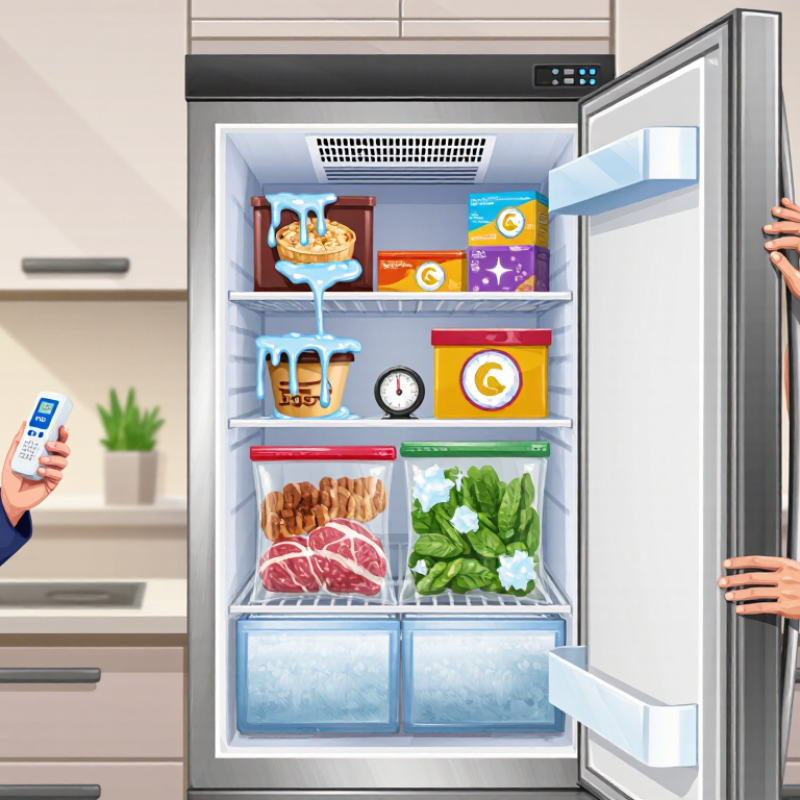
Table of Contents
[Hide]
Common Reasons a Freezer Is Not Cold Enough
Why Is My Freezer Temperature Not Cold Enough?
Common Reasons a Freezer Is Not Cold Enough
A freezer may feel cold but still remain above 0°F (-18°C). Check the temperature with an appliance thermometer, not only by touching frozen food. A crowded compartment can block air vents and create warm corners. Leave space around packages so cold air can circulate. Soft food near the door may indicate frequent opening or a weak door seal.
Frost buildup is another common cause. A thick layer on the back wall can restrict airflow and reduce cooling. Unplug the freezer before removing frost, and never use sharp tools. A damaged gasket can also let warm, moist air enter. Close a sheet of paper in the door; if it slides out easily, the seal may need cleaning or replacement. I have found that a dirty gasket is easy to overlook.
The condenser area may be dusty, especially in kitchens with pets or frequent cooking. Clean it carefully according to the appliance instructions, then allow enough space around the cabinet. A freezer placed beside a heat source may struggle during hot weather. Check that the door closes level and that the interior fan is running when appropriate. If the freezer stays warm after these checks, a failed fan, sensor, defrost component, or sealed cooling system could be responsible. Do not guess. A qualified technician should test those parts.
Why Is My Freezer Temperature Not Cold Enough? - Common Reasons a Freezer Is Not Cold Enough
| Common Reason | Typical Signs | What to Check | Recommended Action | Priority |
|---|---|---|---|---|
| Incorrect temperature setting | The freezer is cool but food is not fully frozen, with no unusual noise or visible damage. | Check the control setting and measure the internal temperature with an appliance thermometer. | Set the freezer to approximately 0°F (-18°C). Allow about 24 hours for the temperature to stabilize after changing the setting. | Low |
| Door not sealing properly | Frost near the door, warm air entering, condensation, or a door that does not close by itself. | Inspect the gasket for cracks, gaps, dirt, or deformation. Close the door on a sheet of paper; it should grip the paper firmly. | Clean the gasket and contact surface. Remove items blocking the door. Replace a damaged or loose gasket if necessary. | Medium |
| Blocked air vents | Some areas are colder than others, and items near the rear wall may freeze while other items remain soft. | Look for food packages pressed against interior vents or stacked so tightly that air cannot circulate. | Keep vents clear and leave space between packages. Avoid overpacking the freezer compartment. | Low |
| Excessive frost or ice buildup | A thick layer of ice covers the back wall or blocks the evaporator area; cooling performance gradually declines. | Inspect the back interior panel and air passages for frost. Frost buildup can indicate a defrost-system problem. | Follow the appliance instructions for defrosting. Do not chip ice with a sharp tool. If frost quickly returns, arrange professional service. | Medium |
| Dirty condenser coils or restricted airflow | The cabinet feels unusually warm, the compressor runs for long periods, or cooling becomes weaker over time. | If accessible, inspect the condenser area for dust, pet hair, and debris. Check that external ventilation spaces are not blocked. | Disconnect power before cleaning accessible coils and surrounding vents. Follow the appliance manual because coil locations vary. | Medium |
| Recently added warm food | The freezer temperature rises after loading a large amount of unfrozen food, then gradually improves. | Consider how much food was added and whether it was still warm. Check the temperature again after several hours. | Add food in smaller batches, keep the door closed, and allow up to 24 hours for recovery. | Low |
| Frequent door opening | The freezer warms during busy periods and improves when the door remains closed for several hours. | Observe how often and how long the door is opened. Look for a door that is left slightly open. | Organize commonly used items near the front and keep the door closed as much as possible. | Low |
| Room temperature is too high | Cooling is reduced in a hot garage, enclosed space, or area with poor ventilation. | Compare the installation environment with the temperature range specified in the appliance manual. | Move the appliance to a suitable location if possible and provide the required clearance around it. | Medium |
| Power or electrical interruption | The interior is warm, the display is off or reset, and other appliances may also have lost power. | Check the power cord, outlet, circuit breaker, and whether the interior light or control panel works. | Restore power safely and avoid repeatedly resetting a tripped breaker. If the outlet or cord is damaged, contact a qualified technician. | High |
| Faulty fan, sensor, thermostat, or compressor | The freezer remains warm after basic checks, makes abnormal noises, cycles continuously, or does not run at all. | Listen for the evaporator fan and compressor, check for error messages, and compare the measured temperature with the setting. | Do not disassemble sealed refrigeration components. Schedule professional diagnosis, especially if the compressor is silent or unusually hot. | High |
| Refrigerant leak or sealed-system fault | The freezer runs continuously but remains warm, with little frost on the evaporator area or an unusual oily residue. | Look for repeated poor cooling after cleaning, defrosting, and verifying the door seal. Do not attempt to test refrigerant yourself. | Contact a qualified refrigeration technician. Refrigerant handling and sealed-system repairs require specialized equipment. | High |
Related Posts
-
Top 10 Freezer Temperature Alarms You Need to Know About?
-
How to Choose the Best Laboratory Fridge for Your Needs?
-
How to Choose the Best Portable Freezers for Your Needs?
-
What is the Ideal Freezer Temperature for Food Safety?
-
Best Fridge Temperature Monitor for Optimal Food Safety?
-
2026 Best Refrigerator Temperature for Food Safety?
Contact Us
Phone
Toll Free: 1-800-796-2344
OH: 513 204 5837
PA: 215-281-9180
support@site_367d8ed1-a876-442b-a1d7-b1fc1cf4ed19