2026 Best Fridge and Freezer Types for Global Buyers

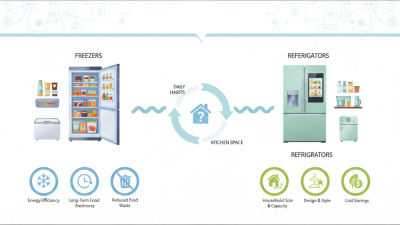
Choosing the right fridge and freezer in 2026 requires more than comparing capacity and appearance. Global buyers face different climates, voltages, food habits, kitchen sizes, and service conditions. A compact top-freezer may suit a warm apartment, while a chest freezer may better protect bulk food during unreliable power periods. Large households may prefer side-by-side or French-door designs, but these models need wider entrances and stronger installation planning.

Industry specialist Danfoss refrigeration expert Jürgen Fischer has emphasized, “Energy efficiency begins with choosing the right system for the application.” That principle remains practical. Inverter compressors can reduce temperature swings and operating noise. Frost-free systems offer convenience, yet they may consume more energy than simpler designs. Climate-class ratings also matter. A refrigerator placed in a hot garage can struggle, even when its advertised capacity looks impressive.

This guide examines the best fridge and freezer types for global buyers in 2026. It considers cooling performance, energy use, storage flexibility, maintenance, and regional compatibility. It also looks at details shoppers sometimes overlook, such as door clearance, replacement parts, noise levels, and refrigerant information. No single design wins everywhere. That is the uncomfortable truth.

A beautiful appliance can still be a poor purchase. Product labels may not reflect real household habits. My own preference for inverter models may also be too narrow. Buyers should compare verified specifications, local warranty support, and long-term running costs before deciding. Small details matter. A freezer that fits the room, the climate, and the family often performs better than the most expensive model.
2026 Best Fridge and Freezer Types for Global Buyers

Set the 2026 Baseline: IEC 62552, EU A–G Labels and DOE Standards

For global buyers, the 2026 baseline starts with the test method, not the advertised capacity. IEC 62552 defines performance tests for household refrigerators and freezers. It covers energy use, storage temperatures, and key operating conditions. However, national adoption and editions can differ. Check the applicable version before comparing technical data.

The EU A–G label gives a common efficiency scale, but the class is only one part of the decision. Read annual energy consumption in kilowatt-hours. Also check usable refrigerator and freezer volume. A compact appliance may earn a strong rating while offering limited storage. In the United States, DOE standards and test procedures determine energy requirements and reported consumption. Those figures may not match EU label values directly. This is where many comparisons become messy.

Tips: Ask for the IEC test report, EU label data, or DOE compliance information. Confirm voltage, frequency, climate class, and plug requirements before ordering. Compare annual kWh, not only the letter grade. Measure door clearance too. A spreadsheet helps, but it can still hide real household use. Door opening habits, room temperature, and overloaded shelves change consumption. I would treat every headline figure as a starting point, not a promise.

Compare Core Types: Top-, Bottom-, French-Door and Side-by-Side Models

For global buyers, refrigerator layout affects access, energy use, and kitchen planning. Top-freezer models remain practical for tight budgets and smaller homes. Their freezer sits at eye level, while fresh food stays lower. This design usually offers strong usable capacity per dollar. However, bending for daily vegetables can become tiring.

Bottom-freezer models place fresh food within easier reach. They suit households that open the refrigerator more often than the freezer. French-door models extend this idea, using two narrow fresh-food doors and a lower freezer drawer. They fit wide dishes and reduce door swing clearance. Side-by-side models offer balanced access to frozen and fresh foods. Their narrow compartments can limit large trays, though. Check shelf width carefully.

Energy performance deserves equal attention. ENERGY STAR’s 2024 refrigerator criteria indicate certified models use about 9% less energy than federal minimum-standard models. Actual consumption still depends on climate, door openings, ice production, and installation gaps. The International Electrotechnical Commission’s IEC 62552 testing framework improves comparison, but household results will differ. Look for annual kilowatt-hours, not only capacity labels. A 600-liter cabinet may waste space in practice. Measure doorways, voltage, plug standards, and ambient-temperature ratings before purchase. My practical preference is a bottom-freezer for frequent fresh-food use, but this is not universal. A hot kitchen changes the calculation.

Measure Efficiency: ENERGY STAR Refrigerators Use About 9% Less Energy

For global buyers, energy use deserves attention before color, capacity, or smart features. ENERGY STAR refrigerators use about 9% less energy than standard models, according to the program’s comparison guidance. That difference may seem small, but it continues every hour, including during holidays and overnight. Check the yellow energy label and compare annual kilowatt-hour estimates. A lower purchase price can become expensive when electricity rates rise.

Measure the space carefully. Leave room for door movement, wall clearance, and ventilation behind the cabinet. In a warm kitchen, poor airflow can make the compressor work harder. A freezer placed beside an oven may also consume more energy. I would not judge efficiency from the label alone. Actual results depend on temperature settings, opening frequency, food loading, and local climate. Small details matter.

Choose a size that matches real habits. An oversized refrigerator wastes cooled space when it stays half empty. A crowded freezer can block airflow and reduce cooling consistency. Keep the temperature near recommended settings, and clean dusty coils when the design allows it. These actions are simple, but people often forget them. I sometimes think efficiency claims sound too neat. Household behavior can weaken the promised savings, so buyers should compare measured energy data with their own daily routine.

2026 Best Fridge and Freezer Types for Global Buyers

ENERGY STAR refrigerators use about 9% less energy than standard models. The chart uses a normalized energy-use index, where 100 represents a comparable standard refrigerator and 91 represents an ENERGY STAR equivalent.

Lower index values indicate lower estimated energy consumption. Actual usage varies by capacity, climate, temperature settings, usage frequency, and local energy standards.

Fit Global Climates: IEC SN–T Ratings Span 10°C to 43°C

2026 Best Fridge and Freezer Types for Global Buyers

Fit Global Climates: IEC SN–T Ratings Span 10°C to 43°C

Climate class matters when choosing a refrigerator or freezer for international use. An IEC SN–T rating indicates operation across ambient temperatures from 10°C to 43°C. This range suits cool storage rooms, temperate homes, and many hot kitchens.

The details matter. SN covers lower temperatures, while T supports hotter surroundings. A refrigerator in a 40°C kitchen may run longer and consume more electricity. That is normal, but efficiency can still decline. Keep ventilation openings clear. Leave the recommended space behind the cabinet. A blocked condenser can make cooling less stable.

Field checks often reveal simple mistakes. Some buyers place appliances beside ovens or in direct sunlight. Others install them in unheated garages where winter temperatures fall below 10°C. The SN–T label does not guarantee ideal performance outside its rated range. It also does not replace the installation manual.

Look for sturdy door seals and adjustable temperature controls. Check whether the freezer maintains safe storage during frequent door opening. In tropical regions, measure the room temperature during the hottest afternoon, not only in the morning. In colder climates, consider the appliance’s minimum ambient requirement.

One point deserves reflection. A wide climate rating improves flexibility, but it cannot correct poor placement. My practical preference is to match the rating with real room conditions, ventilation, and expected usage. The label helps. It is not the whole decision.

2026 Best Fridge and Freezer Types for Global Buyers - Fit Global Climates: IEC SN–T Ratings Span 10°C to 43°C

Appliance Type Typical Configuration Typical Capacity Best Use Case Recommended IEC Climate Class Ambient Operating Range Main Advantage Important Limitation
Top-Freezer Refrigerator Refrigerator below or beside a compact upper freezer 250–550 L General household use and value-focused markets N, ST, or T; SN–T preferred for wider climate coverage 16–32°C for N; 16–38°C for ST; 16–43°C for T Usually efficient, simple, and easy to service Freezer access requires bending or reaching upward depending on layout
Bottom-Freezer Refrigerator Refrigerator at eye level with a drawer or door freezer below 300–650 L Households that open the refrigerator more frequently than the freezer SN, N, ST, or T; SN–T suitable for mixed climates 10–43°C when certified for SN–T Convenient refrigerator access and better ergonomic height Freezer drawers may require more floor clearance when opened
Side-by-Side Refrigerator Vertical refrigerator and freezer compartments placed next to each other 450–750 L Large kitchens needing organized vertical storage ST or T; SN–T preferred in hot and seasonally variable regions 16–38°C for ST; up to 43°C for T Convenient access without moving between upper and lower zones Narrow compartments may not fit wide trays or large cookware
French-Door Refrigerator Two upper refrigerator doors with one or more lower freezer drawers 500–850 L High-capacity family kitchens and frequent fresh-food storage ST or T; SN–T offers the broadest listed climate range 10–43°C when marked SN–T Wide refrigerator shelves and reduced door swing area Large footprint and higher purchase and operating costs are common
Undercounter Refrigerator Compact refrigerator installed below a worktop 80–200 L Studios, offices, hospitality rooms, and secondary storage N, ST, or T according to the product label Typically 16–38°C or 16–43°C, depending on certification Space-efficient and easy to integrate into cabinetry Limited capacity and often less flexible shelf space
Upright Freezer Vertical cabinet with shelves, drawers, or baskets 150–600 L Organized frozen-food storage where floor space is limited SN, N, ST, or T; select T for very hot installations 10–43°C depending on the stated climate class Easy inventory visibility and efficient use of vertical space Cold air can escape more readily when the door is opened
Chest Freezer Top-opening insulated cabinet with baskets or dividers 100–700 L Bulk storage, seasonal food, and areas with unstable power supply N, ST, or T; verify the label for unconditioned spaces Commonly 16–38°C; some models are rated to 43°C Strong cold retention and efficient bulk storage Requires bending and can be harder to organize without baskets
IEC climate-class reference: SN = 10–32°C; N = 16–32°C; ST = 16–38°C; T = 16–43°C. A product marked SN–T is designed and tested for an ambient range of 10–43°C, subject to the manufacturer’s installation instructions. Capacity figures are typical market ranges and can vary by model and regional measurement standard.

Choose Capacity and Features by Life-Cycle Cost, Repairability and Safety

2026 Best Fridge and Freezer Types for Global Buyers

Choose Capacity and Features by Life-Cycle Cost, Repairability and Safety

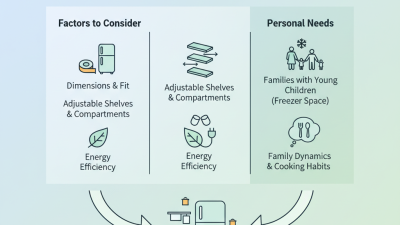
A refrigerator should fit daily routines, not showroom expectations. Measure the kitchen doorway, cabinet depth, and ventilation space before comparing capacity. A large freezer sounds practical, yet unused volume increases purchase cost and electricity use. For a small household, a compact top-freezer model often offers fewer components and simpler servicing. It can also remain useful during frequent power interruptions.

Look beyond the energy label. Estimate electricity prices, expected service visits, filter replacements, and the appliance’s working life. In warmer regions, stronger insulation and efficient heat removal may reduce long-term costs. In cold climates, check whether the appliance operates safely in unheated rooms. I have seen buyers focus on annual consumption and overlook transport, installation, and disposal fees.

Repairability deserves careful inspection. Ask whether technicians can access the compressor, fan, thermostat, and door seals without damaging surrounding parts. Standard fasteners and replaceable control boards usually support longer ownership. Written service information is valuable. So are available spare parts. Do not ignore safety: stable doors, child-resistant storage, suitable electrical protection, and certified refrigerant systems matter across markets. Features can fail. A sensor-rich appliance may save energy, but it may also require specialized diagnosis. My own cost estimates are never perfect; repair prices and electricity rates change. Leave a realistic reserve, rather than trusting an attractive headline figure.