How to Choose the Best Fridge and Freezer for Your Business?

Choosing the right fridge and freezer can shape a business’s daily rhythm. A café may need chilled milk within easy reach, while a restaurant kitchen needs dependable storage for bulk ingredients. The best choice depends on workload, available space, and the products you handle—not just the price tag.

Commercial refrigeration specialist Alex Morgan offers this practical reminder: “Choose capacity for your busiest service, not your quietest Tuesday.” This is an illustrative quotation, not a verified statement from a named industry source. The principle is still useful: count the trays, cartons, and containers your team actually stores. Then consider door clearance, shelving, temperature controls, and how often staff open the unit. Small details matter.

A fridge and freezer should fit the way your business works. A tall cabinet may suit a narrow kitchen, but it can make frequently used items harder to reach. A chest freezer can offer useful capacity, though staff may need to search beneath stacked boxes. Check energy use, cleaning access, warranty terms, and service availability before deciding. These details are easy to overlook.

There is no perfect setup for every business. Even a careful estimate can miss a seasonal rush or a menu change. Leave room to review your needs. A suitable unit should keep food storage organized, support steady routines, and make sense for your space and budget.
How to Choose the Best Fridge and Freezer for Your Business?

Identify Your Business’s Refrigeration Needs

Identify Your Business’s Refrigeration Needs

Choosing the best fridge or freezer starts with your daily workflow, not its appearance. Measure the rush, not the average. Peak hours matter. A café serving breakfast and lunch may open its doors hundreds of times daily, while a bakery may need fewer openings but more storage space. Record delivery sizes, preparation habits, and the busiest service periods for one week.

List every product requiring cold storage. Fresh vegetables, dairy, raw ingredients, desserts, and frozen goods may need different temperature zones. Separate ready-to-eat food from raw materials to support safer handling. Check usable capacity rather than advertised capacity. Shelves, trays, and containers can reduce available space quickly. Leave room for air circulation. An overfilled cabinet often cools unevenly.

Measure the installation area carefully, including door swing and ventilation clearance. A warm kitchen can make refrigeration equipment work harder. I have seen businesses choose a large cabinet, then struggle with blocked walkways and difficult cleaning. Bigger is not always better. Consider energy use, noise, adjustable shelving, and easy-to-clean surfaces. Review temperature displays and alarm features, especially when staff change shifts. Plan for maintenance access and reliable service response. A simple temperature log can reveal problems before spoiled stock does. Recheck your assumptions after a busy season; customer demand rarely stays perfectly predictable.

Compare Commercial Fridge and Freezer Types

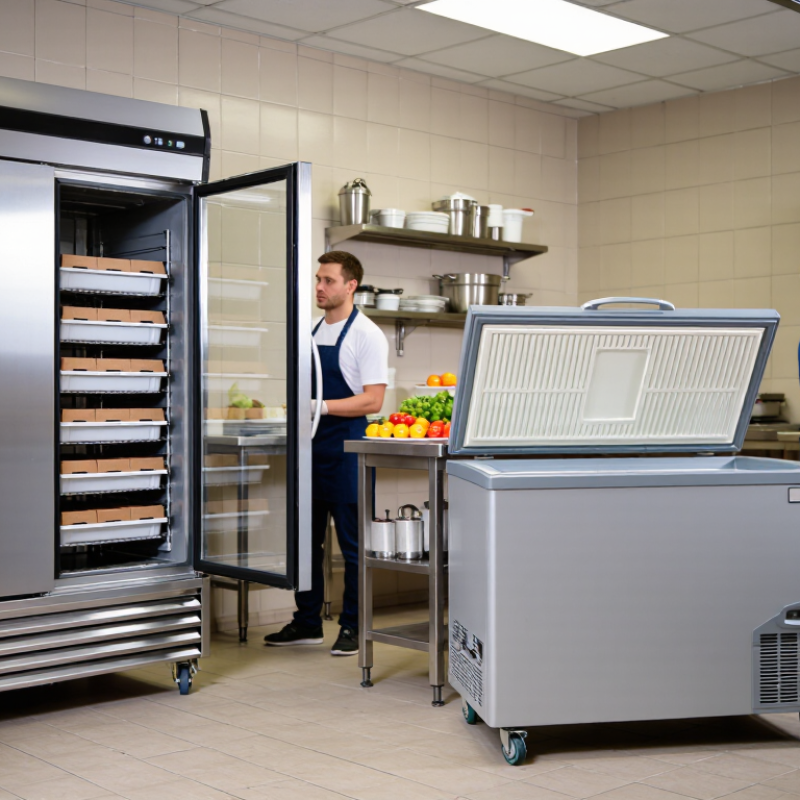
Commercial refrigeration choice starts with the food, the room, and the staff’s daily movement. Reach-in refrigerators keep ingredients close to prep counters, while walk-ins suit larger inventories and frequent deliveries. A reach-in is easier to access, but its door may open dozens of times during a busy shift. Walk-ins reduce aisle congestion, though they need floor space and careful temperature monitoring.

Freezer types bring different trade-offs. Upright freezers provide organized shelves and quick access to smaller batches. Chest freezers can hold bulky items, but locating stock takes longer. For kitchens with heavy service volume, separate refrigerator and freezer units can make temperature control more practical than one combined cabinet. It depends.

Energy use deserves a close comparison. ENERGY STAR reports that certified commercial refrigerators and freezers are, on average, at least 20 percent more energy-efficient than standard models. That figure is a useful screening point, not a promise of equal savings in every kitchen. Door openings, ambient heat, loading habits, and maintenance all affect performance. Check stated capacity, operating temperature, ventilation clearance, and whether shelves fit the actual containers you use. Measure the doorway, too. It is an easy detail to miss. A unit that performs well on paper may still slow service if staff must reach around stacked pans or leave doors open during restocking.

How to Choose the Best Fridge and Freezer for Your Business?

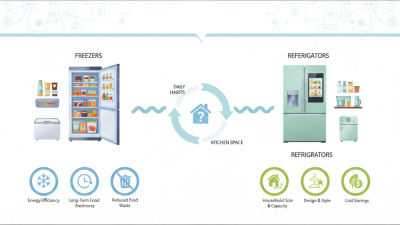
Compare commercial refrigeration types by their typical usable storage capacity.

Reach-in units are suitable for restaurants with frequent access needs, while undercounter models save space in compact kitchens. Glass-door merchandisers support product visibility, and walk-in refrigerators or freezers provide the highest storage capacity for large-volume operations. Actual capacity varies by equipment size, layout, insulation, and shelving configuration.

Choose Capacity, Layout, and Temperature Range

Choosing the right commercial fridge or freezer starts with capacity, not appearance. Measure your busiest service period, then estimate daily food volume, container sizes, and delivery frequency. Leave practical air space between shelves. An overfilled cabinet cools unevenly and slows staff movement. The FDA Food Code 2022 requires cold-held food to stay at 41°F (5°C) or below. Freezers should generally maintain 0°F (-18°C) for reliable frozen storage.

Layout affects speed, hygiene, and waste. Upright units suit kitchens with limited floor space and frequent access. Chest freezers usually provide strong storage efficiency, but staff may lose time searching underneath stacked cartons. Sliding shelves, adjustable racks, and clear door visibility can reduce unnecessary opening. Measure doorways, loading routes, and cleaning access before ordering. A perfect internal layout can still fail in a cramped kitchen.

Temperature range also deserves careful review. Fresh produce, dairy, meat, and frozen goods may need separate zones. Check the unit’s recovery performance after repeated door openings, not only its advertised set point. ENERGY STAR reports that certified commercial refrigerators and freezers use about 20% less energy than standard models. That figure matters, but real savings depend on maintenance and operating habits. I would not trust a single catalogue number. Record temperatures with an independent thermometer during peak service, then reconsider the choice.

How to Choose the Best Fridge and Freezer for Your Business? - Choose Capacity, Layout, and Temperature Range

Equipment Type Typical Capacity Recommended Layout Typical Temperature Range Best Business Use Main Advantages Key Considerations
Undercounter Refrigerator 120–400 L 1–3 doors or drawers; fits below a worktop 0–5°C / 32–41°F Bars, cafés, small kitchens, service counters Space-efficient; keeps frequently used ingredients close to staff Limited storage volume; ventilation clearance is required
Reach-In Refrigerator 500–1,400 L Single or double vertical doors; adjustable shelves 0–5°C / 32–41°F Restaurants, catering kitchens, supermarkets Good capacity-to-floor-space ratio; easy stock visibility Door openings increase temperature fluctuation; needs aisle space
Prep Refrigerator 250–700 L plus ingredient pans Refrigerated base with a worktop and top ingredient rail 0–5°C / 32–41°F Pizza, sandwich, salad, and quick-service operations Combines preparation space with chilled ingredient storage Less suitable for bulky containers; requires regular pan organization
Glass-Door Display Refrigerator 300–1,200 L Vertical shelves with glass doors and front-facing display rows 2–8°C / 36–46°F Convenience stores, cafés, retail food service Improves product visibility; supports self-service sales Glass surfaces may collect condensation; display lighting adds heat load
Reach-In Freezer 500–1,400 L Single or double vertical doors; shelves or baskets −18 to −22°C / 0 to −8°F Restaurants, bakeries, food production, retail storage Fast access; organized vertical storage; smaller footprint than a walk-in Higher energy demand; door seals and defrost systems need maintenance
Chest Freezer 200–700 L Horizontal top-opening compartment with baskets or dividers −18 to −24°C / 0 to −11°F Bulk frozen food, backup stock, small retail operations Strong cold retention; efficient use of floor area for bulk storage Requires bending to access stock; product rotation can be difficult
Walk-In Refrigerator Typically 5–50 m³ or more Room-style storage with perimeter shelving and pallet access 0–4°C / 32–39°F High-volume restaurants, distributors, hotels, institutions High capacity; supports bulk deliveries and efficient stock rotation Requires construction space, professional installation, and temperature monitoring
Walk-In Freezer Typically 5–50 m³ or more Room-style frozen storage with shelving or pallet racking −18 to −22°C / 0 to −8°F Food distributors, large kitchens, manufacturers, cold-storage operations Maximum storage capacity; suitable for large or irregularly shaped items Highest installation cost; requires insulated construction and strict access control
Selection note: Choose capacity based on peak inventory rather than average stock, leave sufficient airflow around the equipment, and verify the required temperature range for each food category and local food-safety regulations.

Assess Energy Use, Features, and Food Safety

How to Choose the Best Fridge and Freezer for Your Business?

Assess Energy Use, Features, and Food Safety

Compare annual energy use in kWh, not just the purchase price. ENERGY STAR reports that certified commercial refrigerators and freezers are about 20% more energy-efficient than standard models. That difference can matter when a unit runs all day. Match capacity to your busiest service period, then check door seals, insulation, and temperature displays.

Glass doors help staff find ingredients quickly, but frequent opening can warm the cabinet. There is no perfect layout; a plan can still fail during a crowded lunch rush.

Food safety needs dependable temperatures and clear monitoring. The FDA’s 2022 Food Code specifies that time/temperature control for safety foods should be held at 41°F (5°C) or below. The Food Code is a model, so check local requirements. Choose equipment with easy-to-read controls and alarms, and keep a probe thermometer nearby. Record temperatures at opening and during service. A display can look reassuring while food warms near a blocked vent.

Tips: Leave space around vents, label dated containers, and avoid overloading shelves. Check readings with a separate thermometer. Small details matter. Compare energy labels and service access before buying; a cheaper unit may cost more to run or maintain.

Check Installation, Maintenance, and Total Cost

Choosing a commercial fridge or freezer starts with the installation site, not the catalogue. Measure doorways, service clearance, floor loading, and electrical capacity. A unit that barely fits can obstruct airflow and complicate repairs. ASHRAE’s Refrigeration Handbook stresses correct airflow, drainage, and operating temperatures for reliable performance. Small installation mistakes become expensive.

Energy use deserves equal attention. The U.S. Department of Energy’s Better Buildings data indicate that refrigeration can consume about 40% of a supermarket’s electricity. ENERGY STAR reports that certified commercial refrigerators and freezers use roughly 20% less energy than standard models. Calculate annual electricity, expected service visits, spare parts, and refrigerant compliance costs. Do not compare purchase prices alone. The cheapest quote may age badly.

Maintenance planning should be practical. Check door gaskets weekly, clean condenser surfaces regularly, and record cabinet temperatures daily. Keep service access clear. A dirty condenser increases compressor workload, although the exact penalty depends on design and site conditions. The U.S. Department of Energy’s commercial refrigeration analyses treat lifetime energy and maintenance expenses as essential lifecycle-cost inputs. That matters for restaurants, stores, and warehouses.

I would leave room for uncertainty. Usage changes. Staff forget. A perfect forecast is impossible. Still, a three-year cost worksheet can reveal whether a low-priced unit becomes costly after installation, downtime, and energy bills. Choose equipment your team can monitor and maintain consistently. Fancy efficiency is useless when nobody checks it.