Aegis provides affordable, low power Wi-Fi sensor network solutions that make a ubiquitous sensing world come alive and a full line of controlled temperature cabinets. Laboratory, Pharmacy and Chromatography refrigerators and freezers which are designed to meet the dimensional and temperature requirements of the scientific community.

How to Choose Low Temp Freezers for Global Sourcing?
Choosing low temp freezers for global sourcing is not a simple price comparison. A freezer may look reliable online, yet fail when ambient temperatures, voltage, or delivery routes change. Buyers need evidence from real operating conditions, not polished photographs. This guide examines temperature range, recovery speed, insulation, alarms, and energy use. It also considers whether suppliers can provide calibration records, factory testing, and responsive technical support. Small details matter. A loose door seal can increase frost, power consumption, and sample risk.
Experienced procurement teams usually begin with the application, not the catalogue. Define the required temperature, chamber volume, sample types, access frequency, and expected service life. Then compare compressor design, refrigerant information, backup options, data logging, and noise levels. Electrical compatibility deserves careful attention. A unit designed for one grid may need a different plug, protection system, or factory configuration elsewhere. Shipping also changes the risk. A long ocean journey can expose equipment to vibration, humidity, delays, and limited inspection opportunities.
Reliable sourcing depends on verifiable documentation and honest communication. Ask for test standards, warranty terms, spare-parts availability, installation guidance, and references from comparable facilities. Confirm import responsibilities with qualified local professionals. Requirements vary by destination. Do not assume every certificate has the same meaning. No framework is perfect. I have seen technically strong equipment become a poor investment when service response was overlooked. The best decision balances performance, total ownership cost, supplier transparency, and the consequences of a failed temperature cycle. This guide offers a practical starting point, while encouraging careful validation before any international order.
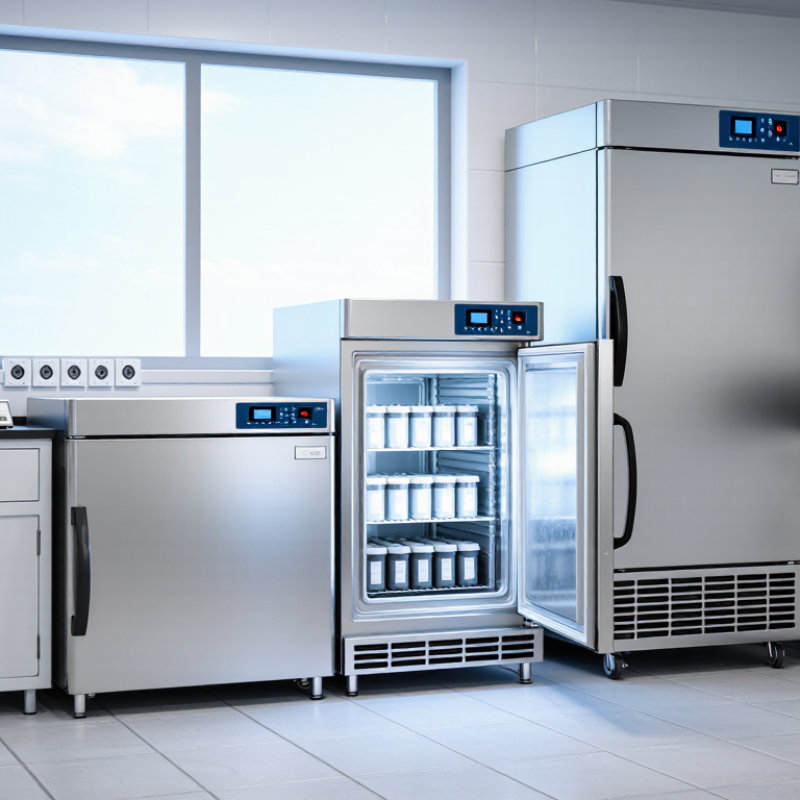
Table of Contents
[Hide]
Define Storage Requirements Across −20°C, −40°C, and −86°C Classes
How to Choose Low Temp Freezers for Global Sourcing?
Define Storage Requirements Across −20°C, −40°C, and −86°C Classes
Choosing a low temperature freezer starts with the sample, not the catalog. At −20°C, many routine reagents, specimens, and short-term materials remain stable. This class usually offers lower energy use and simpler maintenance. However, temperature drift can still damage sensitive contents. At −40°C, users gain a wider safety margin for longer storage. Some materials need this range, but not all do. Paying for extra cooling without a documented requirement wastes capacity and budget.
−86°C freezers support long-term preservation for highly temperature-sensitive biological materials. They need stronger power infrastructure, careful loading, and reliable backup planning. Check internal volume against actual box dimensions. A large chamber may seem efficient, yet half-empty operation can increase costs. Review door-opening frequency, recovery time, alarm visibility, and operating voltage before requesting quotations. Global sourcing also requires compatible plugs, electrical standards, manuals, and service arrangements. These details are easy to overlook.
Tips: Write a storage matrix before comparing suppliers. Record target temperature, acceptable fluctuation, quantity, package size, and access frequency. Ask for tested performance under realistic loading conditions. Empty-chamber data can mislead. Recheck the temperature class with laboratory staff; the first assumption is often incomplete. Keep a contingency plan for power interruptions, because even a well-specified freezer can fail unexpectedly.
How to Choose Low Temp Freezers for Global Sourcing? - Define Storage Requirements Across −20°C, −40°C, and −86°C Classes
| Evaluation Dimension | −20°C Class | −40°C Class | −86°C Class | Global Sourcing Consideration |
|---|---|---|---|---|
| Primary Temperature Target | Approximately −20°C Commonly used for routine frozen storage. |
Approximately −40°C Used when a lower storage temperature is required than standard laboratory freezers provide. |
Approximately −80°C to −86°C Designed for ultra-low-temperature storage. |
Confirm the required product setpoint, allowable temperature range, and alarm limits rather than comparing only the headline temperature. |
| Typical Applications |
|
|
|
Storage suitability must be verified against the product manufacturer’s instructions, regulatory requirements, and the validated storage protocol. |
| Temperature Uniformity | Usually easier to maintain because the temperature differential from ambient is smaller. | Requires stronger insulation and refrigeration performance than a −20°C unit. | More sensitive to door openings, loading patterns, gasket condition, frost, and ambient conditions. | Request mapping data for empty and loaded conditions, including sensor locations and acceptance criteria. |
| Temperature Recovery | Generally faster recovery after brief door openings than colder classes. | Typically slower recovery than −20°C units, depending on cabinet size and load. | Recovery can be comparatively slow after frequent or prolonged access, especially with a large thermal load. | Compare tested recovery time, not marketing claims. Ask whether the result was measured after a defined door-opening procedure. |
| Energy Requirement | Lowest energy demand of the three classes in comparable cabinet sizes. | Higher energy demand than −20°C because of the lower operating temperature. | Highest energy demand because of the large temperature difference from ambient and continuous compressor operation. | Compare annual energy consumption in kWh, tested at the same ambient temperature, voltage, capacity, and setpoint. |
| Recommended Access Pattern | Suitable for relatively frequent routine access when organized properly. | Best for controlled access and clearly organized inventories. | Use short, planned door openings; divide inventory into labeled boxes, racks, or internal compartments. | Match cabinet size to actual inventory. An oversized cabinet can increase energy use and extend recovery time. |
| Frost and Ice Management | Frost may accumulate over time, especially with frequent door openings or high humidity. | Frost control becomes more important as insulation, gaskets, and access conditions affect performance. | Frost can obstruct inner doors, reduce sealing performance, and affect usable capacity; scheduled defrosting is essential. | Check defrost procedures, inner-door design, gasket replacement availability, and cleaning access. |
| Power Protection | Short outages may create less immediate risk, but temperature-sensitive materials still require an emergency plan. | Backup power is advisable for valuable or irreplaceable materials. | Backup power, remote alarms, and an emergency transfer plan are strongly recommended because temperatures can rise significantly during extended outages. | Confirm voltage, frequency, phase, plug type, rated current, circuit requirements, and compatibility with local electrical codes. |
| Monitoring and Alarms | High/low temperature alarms and a calibrated independent thermometer are recommended. | Use continuous monitoring with high/low alarms and documented calibration. | Use continuous monitoring, audible and visual alarms, remote notifications, door-open alarms, and power-failure alerts where appropriate. | Specify alarm setpoints, delay time, battery backup, data logging, export format, and notification method before purchase. |
| Cabinet and Capacity Planning | Available as compact under-counter, upright, or chest configurations. | Often selected as upright or chest equipment for specialized storage. | Commonly available as upright or chest units with racks, boxes, and multiple internal compartments. | Compare net usable volume, external dimensions, door clearance, shelf or rack layout, and transport route constraints. |
| Ambient Conditions | Performance is generally less demanding, but the installation room must remain within the specified ambient range. | Requires adequate ventilation and compliance with the manufacturer’s ambient-temperature limits. | Requires careful room planning, heat dissipation, ventilation, and air-conditioning because the equipment releases substantial heat. | Request operating performance at the intended site ambient temperature, including hot-climate conditions where applicable. |
| Maintenance Requirements | Routine cleaning, gasket inspection, temperature verification, and defrosting as needed. | Routine cleaning, condenser maintenance, gasket inspection, temperature verification, and planned defrosting. | More demanding preventive maintenance, including condenser cleaning, gasket checks, frost removal, temperature mapping, and alarm testing. | Confirm service intervals, spare-part lead times, technician coverage, warranty terms, and local service capability. |
| Best Fit for Sourcing | Cost-conscious general storage with moderate temperature requirements. | Intermediate-temperature applications that need more protection than −20°C but do not require ultra-low storage. | High-value, long-term, or temperature-critical materials requiring ultra-low storage and stronger risk controls. | Select the lowest temperature class that satisfies the validated storage requirement; colder is not automatically better or more economical. |
| Important: The temperature classes above are practical procurement categories, not universal product standards. Actual performance depends on cabinet design, refrigerant system, load, ambient temperature, door-opening frequency, installation conditions, and testing method. Always review the technical datasheet, temperature-mapping report, electrical specification, alarm functionality, and applicable local compliance requirements before global sourcing. | ||||
Related Posts
-
10 Best Low Temp Freezers for Optimal Storage Needs?
-
How to Choose the Best Fridge and Freezer for Your Business?
-
2026 Best Fridge and Freezer Types for Global Buyers
-
How to Choose the Best Freezers and Refrigerators for Your Home?
-

2025 Top Research Freezer Buying Guide What to Look For
-
2025 Guide: How to Choose the Best Ultra Low Freezers for Your Lab Needs
Contact Us
Phone
Toll Free: 1-800-796-2344
OH: 513 204 5837
PA: 215-281-9180
support@site_367d8ed1-a876-442b-a1d7-b1fc1cf4ed19