Aegis provides affordable, low power Wi-Fi sensor network solutions that make a ubiquitous sensing world come alive and a full line of controlled temperature cabinets. Laboratory, Pharmacy and Chromatography refrigerators and freezers which are designed to meet the dimensional and temperature requirements of the scientific community.

What Is a Fridge Temperature Alarm and How Does It Work?
A refrigerator may look cold while its internal temperature quietly rises. That hidden change can damage medicines, spoil dairy products, and increase food-safety risks. A fridge temperature alarm provides an early warning before the problem becomes expensive or dangerous. It monitors the cabinet temperature and alerts users when readings exceed a chosen limit.
Food-safety researcher Dr. Benjamin Chapman captures the challenge clearly: “You can’t see, smell, or taste the bacteria that can make you sick.” His warning explains why a visual check is not enough. A reliable fridge temperature alarm uses a sensor or wired probe near stored products. The device measures temperature at regular intervals. It then compares each reading with a programmed safety range. If the temperature remains too high, the alarm may sound, flash, send a phone notification, or contact a monitoring system.
The details matter. A short door opening should not trigger panic. Many alarms use a time delay for this reason. Some models record temperature history, which helps identify overnight failures or weak cooling cycles. Others continue operating during power interruptions with backup batteries. Still, no alarm is perfect. A misplaced sensor, low battery, or poor calibration can create false confidence. That weakness deserves attention.
This guide will explain how fridge temperature alarm systems work, where sensors should be placed, and which features support dependable monitoring. It will also examine calibration, alert limits, maintenance, and common installation mistakes. Small details can protect a full refrigerator. Sometimes, they protect much more.
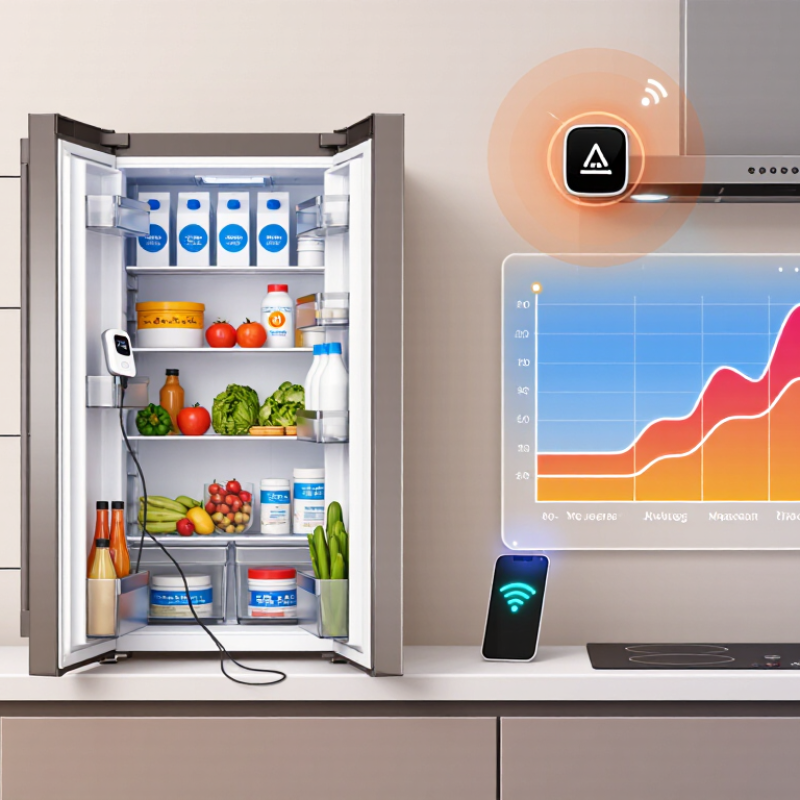
Table of Contents
[Hide]
What Is a Fridge Temperature Alarm?
A fridge temperature alarm is a small monitoring device that warns you when the interior becomes too warm or too cold. It usually uses a temperature sensor, a control unit, and an alert system. The sensor measures air temperature at regular intervals. If the reading crosses a chosen limit, the alarm may sound, flash, or send a notification.
It is more than a simple thermometer. A thermometer shows the current reading, while an alarm watches for unsafe changes over time. For example, a door left open can slowly raise the temperature. A power failure may cause a faster increase. Many alarms also include delay settings, which help prevent alerts during brief fluctuations. However, no device is perfect. A poorly placed sensor can give a misleading reading. Temperature near the door often changes more quickly than temperature at the back.
Tips: Place the sensor near stored food, but do not bury it between containers. Check its reading against a reliable thermometer occasionally. Test the alarm by opening the door briefly or adjusting its limit. Keep the alert volume noticeable, especially in a busy kitchen. Batteries also need attention. A low battery can create false confidence, which is easy to overlook.
Related Posts
-
China Top 10 Fridge Temperature Monitor Manufacturers
-
China Best Freezer Temperature Monitor Buying Guide
-

Why Is My Freezer Temperature Not Cold Enough?
-

China Best Freezer Fridge Options for Your Home and Kitchen?
-
Top 10 Benefits of Using Low Temperature Freezers for Food Storage?
-

What is a 4 cu ft freezer and How Can It Benefit Your Home?
Contact Us
Phone
Toll Free: 1-800-796-2344
OH: 513 204 5837
PA: 215-281-9180
support@site_367d8ed1-a876-442b-a1d7-b1fc1cf4ed19