Aegis provides affordable, low power Wi-Fi sensor network solutions that make a ubiquitous sensing world come alive and a full line of controlled temperature cabinets. Laboratory, Pharmacy and Chromatography refrigerators and freezers which are designed to meet the dimensional and temperature requirements of the scientific community.

2026 Best Freezers and Refrigerators for Businesses
Choosing the right freezers and refrigerators can shape daily service, food quality, and operating costs. For a restaurant, grocery store, café, or catering kitchen, reliable cold storage is essential. A refrigerator that struggles during a busy lunch rush can put ingredients at risk. A freezer with awkward shelves can slow staff down.
This 2026 guide examines business-ready options for different spaces, workloads, and budgets. It considers usable capacity, temperature consistency, energy use, construction, noise, and ease of cleaning. These details matter in real kitchens. A unit may look spacious online, yet leave too little room for stacked pans or deliveries. Small things count.
Specifications help, but they do not tell the whole story. Door seals wear, rooms run warm, and staff open cabinets more often than expected. A tidy feature list cannot guarantee dependable performance. That is worth remembering. The best choice depends on your menu, available floor space, delivery schedule, and local service support. We’ll look at what to compare before buying, including reach-in, undercounter, chest, and upright designs. The aim is practical guidance, not a universal winner. Even a well-reviewed model may be a poor fit for a particular business.
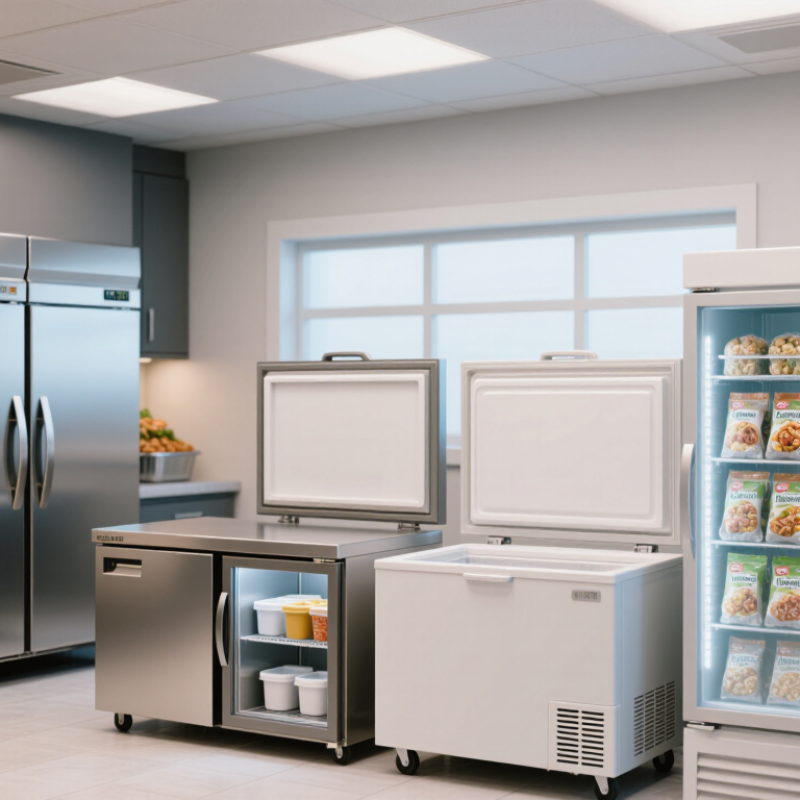
Table of Contents
[Hide]
Commercial Refrigeration: Functions and Business Applications
Commercial refrigeration does more than keep products cold. It protects food quality, supports safe handling, and helps businesses manage daily service. A restaurant may need separate zones for raw ingredients, prepared dishes, and drinks. A bakery might prioritize steady cooling for cream and fillings. In a small shop, a glass-door refrigerator can make stock easy to see, while a chest freezer may suit bulk storage. Choose equipment around actual workflow, not appearance alone.
Reliable temperature control matters. Check the unit’s capacity, airflow, door seal, and recovery time after frequent opening. Keep space around vents, and avoid packing shelves tightly; blocked airflow can create warm spots. A digital display is useful, but staff should still record temperatures and notice unusual changes. Noise, heat output, and energy use also affect placement. One detail is easy to miss: a unit that fits the room may still be awkward to clean or service.
Tips: Measure doorways and installation space before ordering. Leave clearance for ventilation. Label shelves, rotate older stock forward, and clean spills promptly. Keep a simple temperature log. Small routines help, though they do not replace maintenance.
2026 Best Freezers and Refrigerators for Businesses — Commercial Refrigeration: Functions and Business Applications
| Equipment Type | Typical Operating Temperature | Typical Storage Format | Key Functions | Suitable Business Applications | Selection Considerations |
|---|---|---|---|---|---|
| Reach-In Refrigerator | Usually about 1–4°C (34–40°F) | Upright cabinet with shelves; commonly available with one to several doors | Keeps chilled ingredients and prepared foods readily accessible; supports organized storage and frequent stock rotation. | Restaurants, cafés, catering kitchens, grocery back rooms, and food-service operations. | Check usable capacity, shelf adjustability, door clearance, temperature controls, and whether the unit fits the kitchen’s ventilation space. |
| Reach-In Freezer | Typically −18°C (0°F) or colder | Upright cabinet with shelves or trays | Maintains frozen inventory for routine service; helps separate frozen products from refrigerated stock. | Restaurants, bakeries, cafés, institutional kitchens, and small food retailers. | Consider the required frozen-storage volume, frequency of door openings, defrost method, energy use, and available electrical supply. |
| Walk-In Refrigerator | Usually about 1–4°C (34–40°F) | Room-sized insulated enclosure with racks or shelving | Provides high-volume chilled storage with space for bulk deliveries, ingredient organization, and inventory access. | Hotels, supermarkets, food distributors, large restaurants, and institutional food-service facilities. | Plan for site dimensions, insulation, door access, shelving layout, floor requirements, and the cooling capacity needed for the stored load. |
| Walk-In Freezer | Typically −18°C (0°F) or colder | Room-sized insulated enclosure with freezer-rated shelving or racks | Stores substantial frozen inventory and allows staff to access bulk stock without relying on multiple small cabinets. | Food warehouses, supermarkets, hotels, caterers, and high-volume commercial kitchens. | Evaluate insulation and door sealing, defrost needs, traffic patterns, floor construction, and the equipment’s suitability for the planned temperature. |
| Undercounter Refrigerator or Freezer | Refrigerator: usually about 1–4°C (34–40°F); freezer: typically −18°C (0°F) or colder | Compact cabinet installed beneath a worktop or service counter | Keeps frequently used ingredients close to the point of preparation or service while saving floor space. | Bars, cafés, food trucks, compact kitchens, and restaurant prep stations. | Measure counter and ventilation clearances; confirm usable internal capacity, door or drawer configuration, and suitability for the surrounding ambient conditions. |
| Commercial Display Refrigerator | Often around 1–5°C (34–41°F), depending on product and design | Glass-door or open-front display cabinet with shelves | Displays chilled products for customer selection while maintaining refrigerated storage conditions. | Convenience stores, cafés, delis, supermarkets, and self-service food areas. | Review product visibility, shelf arrangement, lighting, door style, expected customer traffic, and the temperature requirements of the items being displayed. |
| Chest Freezer | Typically −18°C (0°F) or colder | Horizontal insulated cabinet with a top-opening lid and baskets | Provides bulk frozen storage; top-opening designs can reduce cold-air loss when opened compared with many upright layouts. | Small retailers, cafés, food stalls, and businesses needing supplementary frozen storage. | Allow for lid-opening clearance and manual access; check basket organization, defrost requirements, and whether the footprint suits the available space. |
| Blast Chiller / Blast Freezer | Rapidly chills or freezes hot food; target cycles and final temperatures depend on the equipment and food-safety procedure | Insulated cabinet with trays or racks and controlled high-speed air circulation | Rapidly reduces food temperature after cooking to support controlled batch preparation and safe chilled or frozen storage. | Commercial kitchens, caterers, bakeries, central production kitchens, and food manufacturers. | Match tray capacity and cycle performance to batch size; follow local food-safety rules and the manufacturer’s instructions for validated chilling procedures. |
Temperature ranges are typical operating targets, not universal specifications. Actual performance varies by equipment design, ambient conditions, loading, and local food-safety requirements; confirm the required operating range and installation conditions before purchase.
Related Posts
-
How to Choose the Best Fridge and Freezer for Your Business?
-
2026 Best Fridge and Freezer Types for Global Buyers
-
How to Choose Low Temp Freezers for Global Sourcing?
-
2026 Top Fridge and Freezer Suppliers Worldwide?
-
How to Choose a Fridge and Freezer in 2026?
-
2026 Top Refrigerator Cooler Types for Global Buyers
Contact Us
Phone
Toll Free: 1-800-796-2344
OH: 513 204 5837
PA: 215-281-9180
support@site_367d8ed1-a876-442b-a1d7-b1fc1cf4ed19